 Back
BackEnvironmental Toxicology: Toxins, Hazards, and Their Impacts on Ecosystems and Human Health
Study Guide - Smart Notes
 Tailored notes based on your materials, expanded with key definitions, examples, and context.
Environmental Toxicology
Introduction to Environmental Health and Toxicology
Environmental toxicology is the study of how environmental factors and toxic substances affect human health and ecosystems. It encompasses the identification of hazards, the movement of toxins through the environment, and the biological impacts of these substances.
Environmental Health: Examines how environmental factors influence human health and well-being.
Major Types of Environmental Hazards:
Physical hazards: Natural events such as floods, fires, droughts, weather extremes, and UV radiation.
Chemical hazards: Synthetic chemicals (e.g., pesticides, plastics) and some natural toxins (e.g., venoms, poisons).
Biological hazards: Pathogens and parasites resulting from ecological interactions.
Cultural hazards: Risks associated with lifestyle, occupation, or socioeconomic status.
Key Concepts in Toxicology
Toxicology is the scientific study of the adverse effects of chemical substances on living organisms. Environmental toxicology focuses on substances released into or originating from the environment.
Toxicity: The degree of harm a substance can cause.
Synthetic Chemicals: Man-made substances that can enter air, water, and soil, affecting organisms. Examples include pesticides, herbicides, insecticides, and industrial chemicals such as BPA and phthalates.
Prevalence: Studies have found widespread presence of synthetic chemicals in human populations and the environment.
Not all synthetic chemicals are harmful; risk depends on exposure and toxicity.
Types of Toxic Substances and Their Effects
Toxic substances can affect organisms in various ways, depending on their chemical nature and biological targets.
Carcinogens: Cause cancer by inducing uncontrolled cell growth.
Mutagens: Cause genetic mutations in DNA.
Neurotoxins: Disrupt nervous system function.
Allergens: Trigger allergic reactions.
Teratogens: Cause developmental harm before birth.
Pathway Inhibitors: Block essential biochemical processes.
Endocrine Disruptors: Interfere with hormone systems by mimicking, blocking, or breaking down hormones.
Indoor Hazards from Toxins
Many toxins are present indoors, posing significant health risks.
Cigarette smoke: Contains numerous carcinogens and toxins.
Radon: A radioactive gas that seeps from the ground and can accumulate indoors.
Mold: Can cause respiratory infections and allergic reactions.
Asbestos: Once widely used in construction, can cause lung diseases.
Lead: Previously used in paint, gasoline, and pipes; toxic to the nervous system.
PBDEs: Flame retardants found in electronics and furniture.
BPA and phthalates: Chemicals in plastics and resins with potential endocrine-disrupting effects.
Movement and Impact of Toxins in the Environment
Transport and Persistence of Toxins
Toxins can move through the environment via air, water, and soil, sometimes leading to unintended and cascading ecological consequences.
Air currents: Can transport toxins globally, especially to polar regions.
Runoff: Concentrates toxins in aquatic systems.
Leaching: Toxins may enter groundwater supplies.
Persistence: Some toxins or their breakdown products remain in the environment for long periods.
Impact on ecosystem services: Toxins can harm decomposers and pollinators, threatening ecosystem functions.
Bioaccumulation and Biomagnification
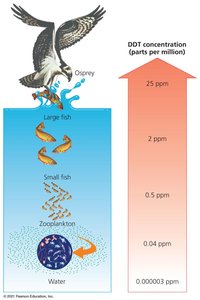
Certain toxins can accumulate in organisms and become more concentrated at higher trophic levels in food chains.
Bioaccumulation: The buildup of toxins in an organism's tissues over time.
Biomagnification: The increase in toxin concentration as it moves up the food chain, affecting top predators most severely.
Examples: DDT, PCBs, and mercury are well-known for biomagnification effects.
Studying the Effects of Toxins
Approaches to Toxicology Research
Scientists use several methods to study the effects of toxins on organisms and ecosystems.
Field and laboratory studies: Observing wildlife and conducting controlled experiments with lab animals.
Case histories: Documenting effects in exposed individuals (not always empirical).
Epidemiological studies: Tracking health outcomes in populations with varying exposures.
Dose-response analysis: Determining how different doses of a toxin affect organisms.
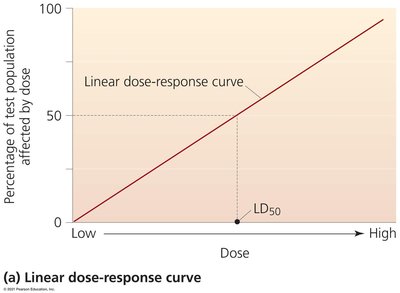
LD50 (Lethal Dose 50%): The dose at which 50% of the test population is killed.
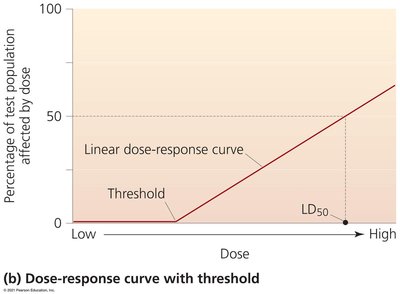
Threshold dose: The lowest dose at which a response is observed.
Synergistic effects: When combined toxins produce a greater effect than the sum of their individual effects.
Dose-Response Relationships
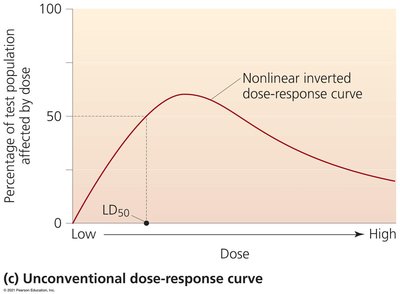
Dose-response curves illustrate how the magnitude of exposure to a toxin relates to the proportion of the population affected. Different substances may exhibit different types of dose-response relationships.
Linear dose-response: The effect increases proportionally with dose.
Threshold dose-response: No effect is observed until a certain threshold is reached.
Nonlinear (inverted) dose-response: The effect increases up to a point, then decreases at higher doses.
Curve Type | Description | Example |
|---|---|---|
Linear | Effect increases steadily with dose | Many acute toxins |
Threshold | No effect below threshold; effect increases above it | Some chronic toxins |
Nonlinear (inverted) | Effect peaks at intermediate dose, decreases at high dose | Hormesis, some endocrine disruptors |
Infectious Diseases and Environmental Health
Role of Infectious Diseases
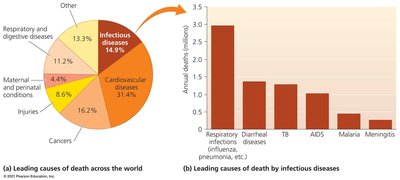
Infectious diseases are a major biological hazard and a leading cause of death worldwide. They are caused by pathogens such as bacteria, viruses, and parasites, and their spread can be influenced by environmental factors.
Leading causes of death: Cardiovascular diseases, infectious diseases, respiratory and digestive diseases, cancers, injuries, and maternal/perinatal conditions.
Major infectious diseases: Respiratory infections, diarrheal diseases, tuberculosis (TB), AIDS, malaria, and meningitis.
Additional info: Environmental changes, such as habitat alteration and climate change, can influence the emergence and spread of infectious diseases by affecting vectors and host populations.
