 Back
Enzymes and Cellular Respiration: Key Concepts and Pathways
Study Guide - Smart Notes
 Tailored notes based on your materials, expanded with key definitions, examples, and context.
Enzymes: Catalysts of Biological Reactions
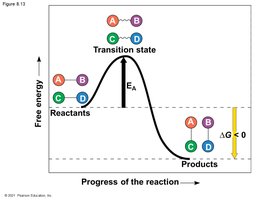
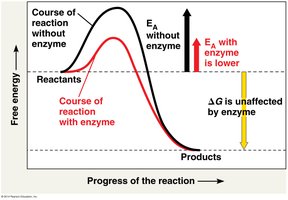
Activation Energy and Reaction Progress
Enzymes are catalytic proteins that accelerate chemical reactions by lowering the activation energy (EA) barrier. They do not alter the free energy change (ΔG) of the reaction, but make it proceed faster by stabilizing the transition state.
Activation Energy (EA): The minimum energy required to initiate a chemical reaction.
Transition State: The high-energy intermediate state during a reaction.
ΔG: The change in free energy between reactants and products; unaffected by enzymes.
Enzyme-Substrate Complex and Specificity
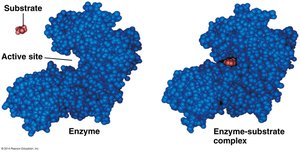
Enzymes act on specific substrates, forming an enzyme-substrate complex. The active site of the enzyme binds the substrate, often with high specificity. The induced fit model describes how substrate binding enhances the enzyme's catalytic ability.
Active Site: Region of the enzyme where substrate binds.
Induced Fit: Binding of substrate causes conformational change in enzyme, improving catalysis.
Enzyme-Substrate Complex: Temporary association between enzyme and substrate during reaction.
Cellular Respiration and Fermentation
Overview of Energy Conversion
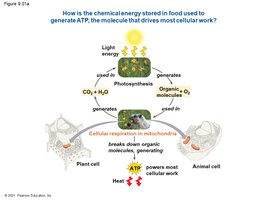
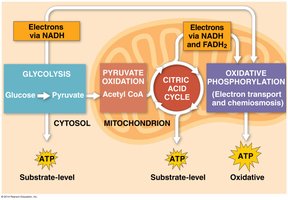
Cellular respiration is the process by which cells convert food energy into ATP, the molecule that powers most cellular work. It involves a series of metabolic pathways, including glycolysis, the citric acid cycle, and oxidative phosphorylation.
ATP: Adenosine triphosphate, the main energy currency of the cell.
Food Energy: Chemical energy stored in organic molecules.
Aerobic Respiration vs. Fermentation
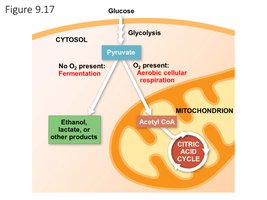
Cells can extract energy from organic molecules via aerobic respiration (with oxygen) or fermentation (without oxygen). Aerobic respiration fully oxidizes glucose, while fermentation only partially breaks down sugars, producing alcohols or acids.
Aerobic Respiration: Requires oxygen; produces CO2, H2O, and ATP.
Fermentation: Occurs in absence of oxygen; produces ethanol, lactate, or other products.
Catabolic Pathways: Break down macromolecules for energy.
Oxidation-Reduction (Redox) Reactions
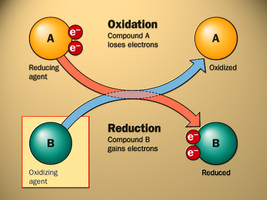
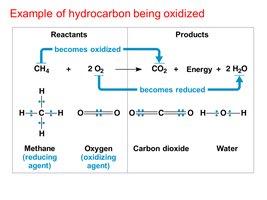
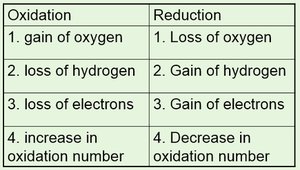
Cellular respiration involves electron transfer through oxidation-reduction reactions. The reducing agent loses electrons and is oxidized, while the oxidizing agent gains electrons and is reduced.
Oxidation: Loss of electrons (or hydrogen), gain of oxygen.
Reduction: Gain of electrons (or hydrogen), loss of oxygen.
Oxidizing Agent: Accepts electrons, becomes reduced.
Reducing Agent: Donates electrons, becomes oxidized.
Mnemonic and Comparison Table
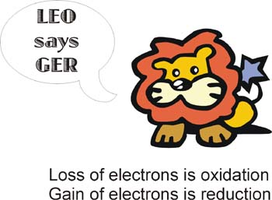
Mnemonic: "LEO says GER" (Loss of Electrons is Oxidation, Gain of Electrons is Reduction).
Oxidation | Reduction |
|---|---|
1. Gain of oxygen | 1. Loss of oxygen |
2. Loss of hydrogen | 2. Gain of hydrogen |
3. Loss of electrons | 3. Gain of electrons |
4. Increase in oxidation number | 4. Decrease in oxidation number |
Electron Carriers and Coenzymes
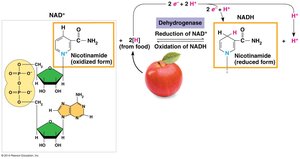
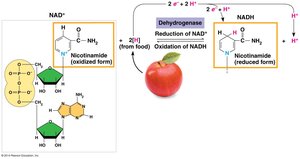
Electron carriers such as NAD+ (nicotinamide adenine dinucleotide) play a crucial role in cellular respiration. NAD+ cycles between oxidized and reduced forms, shuttling electrons between metabolic pathways.
NAD+: Oxidized form; accepts electrons to become NADH.
NADH: Reduced form; donates electrons to the electron transport chain.
Coenzyme: Non-protein molecule that assists enzyme function.

ATP Production: Substrate-Level and Oxidative Phosphorylation
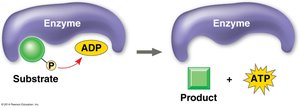
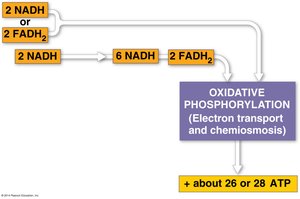
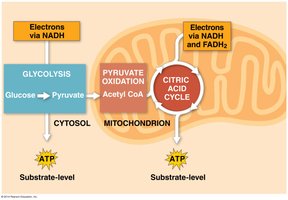
ATP is produced in cellular respiration by two mechanisms: substrate-level phosphorylation and oxidative phosphorylation. Substrate-level phosphorylation generates ATP directly in glycolysis and the citric acid cycle, while oxidative phosphorylation produces most ATP via the electron transport chain and chemiosmosis.
Substrate-Level Phosphorylation: Direct transfer of phosphate group to ADP.
Oxidative Phosphorylation: ATP synthesis powered by redox reactions and H+ gradient.
Main Stages of Cellular Respiration
Glycolysis
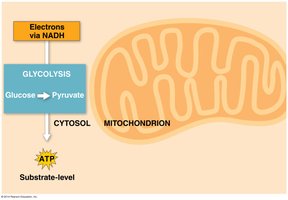
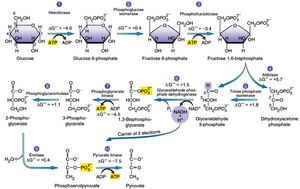
Glycolysis occurs in the cytosol and breaks down glucose into two molecules of pyruvate, generating ATP and NADH. It does not require oxygen and is the first step in both aerobic and anaerobic pathways.
Location: Cytosol
Inputs: Glucose
Outputs: 2 Pyruvate, 2 ATP, 2 NADH
Pyruvate Oxidation and Citric Acid Cycle
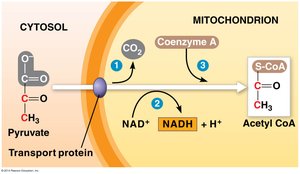
Pyruvate oxidation connects glycolysis to the citric acid cycle. Pyruvate is transported into the mitochondrion, converted to acetyl CoA, and enters the citric acid cycle. The cycle decomposes acetyl groups, producing NADH and FADH2 for the electron transport chain.
Pyruvate Oxidation: Produces acetyl CoA, NADH, and CO2.
Citric Acid Cycle: Completes glucose oxidation; generates NADH, FADH2, ATP, and CO2.
Electron Transport Chain and Chemiosmosis
The electron transport chain consists of four multi-protein complexes in the inner mitochondrial membrane. NADH and FADH2 donate electrons, which are transferred through the chain, ultimately reducing oxygen to water. Electron transfer drives H+ pumping, creating a gradient used by ATP synthase to produce ATP (chemiosmosis).
Location: Inner mitochondrial membrane
Function: Couples redox reactions to ATP synthesis
Proton-Motive Force: Energy stored in H+ gradient
Final ATP Accounting
Most ATP is produced during oxidative phosphorylation. The total yield from one glucose molecule is about 30-32 ATP, depending on cell conditions.
Connecting Metabolic Pathways
Proteins, carbohydrates, and fats can all be metabolized for energy, converging on the pathways of cellular respiration.
