Back
Enzymes and Energy in Biological Systems
Study Guide - Smart Notes
 Tailored notes based on your materials, expanded with key definitions, examples, and context.
Enzymes
Structure and Function of Enzymes
Enzymes are specialized proteins that act as biological catalysts, speeding up chemical reactions in living organisms. Their unique three-dimensional (3D/4D) structure allows them to bind specific molecules, called substrates, at a region known as the active site. This precise fit is often described as a "lock and key" model.
Enzyme Structure: Made of amino acids folded into a specific shape.
Active Site: The region where the substrate binds and the reaction occurs.
Catalysis: Enzymes lower the activation energy required for reactions, making them proceed faster.
Environmental Sensitivity: Enzyme activity is affected by pH, temperature, and other conditions. Extreme changes can denature (unfold) the enzyme, altering the active site and stopping function.
Naming: Most enzymes are named by adding -ase to their substrate (e.g., lactase breaks down lactose).
Mechanism of Enzyme Action
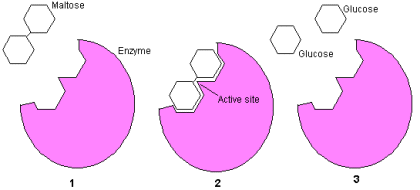
Enzymes work by binding substrates at their active site, facilitating the conversion to products, and then releasing the products. The enzyme itself is not consumed and can be reused.
Substrate Binding: Substrate fits into the enzyme's active site.
Reaction: The enzyme catalyzes the transformation of substrate to product.
Product Release: Products are released, and the enzyme is free to catalyze another reaction.
Enzyme Kinetics and Activation Energy
Enzymes lower the activation energy (the energy required to start a reaction), making reactions more efficient. This is crucial for sustaining life at biological temperatures.
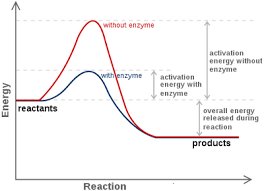
Activation Energy: The minimum energy needed for a reaction to occur.
Effect of Enzymes: Enzymes provide an alternative pathway with lower activation energy.
Examples of Human Enzymes
Humans produce a variety of enzymes, each specific to a particular substrate:
Amylase: Digests carbohydrates in saliva and the gastrointestinal tract.
Lipase: Breaks down lipids in the digestive system.
Catalase: Decomposes toxic hydrogen peroxide in cells.
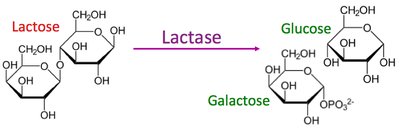
Lactase: Digests lactose (milk sugar) into glucose and galactose.
Energy in Biological Systems
Forms and Conservation of Energy
Energy is fundamental to all biological processes. It cannot be created or destroyed, only transformed from one form to another (the First Law of Thermodynamics).
Kinetic Energy: Energy of motion.
Potential Energy: Stored energy, such as in chemical bonds.
Chemical, Solar, Thermal, Electrical Energy: Various forms used and produced by cells.
ATP (Adenosine Triphosphate): The main energy currency of the cell.
Structure and Function of ATP
ATP consists of three main parts: a ribose sugar, an adenine base, and three phosphate groups. The bonds between the phosphate groups store significant potential energy.
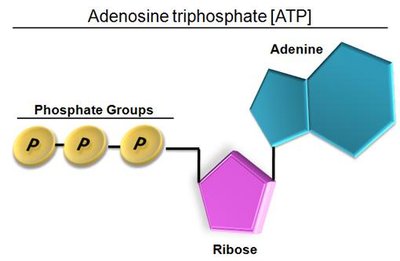
Energy Storage: Energy is stored in the high-energy bonds between phosphate groups.
Energy Release: Breaking the bond between the second and third phosphate releases energy for cellular work.
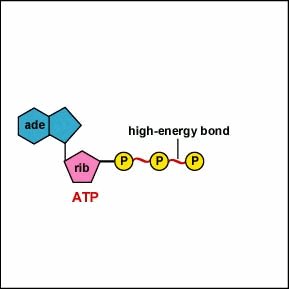
ATP Cycle: Catabolic and Anabolic Reactions
Cells constantly cycle ATP to meet energy demands. Catabolic reactions break down molecules and release energy, while anabolic reactions build molecules and require energy input.
ATP Hydrolysis:
ATP Synthesis:
ATPase: Enzyme that catalyzes ATP breakdown.
ATP Synthase: Enzyme that synthesizes ATP from ADP and phosphate.
Exergonic Reaction: Releases energy (e.g., ATP hydrolysis). Endergonic Reaction: Requires energy input (e.g., ATP synthesis).
Redox Reactions (Oxidation-Reduction)
Definition and Importance
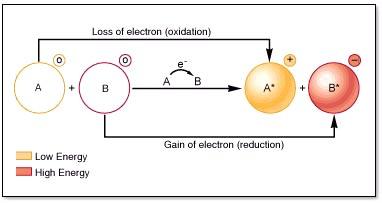
Redox reactions involve the transfer of electrons between molecules, which is essential for energy transfer in cells (e.g., cellular respiration, photosynthesis).
Oxidation: Loss of electrons from a molecule or atom.
Reduction: Gain of electrons by a molecule or atom.
These reactions always occur together: when one molecule is oxidized, another is reduced.
Electrons carry energy, so redox reactions are a way to transfer energy within cells.