 Back
Enzymes and Metabolism: Bioenergetics and Regulation of Cellular Reactions
Study Guide - Smart Notes
 Tailored notes based on your materials, expanded with key definitions, examples, and context.
Energy and Life
Bioenergetics and Cellular Work
All living cells require energy to perform work, and the study of how energy flows through living organisms is called bioenergetics. Life depends on a series of chemical reactions that transform energy and matter within cells.
Energy is the capacity to do work.
Cells use energy to drive processes such as growth, movement, and reproduction.
Metabolism and Metabolic Pathways
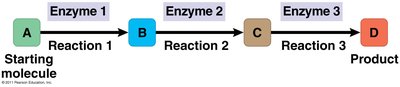
Metabolism is the sum of all chemical reactions within an organism. These reactions are organized into metabolic pathways, which are sequences of enzymatically catalyzed steps.
Catabolic pathways: Break down molecules, releasing energy (e.g., hydrolysis of polymers).
Anabolic pathways: Build complex molecules from simpler ones, consuming energy (e.g., synthesis of proteins).
Chemical Energy and Thermodynamics
Kinetic and Potential Energy
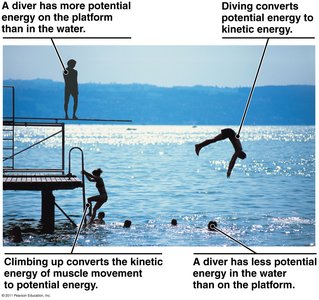
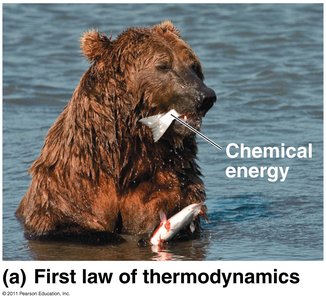
Energy exists in different forms, including kinetic energy (energy of motion) and potential energy (stored energy). Chemical energy is a form of potential energy stored in the bonds of molecules.
Laws of Thermodynamics
Thermodynamics is the study of energy transformations. Two fundamental laws govern energy in biological systems:
First Law: Energy cannot be created or destroyed, only transformed (conservation of energy).
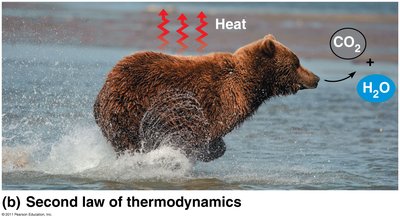
Second Law: Every energy transformation increases the disorder (entropy) of the universe. Some energy is always lost as heat.
Free Energy and Spontaneous Reactions
Free-Energy Change (ΔG)
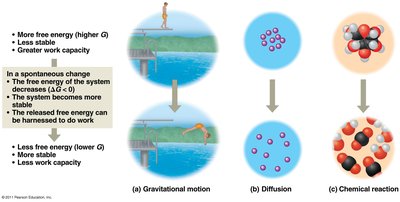
The change in free energy (ΔG) determines whether a chemical reaction will occur spontaneously. A negative ΔG indicates a spontaneous process, which is associated with a decrease in energy or an increase in entropy.
Spontaneous reactions: ΔG < 0
Nonspontaneous reactions: ΔG > 0
Exergonic and Endergonic Reactions
Reactions can be classified based on their energy changes:
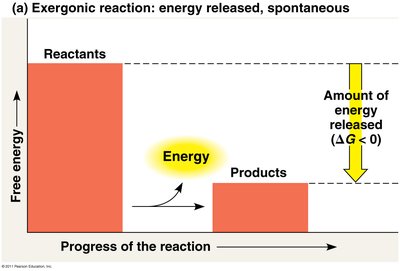
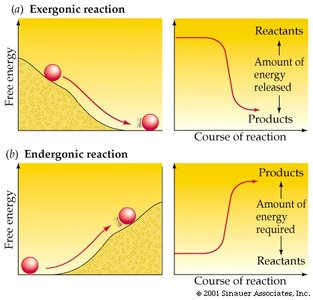
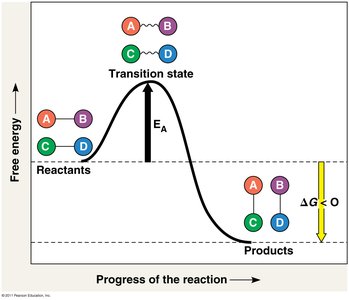
Exergonic reactions: Release energy; products have lower free energy than reactants (ΔG < 0).
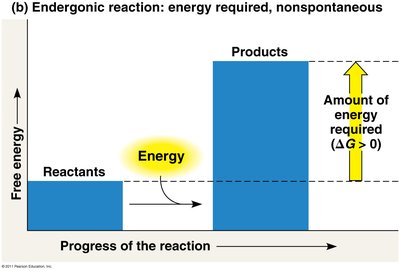
Endergonic reactions: Absorb energy; products have higher free energy than reactants (ΔG > 0).
Equilibrium and Open Systems
Biological Equilibrium
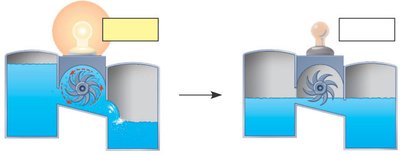
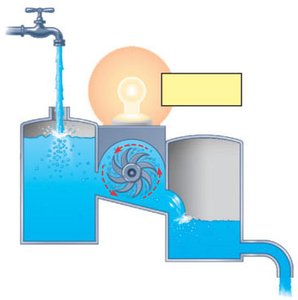
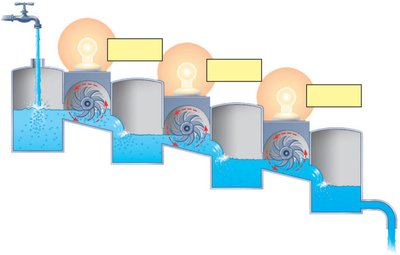
Cells are open systems that exchange energy and matter with their surroundings. If a cell reaches equilibrium, it can no longer do work and will die. Metabolic pathways keep cells away from equilibrium by constantly using and replenishing reactants and products.
Enzymes: Biological Catalysts
Activation Energy and Catalysis
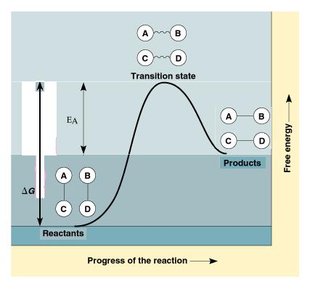
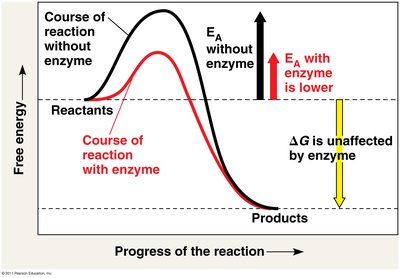
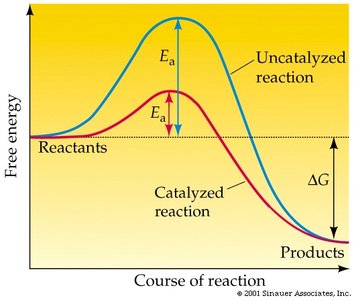
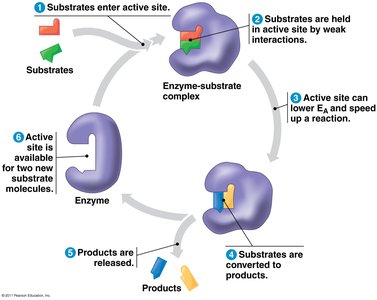
Even spontaneous reactions require an initial input of energy, called activation energy (E_A), to get started. Enzymes are biological catalysts that lower the activation energy, allowing reactions to proceed more rapidly without being consumed in the process.
Enzyme Structure and Function
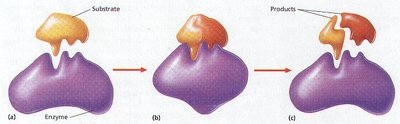
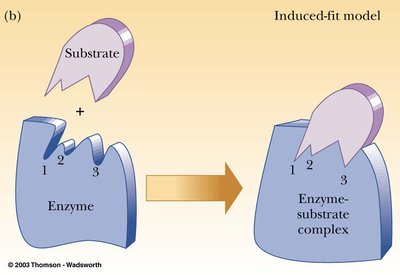
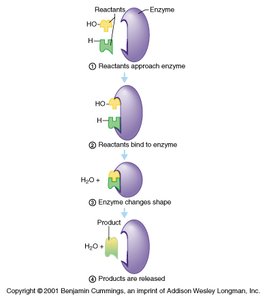
Enzymes are highly specific proteins that bind to reactants called substrates at their active site. The enzyme-substrate complex facilitates the conversion of substrates into products.
Specificity is often described by the "lock and key" or "induced fit" models.
How Enzymes Lower Activation Energy
Enzymes lower activation energy by:
Orienting substrates correctly
Straining substrate bonds
Providing a favorable microenvironment
Forming temporary covalent bonds with substrates
Factors Affecting Enzyme Activity
Enzyme and Substrate Concentration
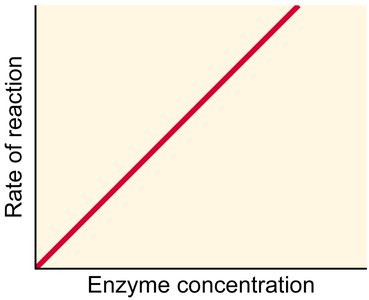
The rate of an enzyme-catalyzed reaction depends on the concentrations of enzyme and substrate:
Increasing enzyme concentration increases reaction rate (if substrate is not limiting).
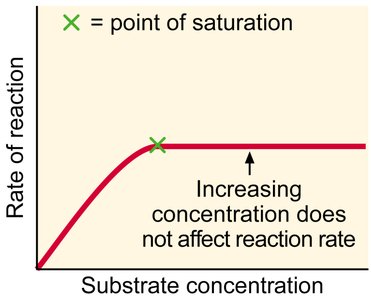
Increasing substrate concentration increases rate until the enzyme is saturated.
Temperature and pH
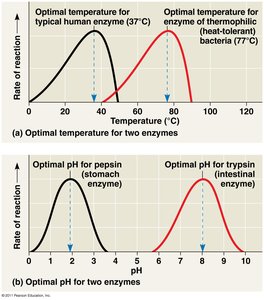
Each enzyme has an optimal temperature and pH at which it functions most efficiently. Deviations from these conditions can reduce enzyme activity or denature the enzyme.
Cofactors and Coenzymes
Some enzymes require non-protein helpers called cofactors to function. Coenzymes are organic cofactors, often derived from vitamins (e.g., Acetyl CoA).
Enzyme Inhibition and Regulation
Types of Inhibition
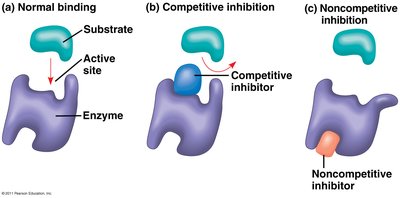
Competitive inhibitors: Bind to the active site, blocking substrate binding.
Noncompetitive inhibitors: Bind elsewhere on the enzyme, changing its shape and reducing activity.
Inhibition can be reversible or irreversible.
Allosteric Regulation
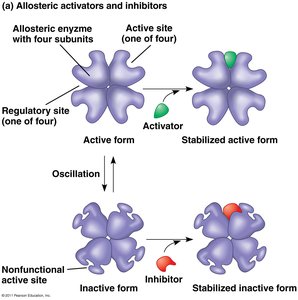
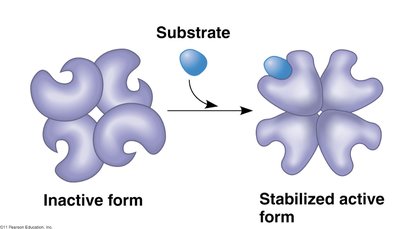
Allosteric regulation involves the binding of regulatory molecules at sites other than the active site, causing conformational changes that affect enzyme activity. This can result in activation or inhibition.
Cooperativity: Binding of one substrate molecule increases the activity of other active sites (e.g., hemoglobin).
Feedback Inhibition
In feedback inhibition, the end product of a metabolic pathway inhibits an enzyme involved earlier in the pathway, preventing overproduction of the product and conserving resources.
Practice Questions
Which of the following is the most abundant carbon-containing compound in the atmosphere of the Earth? Answer: b) Carbon dioxide
A feature of organic compounds NOT found in inorganic compounds is the presence of: Answer: c) carbon atoms covalently bonded to each other
The movement of water to the top of a 15-meter tree is best explained by: Answer: a) transpiration and cohesion
Which of the following can be used to determine the rate of enzyme-catalyzed reactions? Answer: b) rate of disappearance of the substrate
Additional info: This guide covers the core concepts of energy, metabolism, enzyme function, and regulation, which are foundational for understanding cellular processes in biology.
