 Back
Epigenetics and Gene Regulation: Mechanisms and Behavioral Consequences
Study Guide - Smart Notes
 Tailored notes based on your materials, expanded with key definitions, examples, and context.
Epigenetics and Gene Regulation
Introduction to Epigenetics
Epigenetics refers to heritable changes in gene expression that do not involve alterations to the underlying DNA sequence. These changes are often mediated by chemical modifications to DNA or histone proteins, affecting how genes are turned on or off. - Key Point 1: Epigenetic mechanisms include DNA methylation, histone modification, and non-coding RNA regulation. - Key Point 2: Environmental factors such as stress, nutrition, and toxins can influence epigenetic patterns, leading to changes in gene expression. - Example: Major Depressive Disorder (MDD) is associated with epigenetic remodeling of DNA, including hypermethylation of genes like BDNF and SLC6A4. 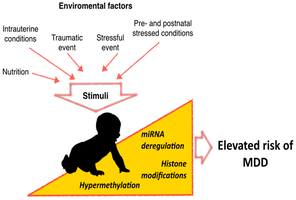
Environmental Effects on Epigenetics
Environmental signals can modify gene expression through epigenetic mechanisms, impacting behavior and health. - Key Point 1: Stress, nutrition, exercise, and toxins can trigger neuronal signals that alter gene regulatory factors. - Key Point 2: Epigenetic markers such as methyl groups can upregulate or downregulate gene expression, affecting cellular function and behavior. - Example: Maternal and paternal environmental exposures can result in epigenetic changes passed to offspring.
Epigenetics and Behavior: Animal Models
Animal studies, particularly in rats, have demonstrated the impact of early maternal care on adult phenotypes through epigenetic modifications. - Key Point 1: High levels of maternal licking and grooming (HG) in rat pups lead to normal glucocorticoid receptor levels and resistance to acute stress. - Key Point 2: Low levels of maternal care (LG) result in reduced glucocorticoid receptor levels and heightened stress responses. - Example: These epigenetic patterns are inherited and influence the HPA feedback loop, regulating stress hormone responses. 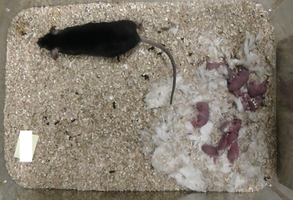

Glucocorticoid Receptors and Stress Regulation
Glucocorticoid receptors play a crucial role in regulating the body's response to stress via the HPA axis. - Key Point 1: Glucocorticoid receptors bind stress hormones like cortisol and upregulate anti-inflammatory genes through chromosome remodeling. - Key Point 2: Epigenetic modifications in the promoter region of the glucocorticoid receptor gene can alter receptor levels and stress sensitivity. - Example: Increased methylation in the promoter region is observed in post-mortem brains of suicide victims, indicating a link between epigenetic regulation and mental health. 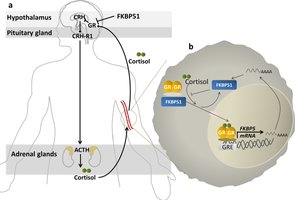
Reversibility and Clinical Implications of Epigenetic Changes
Epigenetic modifications are more vulnerable to environmental stress than genetic changes, but they are also reversible. - Key Point 1: Failures in epigenetic mechanisms can cause acquired disorders, but epigenomic alterations can potentially be restored. - Key Point 2: Drugs targeting epigenetic enzymes are being tested in human clinical trials, offering hope for treating epigenetically influenced diseases.
Gene Regulation Mechanisms
Gene regulation can occur through several mechanisms, including chromosome remodeling, activators and repressors, and alternative splicing. - Key Point 1: Chromosome remodeling alters the accessibility of genes for transcription. - Key Point 2: Alternative splicing allows a single gene to produce multiple protein products by varying the inclusion of exons and introns in mRNA. - Example: The fruit fly Drosophila melanogaster exhibits complex behavior due to alternative splicing of the SCRIBBLE gene, resulting in sex-specific proteins and behaviors.
Alternative Splicing Table
Splicing Pattern | Protein Product |
|---|---|
All exons retained | Protein 1 |
Orange exon excluded | Protein 2 |
Intron included | Protein 3 |
Missing exons | Protein 4, 5 |
Alternative splicing within exons | Protein 6, 7 |
Evolutionary Consequences of Gene Regulation
Small changes in gene regulation, rather than changes in gene sequence, have played a major role in evolution. - Key Point 1: Humans and chimps share 98% DNA sequence homology, but differences in gene regulation, such as methylation patterns, account for species-specific traits. - Key Point 2: The promoter region of the BRCA1 gene is more methylated in humans than in chimps, illustrating regulatory divergence.
Summary Table: Epigenetic Mechanisms and Effects
Mechanism | Effect | Example |
|---|---|---|
DNA Methylation | Gene silencing | Hypermethylation of BDNF in MDD |
Histone Modification | Altered chromatin structure | Histone acetylation increases gene expression |
Alternative Splicing | Multiple protein products | SCRIBBLE gene in fruit flies |
Conclusion
Epigenetic regulation is a dynamic and reversible process that integrates environmental signals to modulate gene expression, impacting development, behavior, and evolution. Understanding these mechanisms provides insight into complex traits and potential therapeutic targets for acquired disorders. Additional info: Epigenetic modifications are especially critical during early development, and their reversibility offers hope for intervention in diseases with an epigenetic basis.
