 Back
Essential Concepts in Biology: Cells, Chemistry, Biomolecules, and Cellular Processes
Study Guide - Smart Notes
 Tailored notes based on your materials, expanded with key definitions, examples, and context.
Introduction to Biology
Characteristics of Life
Biology is the study of living organisms, all of which share five fundamental characteristics: cellular organization, replication, information processing, energy utilization, and evolution. These traits distinguish living things from non-living matter.
Cells: All organisms are composed of membrane-bound cells, which are highly organized compartments separated from their environment.
Replication: All organisms are capable of reproduction, ensuring the continuation of their species.
Information: Hereditary information is encoded in genes and processed alongside environmental information.
Energy: Organisms acquire and use energy to maintain life processes.
Evolution: Populations of organisms evolve over time, adapting to their environments.
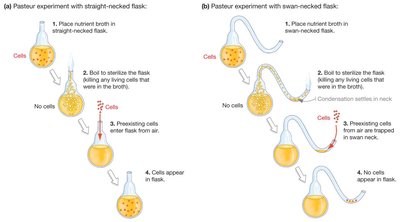
Cell Theory: All organisms are made up of cells, and all cells arise from preexisting cells. This was demonstrated experimentally by scientists such as Robert Hooke and Anton van Leeuwenhoek.
The Central Dogma of Molecular Biology
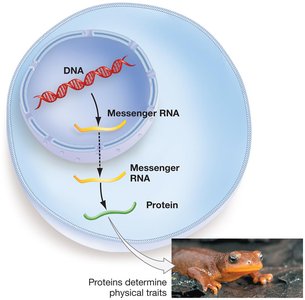
The central dogma describes the flow of genetic information within a cell: DNA is transcribed into messenger RNA, which is then translated into protein. Proteins determine the physical traits of organisms.
DNA: Contains hereditary information.
Messenger RNA: Carries genetic instructions from DNA to the ribosome.
Protein: Synthesized from RNA, proteins perform cellular functions and determine traits.
Chemistry
Basic Atomic Structure
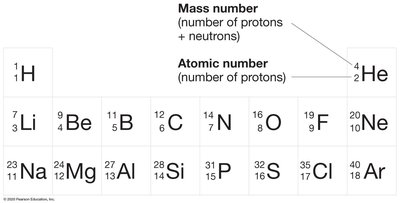
Atoms are the fundamental units of matter, consisting of a nucleus (protons and neutrons) surrounded by orbiting electrons. The atomic number is the number of protons, and the mass number is the sum of protons and neutrons.
Protons: Positive charge (+1)
Neutrons: Neutral charge
Electrons: Negative charge (-1)
Isotopes: Atoms of the same element with different numbers of neutrons, resulting in different masses.
Chemical Bonds
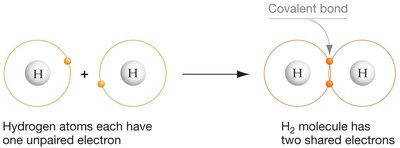
Atoms form chemical bonds to achieve stable electron configurations. Covalent bonds involve the sharing of electrons between atoms, forming molecules.
Covalent Bonds: Formed when unpaired valence electrons are shared by two atoms.
Molecule: Connected atoms held together by covalent bonds.
Types of Chemical Bonds
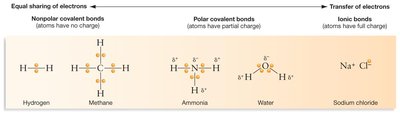
Electrons in covalent bonds are not always shared equally. The degree of sharing depends on electronegativity, leading to nonpolar, polar, or ionic bonds.
Nonpolar Covalent Bonds: Electrons are shared equally (e.g., H2, CH4).
Polar Covalent Bonds: Electrons are shared unequally, resulting in partial charges (e.g., H2O).
Ionic Bonds: Electrons are transferred, resulting in full charges (e.g., NaCl).
Water
Properties of Water
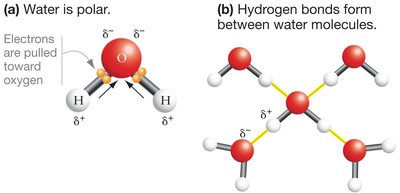
Water is a polar molecule, meaning its electrons are pulled toward the oxygen atom, creating partial charges. Water molecules form hydrogen bonds with each other, contributing to its unique properties.
Polarity: Oxygen is more electronegative than hydrogen, resulting in a partial negative charge on oxygen and partial positive charges on hydrogen.
Hydrogen Bonds: Weak interactions between the partial charges of water molecules.
Biomolecules
Amino Acids and Proteins
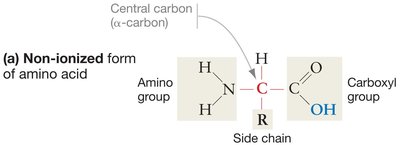
Amino acids are the building blocks of proteins. Each amino acid has a core structure consisting of an amino group, a carboxyl group, a central carbon, and a unique side chain (R-group).
R-group: Determines the properties and reactivity of each amino acid.
Functional Groups: Some side chains contain functional groups that participate in chemical reactions.
Protein Structure
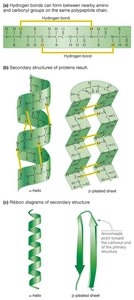
Proteins have four levels of structure: primary, secondary, tertiary, and quaternary. Secondary structure is formed by hydrogen bonds between amino acids, resulting in α-helices and β-pleated sheets.
Secondary Structure: Hydrogen bonds between carbonyl and amino groups.
α-helix: Spiral structure stabilized by hydrogen bonds.
β-pleated sheet: Sheet-like structure stabilized by hydrogen bonds.
Tertiary Structure
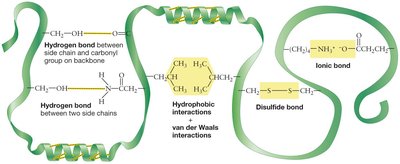
Tertiary structure results from interactions between R-groups, including hydrogen bonding, hydrophobic interactions, van der Waals forces, covalent bonding (disulfide bonds), and ionic bonding.
Hydrogen Bonding: Between polar side chains and partial charges.
Hydrophobic Interactions: Water forces hydrophobic side chains together.
van der Waals Interactions: Weak electrical interactions between hydrophobic side chains.
Covalent Bonding: Disulfide bonds between sulfhydryl groups.
Ionic Bonding: Between groups with full and opposing charges.
Carbohydrates
Structure and Function
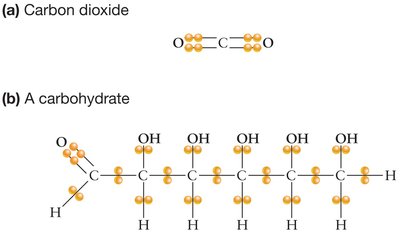
Carbohydrates have the molecular formula (CnH2O)n and contain carbonyl, hydroxyl, and many carbon-hydrogen bonds. They serve as energy storage molecules and structural components.
Energy Storage: Carbohydrates store more energy than CO2 due to weaker C–H and C–C bonds with higher potential energy.
Example: Glucose is a primary energy source in cells.
Lipids and Membranes
Lipid Structure and Function
Lipids are carbon-containing compounds insoluble in water due to their high proportion of nonpolar C–H and C–C bonds. Hydrocarbons are nonpolar molecules containing only carbon and hydrogen.
Fatty Acids: Hydrocarbon chains bonded to a carboxyl group; can be saturated or unsaturated.
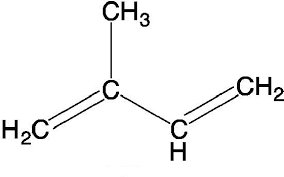
Isoprenoids: Hydrocarbon chains functioning as pigments, scents, vitamins, and hormone precursors.
Fats and Phospholipids
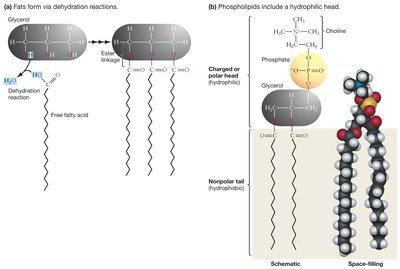
Fats are composed of three fatty acids linked to glycerol, forming triacylglycerols. Phospholipids include a hydrophilic head and hydrophobic tails, forming the basis of cell membranes.
Energy Storage: Fats store twice as much chemical energy as carbohydrates.
Formation: Fats form via dehydration reactions, creating ester linkages.
Phospholipids: Amphipathic molecules with both hydrophilic and hydrophobic regions.
Steroids
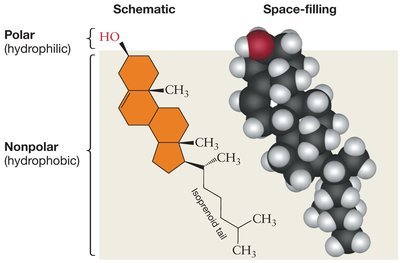
Steroids are defined by a common structure of four fused rings. They are important components of cell membranes and precursors to hormones.
Phospholipid Bilayers
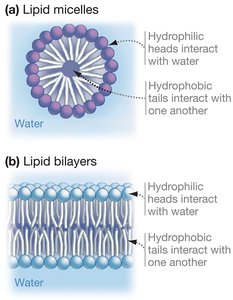
Phospholipids spontaneously form bilayers in water, with hydrophilic heads facing outward and hydrophobic tails inward. This structure is fundamental to cell membranes.
Micelles: Spherical aggregates formed by free fatty acids.
Lipid Bilayers: Paired sheets formed by phospholipids.
Membrane Permeability
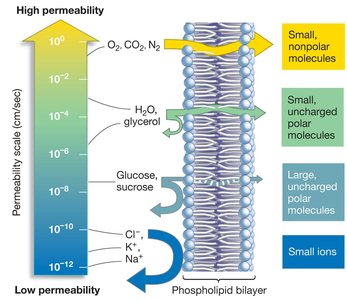
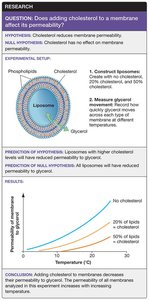
Lipid bilayers show selective permeability, allowing certain molecules to pass while blocking others. Permeability depends on lipid composition and the presence of cholesterol.
High Permeability: Small, nonpolar molecules (O2, CO2, N2).
Low Permeability: Large, uncharged polar molecules and ions.
Fluid-Mosaic Model of Membrane Structure
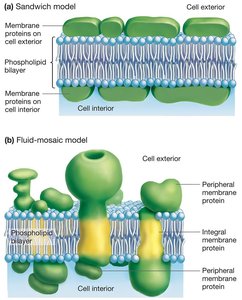
The fluid-mosaic model describes membranes as dynamic mosaics of phospholipids and proteins. Integral membrane proteins span the membrane, while peripheral proteins bind to membrane lipids without passing through.
Integral Proteins: Span the membrane, facing both interior and exterior surfaces.
Peripheral Proteins: Bind to membrane lipids on either side of the membrane.
Cell Components
Eukaryotic Cell Structure
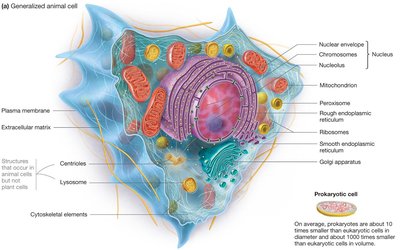
Eukaryotic cells contain membrane-bound organelles, including the nucleus, mitochondria, endoplasmic reticulum, Golgi apparatus, and cytoskeleton. Prokaryotic cells lack these organelles and are generally smaller.
Cytoskeletal Filaments
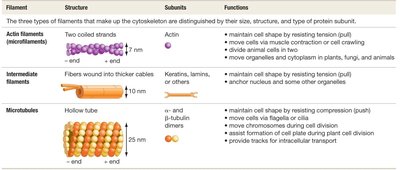
The cytoskeleton is composed of actin filaments, intermediate filaments, and microtubules, each with distinct structures and functions.
Filament | Structure | Subunits | Functions |
|---|---|---|---|
Actin filaments (microfilaments) | Two coiled strands | Actin | Maintain cell shape, move cells, divide animal cells, move organelles |
Intermediate filaments | Fibers wound into thicker cables | Keratin, lamin, others | Maintain cell shape, anchor nucleus and organelles |
Microtubules | Hollow tube | α- and β-tubulin dimers | Maintain cell shape, move cells, move chromosomes, assist cell division, provide tracks for transport |
Energy and Metabolism
Cellular Respiration
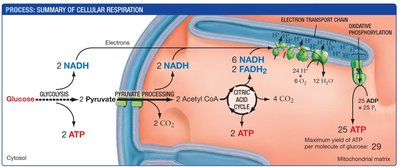
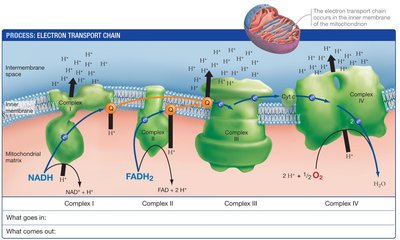
Cellular respiration is the process by which cells oxidize glucose to produce ATP. It involves glycolysis, pyruvate processing, the citric acid cycle, and the electron transport chain.
Overall Reaction:
ATP Yield: Maximum yield per glucose molecule is 29 ATP.
Fermentation
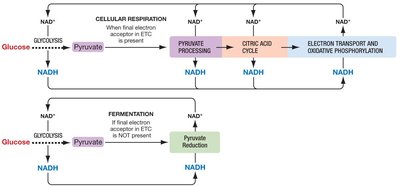
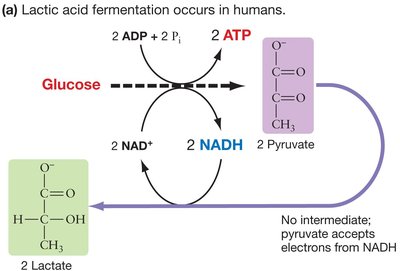
Fermentation is a metabolic pathway that regenerates NAD+ from NADH, allowing glycolysis to continue in the absence of oxygen. It serves as an emergency backup for ATP production.
Photosynthesis
Overview of Photosynthesis
Photosynthesis converts sunlight, carbon dioxide, and water into carbohydrates and oxygen. The process is the opposite of cellular respiration.
Overall Reaction:
Light Reactions and Electron Transport
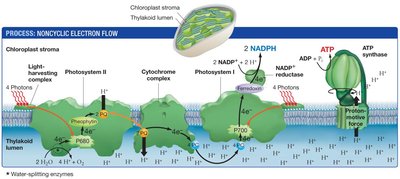
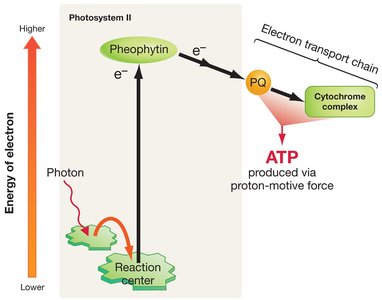
Electrons are passed from water to NADP+ in a linear pathway called noncyclic electron flow. Photosystem II feeds excited electrons to an electron transport chain, generating ATP via proton-motive force.
Calvin Cycle
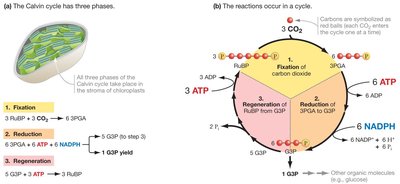
The Calvin cycle fixes and reduces carbon in CO2 and regenerates RuBP. The enzyme Rubisco catalyzes CO2 fixation and is the most abundant enzyme in photosynthetic organisms.
Cell Division
Cell Cycle and Checkpoints
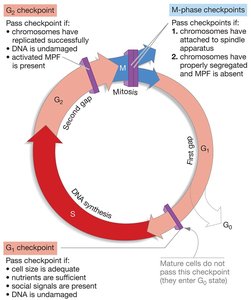
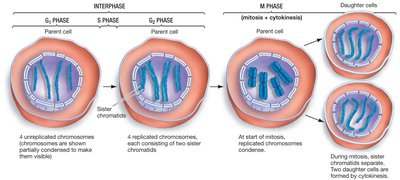
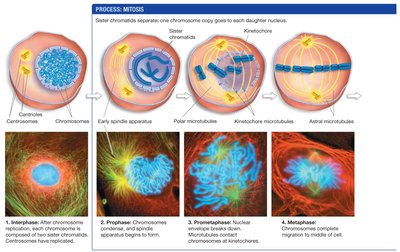
The cell cycle consists of interphase (G1, S, G2) and M phase (mitosis and cytokinesis). Four cell-cycle checkpoints ensure proper division and DNA integrity.
Mitosis and Cytokinesis
M phase includes mitosis (division of replicated chromosomes) and cytokinesis (division of cytoplasm), resulting in two daughter cells with identical genetic material.
Meiosis
Phases of Meiosis
Meiosis consists of two divisions, resulting in daughter cells with half the chromosome number of the parent cell. Meiosis I produces haploid cells with replicated chromosomes, and genetic variation arises from crossing over and independent alignment.
Comparison of Mitosis and Meiosis
Mitosis and meiosis differ in the number of cell divisions, chromosome number in daughter cells, DNA content, synapsis of homologs, spindle fiber attachment, chiasmata formation, chromosome makeup, and their roles in the organism life cycle.
Feature | Mitosis | Meiosis |
|---|---|---|
Number of cell divisions | One | Two |
Chromosome number in daughter cells | Same as parent | Half of parent |
DNA content in daughter cells | Reduced to 1/2 | Reduced to 1/4 |
Synapsis of homologs | No | Yes |
Spindle fiber attachment | Individual chromatids attach to different poles | Both chromatids attach to same pole |
Number of chiasmata | None | One or more per pair |
Chromosome makeup in daughter cells | Identical | Different combinations |
Role in organism life cycle | Growth, repair, asexual reproduction | Gamete production |
