 Back
Eukaryotic Cell Structure & Cell Analogy Assignment Guidance
Study Guide - Smart Notes
 Tailored notes based on your materials, expanded with key definitions, examples, and context.
Q1. What are the essential parts of a eukaryotic cell, and what are their functions?
Background
Topic: Eukaryotic Cell Structure
This question reviews the major organelles found in eukaryotic cells and their biological functions. Understanding these components is foundational for General Biology, as it helps explain how cells operate and maintain life.
Key Terms and Functions:
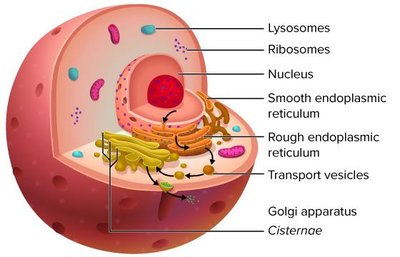
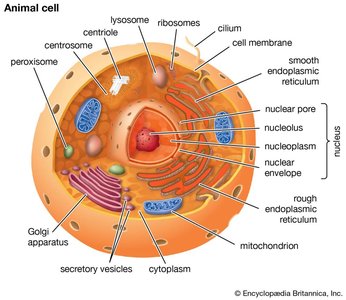
Nucleus: The control center of the cell; stores DNA and directs cell activities.
Mitochondria: The powerhouse; generates ATP energy for cellular processes.
Plasma Membrane: The boundary; regulates what enters and exits the cell.
Ribosomes: Protein factories; build proteins from genetic instructions.
Rough Endoplasmic Reticulum (ER): Processes and transports newly made proteins; studded with ribosomes.
Smooth Endoplasmic Reticulum (ER): Synthesizes lipids and detoxifies substances; lacks ribosomes.
Golgi Apparatus: Packages and ships proteins to their final destination.
Lysosomes: Break down waste and cellular debris.
Vesicles: Transport materials within the cell.
Step-by-Step Guidance
Review the list of organelles and their functions. Make sure you understand what each part does for the cell.
Compare the organelles to familiar systems or objects to help remember their roles (e.g., nucleus as a control center, mitochondria as a power plant).
Study diagrams of eukaryotic cells to visually reinforce the location and relationships of these organelles.
Practice explaining the function of each organelle in your own words, focusing on how they contribute to cell survival and activity.
Try solving on your own before revealing the answer!
Final Answer:
The essential parts of a eukaryotic cell include the nucleus, mitochondria, plasma membrane, ribosomes, rough and smooth ER, Golgi apparatus, lysosomes, and vesicles. Each organelle has a specific function that supports the cell's life processes, such as energy production, protein synthesis, waste removal, and transport of materials.
Understanding these organelles and their functions is crucial for grasping how cells operate as the basic units of life.
Q2. How do you create a cell analogy assignment, mapping cell structures onto parts of a chosen system?
Background
Topic: Cell Analogy & Application of Cell Structure Knowledge
This question tests your ability to creatively apply your understanding of cell organelles by comparing them to parts of another system, place, or object. This exercise helps reinforce the functions of cell components and encourages deeper reasoning and originality.
Key Terms and Requirements:
Analogy: A comparison between two things, typically for explanation or clarification.
Required Cell Structures: Nucleus, plasma membrane, ribosomes, mitochondria, rough ER, Golgi apparatus (plus at least two more: smooth ER, lysosome, cytoskeleton, vesicles, vacuole, centrosome, chloroplast, cell wall).
Explanation: You must justify why each part of your chosen system matches the function of a cell organelle.

Step-by-Step Guidance
Choose a system, place, object, or idea that you can map cell structures onto (e.g., a factory, a city, a sports team).
Identify at least 8 cell organelles you want to include in your analogy, making sure to cover all required ones.
For each organelle, determine which part of your chosen system best matches its function (e.g., nucleus as the manager, mitochondria as the power generator).
Draw your analogy, labeling each part clearly and providing a short explanation for why it matches the cell organelle's function.
Focus on biological accuracy, quality of connection, reasoning, and originality in your explanations.
Try solving on your own before revealing the answer!
Final Answer:
To create a cell analogy assignment, select a system and map at least 8 cell structures onto its parts, ensuring you include all required organelles. Draw the system, label each component, and provide strong explanations for each analogy, demonstrating your understanding of cell functions and reasoning behind the comparison.
Originality and clear biological reasoning are key to a successful analogy.
