 Back
Eukaryotic Cell Structure and Function: Information Flow, Endomembrane System, and Energy Transformations
Study Guide - Smart Notes
 Tailored notes based on your materials, expanded with key definitions, examples, and context.
Cell Structures: Eukaryotic Interior Organelles
Overview of Eukaryotic Cell Structure
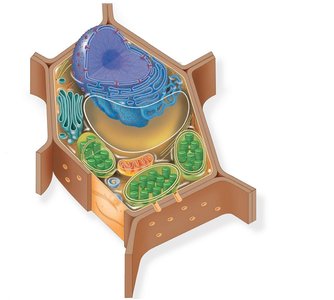
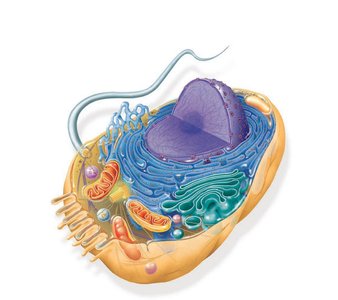
Eukaryotic cells are characterized by their compartmentalization into membrane-bound organelles, each with specialized functions. These organelles facilitate information flow, synthesis and transport of biomolecules, and energy transformations essential for cellular life.
Nucleus: Houses genetic material and controls cellular activities.
Endomembrane System: Coordinates synthesis, processing, and transport of proteins and lipids.
Energy Organelles: Mitochondria and chloroplasts drive cellular energy transformations.
Information Flow: Nucleus and Ribosomes
Nucleus: Structure and Function
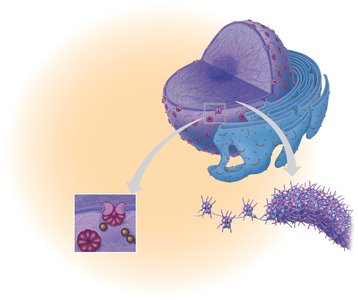
The nucleus is the central repository of genetic information in eukaryotic cells. It is surrounded by a double membrane called the nuclear envelope, which contains nuclear pores for regulated exchange of materials.
Chromatin: DNA-protein complex that condenses to form chromosomes during cell division.
Nucleolus: Site of ribosome assembly.
Nuclear Envelope: Consists of inner and outer membranes; nuclear pores allow passage of RNA and proteins.
Ribosomes: Protein Synthesis
Ribosomes are molecular machines responsible for protein synthesis. They catalyze the formation of peptide bonds via dehydration synthesis.
Free Ribosomes: Located in the cytoplasm; synthesize proteins for use within the cell.
Bound Ribosomes: Attached to the endoplasmic reticulum; synthesize proteins for membranes or export.
Endomembrane System
Components and Functions
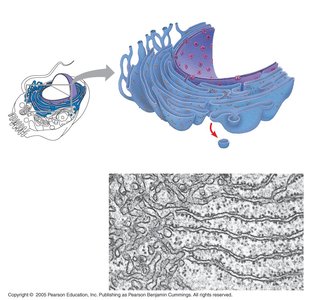
The endomembrane system is a network of membranes involved in the synthesis, processing, and transport of proteins and lipids. Its components are either continuous or connected via vesicles.
Endoplasmic Reticulum (ER): Divided into rough (protein synthesis) and smooth (lipid synthesis, detoxification, Ca2+ storage).
Golgi Apparatus: Modifies, sorts, and packages proteins and lipids for delivery.
Vesicles and Vacuoles: Transport and store substances within the cell.
Lysosomes: Digestive organelles containing hydrolytic enzymes.
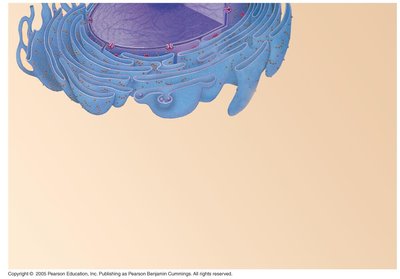
Endoplasmic Reticulum (ER)
The ER is a major site of biosynthesis and transport. The rough ER is studded with ribosomes, while the smooth ER lacks ribosomes and is involved in lipid metabolism.
Rough ER: Synthesizes proteins for membranes and secretion.
Smooth ER: Synthesizes lipids, detoxifies poisons, and stores calcium ions.
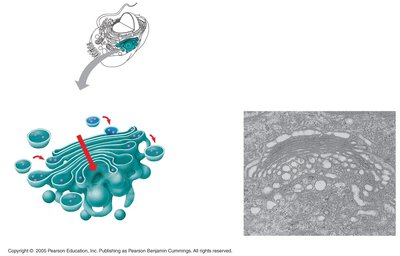
Golgi Apparatus
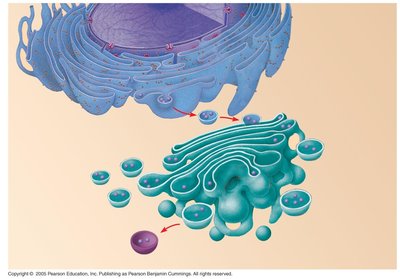
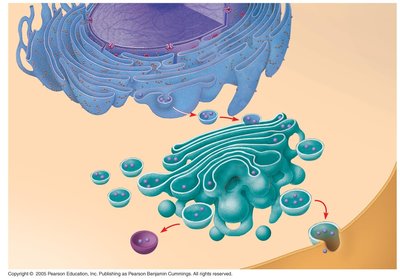
The Golgi apparatus is a series of flattened membrane sacs (cisternae) that process and package proteins and lipids received from the ER. It has a cis face (receiving side) and a trans face (shipping side).
Protein Processing: Modifies carbohydrates on glycoproteins.
Packaging: Adds destination tags for delivery.
Vesicle Formation: Vesicles bud off and transport materials to their destinations.
Lysosomes
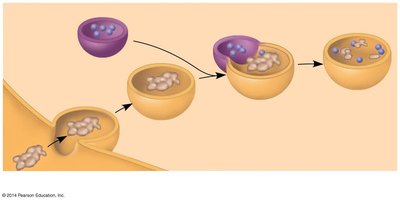
Lysosomes are membrane-bound organelles containing digestive enzymes. They break down macromolecules, old organelles, and foreign substances.
Digestive Enzymes: Hydrolyze proteins, lipids, nucleic acids, and carbohydrates.
Phagocytosis: Lysosomes fuse with food vacuoles to digest contents.
Vesicles and Vacuoles
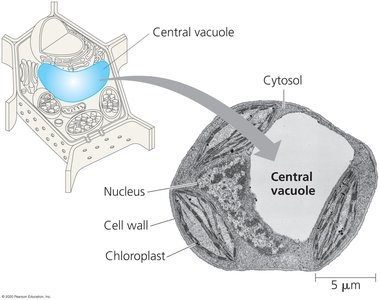
Vesicles are small membrane-bound compartments, while vacuoles are larger and serve diverse functions such as storage and maintaining cell structure.
Vesicles: Transport materials within the cell.
Vacuoles: Store nutrients, waste products, and help maintain turgor pressure in plant cells.
Energy Transformations: Mitochondria, Chloroplasts, and Peroxisomes
Mitochondria
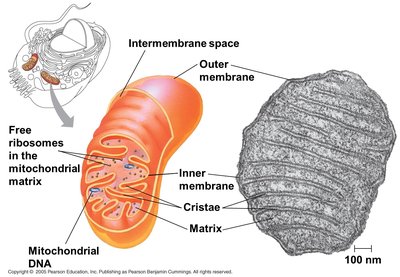
Mitochondria are the powerhouses of the cell, responsible for cellular respiration and ATP production. They have a double membrane, their own DNA, and ribosomes.
Outer and Inner Membranes: Create distinct compartments.
Matrix: Contains enzymes for the citric acid cycle.
Cristae: Folds of the inner membrane increase surface area for ATP synthesis.
Chloroplasts
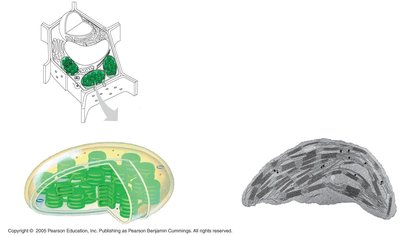
Chloroplasts are found in plant cells and are the site of photosynthesis. They contain their own DNA and ribosomes, and are composed of an inner and outer membrane, stroma, thylakoids, and grana.
Thylakoids: Membranous sacs where light reactions occur.
Stroma: Fluid surrounding thylakoids; site of Calvin cycle.
Grana: Stacks of thylakoids.
Peroxisomes
Peroxisomes are single-membrane organelles that carry out oxidation reactions, producing hydrogen peroxide and converting it to water. They detoxify alcohol and other harmful substances.
Oxidation Reactions: Breakdown of fatty acids and detoxification.
Glyoxysomes: Specialized peroxisomes in plant seeds for converting fats to sugars.
Example: Peroxisomes in liver cells detoxify alcohol consumed in beverages.
