 Back
Eukaryotic Cell Structure and Function: Plasma Membrane, Organelles, and Surface Area
Study Guide - Smart Notes
 Tailored notes based on your materials, expanded with key definitions, examples, and context.
A Tour of the Eukaryotic Cell
Plasma Membrane
The plasma membrane is a fundamental structure in all cells, acting as a selective barrier that regulates the passage of oxygen, nutrients, and waste. It is primarily composed of a phospholipid bilayer with embedded and attached proteins, which contribute to its function and structure.
Phospholipid Bilayer: Provides the basic structural framework, with hydrophilic heads facing outward and hydrophobic tails inward.
Proteins: Integral and peripheral proteins serve roles in transport, signaling, and structural support.
Selective Permeability: Allows the cell to maintain homeostasis by controlling what enters and exits.
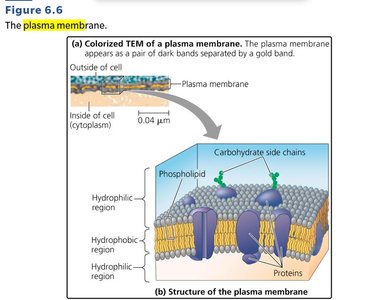
Example: The plasma membrane's selective permeability is essential for processes such as nutrient uptake and waste removal.
Volume vs. Surface Area
The relationship between a cell's surface area and volume is crucial for its efficiency. As cells grow, their volume increases faster than their surface area, which can limit the rate of nutrient diffusion and waste removal. Smaller cells have a higher surface area-to-volume ratio, making them more efficient.
Surface Area: Determines how much material can be exchanged at a time.
Volume: Represents the amount of material that needs to be supplied.
Efficiency: Cells with higher surface area-to-volume ratios are more efficient at exchange.
Total volume | Total surface area | Surface-to-volume ratio |
|---|---|---|
27 units3 | 54 units2 | 2 |
27 units3 | 162 units2 | 6 |
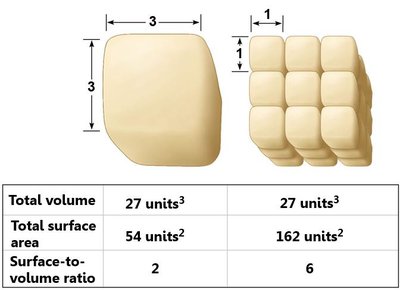
Example: The efficiency of nutrient diffusion in small cells versus large cells is illustrated by their surface area-to-volume ratios.
Frosting vs. Cake Ratio Analogy
The "frosting vs. cake ratio" is a helpful analogy for understanding surface area-to-volume relationships. A smaller cake has more frosting relative to its volume, just as a smaller cell has more membrane surface relative to its internal volume.
Small Cake: Higher ratio of frosting (surface) to cake (volume).
Large Cake: Lower ratio of frosting to cake.


Example: This analogy helps visualize why smaller cells are more efficient at exchange.
Cellular Adaptations to Increase Surface Area
Cells often develop structural adaptations to increase their surface area without significantly increasing their volume. This allows for greater exchange of materials and improved cellular function.
Microvilli: Long, thin projections on intestinal epithelial cells that increase surface area for absorption.
T-tubules: Tubular extensions in muscle cells that allow electrical signals to penetrate deep into the cell for contraction.
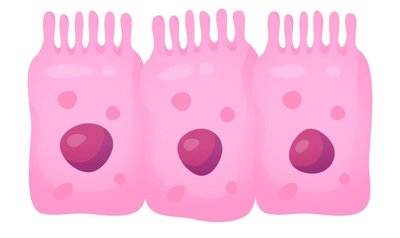
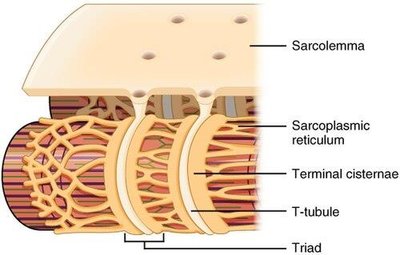
Example: Microvilli enhance nutrient absorption in the intestine, while T-tubules facilitate muscle contraction.
Cell Components
Nucleus
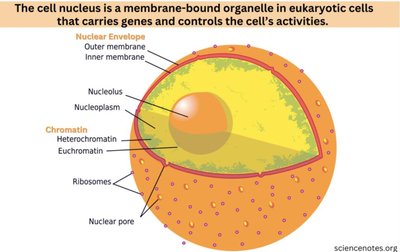
The nucleus is a membrane-bound organelle found in eukaryotic cells. It houses the cell's genetic material in the form of chromosomes and plays a crucial role in regulating gene expression, transcription, and ribosome synthesis.
Nuclear Envelope: Double membrane with nuclear pores for selective exchange between nucleus and cytoplasm.
Nuclear Lamina: Netlike array of protein filaments that supports the nuclear envelope and organizes genetic material.
Nuclear Matrix: Protein framework extending throughout the nuclear interior.
Chromosomes: DNA molecules associated with proteins; number varies by species.
Example: Human cells have 46 chromosomes, while fruit fly cells have 8, reflecting evolutionary history.
Nucleolus
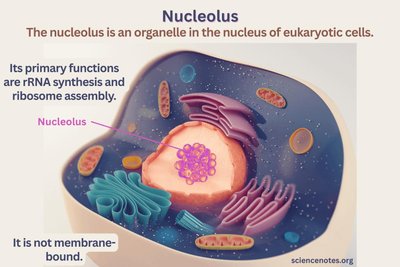
The nucleolus is a non-membranous structure located inside the nucleus. Its main function is the synthesis of ribosomal RNA (rRNA) and the assembly of ribosome subunits.
rRNA Synthesis: Genes in DNA code for rRNA, which is synthesized in the nucleolus.
Ribosome Assembly: Proteins imported from the cytoplasm combine with rRNA to form ribosome subunits.
mRNA: Synthesized from DNA and exits through nuclear pores for translation in the cytoplasm.

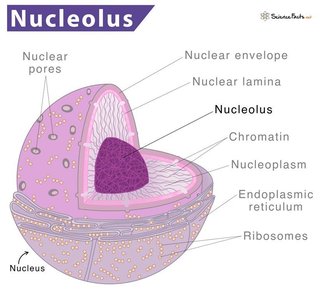
Example: The nucleolus is essential for ribosome production, which is necessary for protein synthesis.
Ribosomes
Ribosomes are complexes of rRNA and proteins that are not membrane-bound. They consist of two subunits and are responsible for translating mRNA into polypeptides.
Composition: Two-thirds rRNA, one-third ribosomal proteins by mass.
Location: Free ribosomes (in cytosol) make proteins for internal use; bound ribosomes (on ER or nuclear envelope) make proteins for export.
Protein Synthesis: Cells with high rates of protein synthesis (e.g., pancreas) have abundant ribosomes.

Example: Mature red blood cells lack ribosomes and do not synthesize proteins.
Endoplasmic Reticulum
Rough Endoplasmic Reticulum (RER)
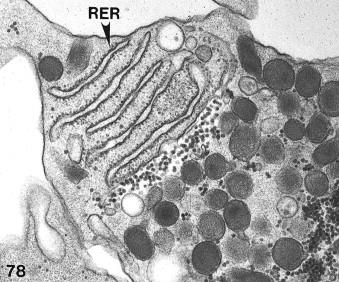
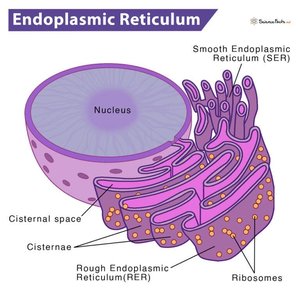
The rough endoplasmic reticulum is a network of folded, flattened membrane sacs (cisternae) with ribosomes attached to its surface. It processes proteins and is involved in the synthesis of membrane proteins and phospholipids.
Structure: Cisternae with ribosomes; lumen is the internal cavity.
Function: Processes secretory proteins (e.g., insulin), holds ribosomes, creates membrane components.

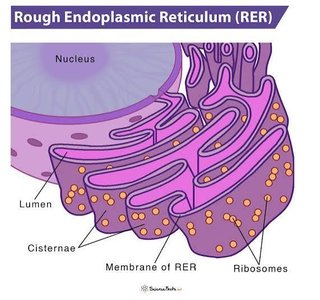
Example: The RER is abundant in cells that secrete proteins, such as pancreatic cells.
Smooth Endoplasmic Reticulum (SER)
The smooth endoplasmic reticulum is a network of membrane tubules lacking ribosomes. It is involved in lipid synthesis, carbohydrate metabolism, calcium ion storage, and detoxification.
Lipid Synthesis: Produces phospholipids and steroids.
Carbohydrate Metabolism: Breaks down glycogen.
Calcium Storage: Especially important in muscle cells (sarcoplasmic reticulum).
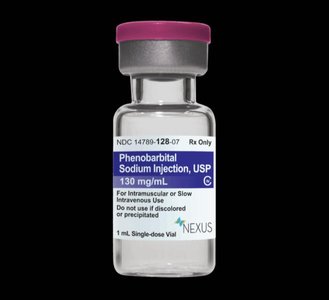
Detoxification: Detoxifies drugs and poisons, especially in liver cells.
Example: Alcohol and drugs increase SER and detoxification enzymes in liver cells, leading to tolerance.
Golgi Apparatus
Structure and Function
The Golgi apparatus acts as a cellular warehouse for receiving, sorting, shipping, and some manufacturing. It processes and transports products from other parts of the cell, such as proteins from the ER.
Cis-face: Receiving side, closer to the ER.
Trans-face: Shipping side, where vesicles exit.
Vesicle Transport: Vesicles move through layers, where products can be edited.

Example: The Golgi apparatus is essential for packaging and modifying proteins for secretion.
Exocytosis
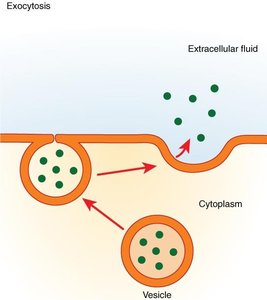
Exocytosis is the process by which cells package molecules inside secretory vesicles, which then merge with the plasma membrane to release their contents outside the cell.
Vesicle Fusion: Special proteins on vesicle and plasma membrane merge to form a continuous sheet.
Content Release: The vesicle opens outward, dumping its contents into the extracellular space.
Example: Exocytosis is used for secretion of hormones and neurotransmitters.
Additional info: The notes have been expanded with academic context and examples to ensure completeness and clarity for exam preparation.
