 Back
Eukaryotic Gene Expression and Mutations: Structure, Function, and Analysis
Study Guide - Smart Notes
 Tailored notes based on your materials, expanded with key definitions, examples, and context.
Eukaryotic Gene Expression
Overview of Eukaryotic Gene Structure
Eukaryotic genes contain several distinct regions that regulate and encode information for protein synthesis. Understanding these regions is essential for interpreting gene expression and the effects of mutations.
Promoter Region: The DNA sequence where RNA polymerase binds to initiate transcription. In the Gene Explorer simulation, the promoter sequence is 5'-TATAA-3'.
Terminator Region: The DNA sequence signaling the end of transcription, such as 5'-GGGGG-3'.
Exons: Protein-coding sequences that remain in mature mRNA after splicing.
Introns: Non-coding sequences removed from pre-mRNA during processing. Introns in Gene Explorer begin with 5'-GTGCG-3' and end with 5'-CAAAG-3'.
Start Codon: The sequence ATG marks the beginning of translation.
Stop Codons: Sequences such as TGA, TAA, TAG signal the end of translation.
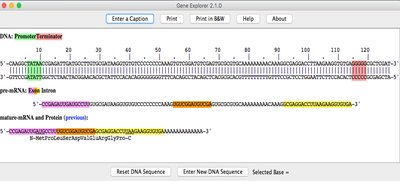
Transcription and Translation
Gene expression in eukaryotes involves two main steps: transcription and translation.
Transcription: The process by which RNA polymerase synthesizes a complementary RNA strand from the DNA template. The initial product is pre-mRNA, which includes both exons and introns.
mRNA Processing: Pre-mRNA undergoes splicing to remove introns, and exons are joined to form mature mRNA. A 5' cap and a poly-A tail are added to increase mRNA stability and facilitate translation.
Translation: Ribosomes read the mature mRNA from the start codon to the stop codon, synthesizing a polypeptide chain according to the genetic code.
Example: In the Gene Explorer output, the mature mRNA is translated into a protein sequence, with the N-terminus (amino group) and C-terminus (carboxyl group) indicated.
Mapping a Eukaryotic Gene
Gene mapping involves identifying the positions of promoters, exons, introns, start and stop codons, and terminators within a DNA sequence. This is crucial for understanding gene structure and function.
Promoter: Typically located upstream of the coding region.
Exons and Introns: Exons are interspersed with introns; only exons are retained in mature mRNA.
Start and Stop Codons: Define the coding region for translation.
Terminator: Marks the end of transcription.
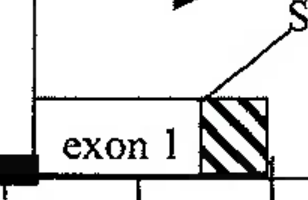
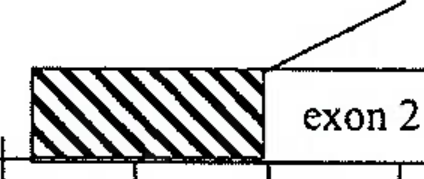
Additional info: The leader sequence (before the start codon) and trailing sequence (after the stop codon but before the terminator) are transcribed but not translated.
Mutations and Their Effects on Gene Expression
Types of Mutations
Mutations are changes in the DNA sequence that can affect gene expression and protein function. The main types include:
Base Substitution (Point Mutation): A single nucleotide pair is replaced by another (e.g., AT to GC).
Missense Mutation: A base change results in a different amino acid in the protein.
Silent Mutation: A base change does not alter the amino acid sequence due to redundancy in the genetic code.
Nonsense Mutation: A base change creates a premature stop codon, truncating the protein.
Frameshift Mutation: Insertion or deletion of bases alters the reading frame, potentially changing every amino acid downstream.
Effects of Mutations
The impact of a mutation depends on its location and type:
Mutations in introns often have no effect if splicing is not disrupted.
Mutations in exons can alter the amino acid sequence, potentially affecting protein function.
Mutations in promoter or terminator regions can affect transcription efficiency or termination.
Some mutations are silent and do not affect the protein product.
Mutation Analysis Using Gene Explorer
Gene Explorer allows simulation of mutations and observation of their effects on mRNA and protein sequences. For each mutation, it is important to:
Identify the region of the gene affected (e.g., exon, intron, promoter).
Determine the type of mutation (e.g., substitution, deletion).
Analyze changes in the amino acid sequence and predict functional consequences.
Bioinformatics in Gene Analysis
Modern gene analysis relies on bioinformatics tools to interpret DNA and protein sequences. Resources such as the National Center for Biotechnology Information (NCBI) provide databases and analytical tools for genetic research.
Key Sequences and Their Roles
Gene Region | DNA Sequence (5' to 3') |
|---|---|
Promoter | TATAA |
Terminator | GGGGG |
Intron Beginning | GTGCG |
Intron End | CAAAG |
Start Codon | ATG |
Stop Codons | TGA, TAA, TAG |
Summary Table: Mutation Analysis
Mutation | Region Affected | Type of Mutation | Effect on Amino Acid Sequence |
|---|---|---|---|
Mutation 1 | [To be determined] | Base Substitution | [To be determined] |
Mutation 2 | [To be determined] | Deletion | [To be determined] |
Mutation 3 | [To be determined] | Base Substitution | [To be determined] |
Mutation 4 | [To be determined] | Base Substitution | [To be determined] |
Additional info: The specific effects of each mutation depend on the DNA sequence context and should be analyzed using the Gene Explorer program as described in the procedure.
Key Definitions
Transcription: Synthesis of RNA from a DNA template.
Translation: Synthesis of a polypeptide using the information in mRNA.
Intron: Non-coding sequence removed from pre-mRNA.
Exon: Coding sequence retained in mature mRNA.
Mutation: Any change in the DNA sequence.
Equations and Genetic Code
The relationship between DNA, mRNA, and protein can be summarized as:
Additional info: The genetic code is read in triplets (codons), each specifying an amino acid or stop signal.
