 Back
Evidence for Evolution and Mechanisms of Evolutionary Change
Study Guide - Smart Notes
 Tailored notes based on your materials, expanded with key definitions, examples, and context.
Evidence for Evolution
Introduction to Evolutionary Theory
Evolution is the process by which species change over time, driven by genetic variation, environmental pressures, and time. Charles Darwin's theory of evolution by natural selection provides a scientific explanation for the diversity and unity of life, as well as the adaptation of organisms to their environments. The theory is supported by extensive evidence from multiple fields of biology.
Darwin’s Theory and Its Scientific Basis
Theory in Science: A scientific theory accounts for many observations and integrates diverse phenomena. The theory of evolution is supported by continual observation and experimentation.
Main Ideas from The Origin of Species:
Descent with modification by natural selection explains the unity and diversity of life, and the adaptation of organisms to their environments.
All organisms are related by descent from a common ancestor.
Adaptations accumulate in populations over generations, leading to new species.
Mechanisms of Evolution
Artificial Selection, Natural Selection, and Adaptation
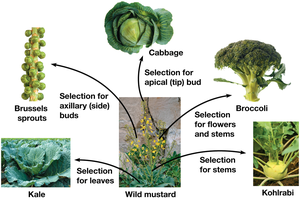
Artificial selection is the process by which humans breed plants and animals for desired traits. Darwin argued that a similar process occurs in nature—natural selection—where environmental pressures favor individuals with advantageous traits.
Artificial Selection: Humans select and breed individuals with desired traits over generations.
Natural Selection: Nature selects for traits that enhance survival and reproduction.
Adaptation: Inherited characteristics that enhance an organism's ability to survive and reproduce in specific environments.
Darwin’s Observations and Inferences
Observation #1: Members of a population vary in their inherited traits.
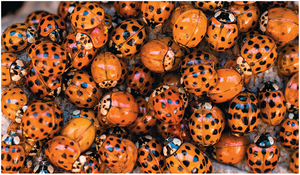
Observation #2: All species produce more offspring than the environment can support; many fail to survive and reproduce.
Inference #1: Individuals with advantageous traits leave more offspring.
Inference #2: Favorable traits accumulate in the population over generations.
Examples of Natural Selection
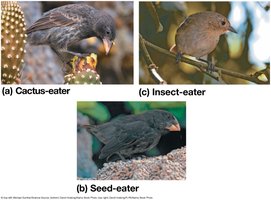
Beak Variation in Galapagos Finches: Different beak shapes are adaptations to different food sources, illustrating how natural selection leads to diversification.
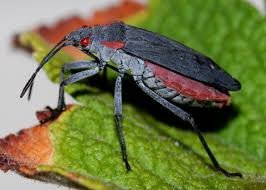
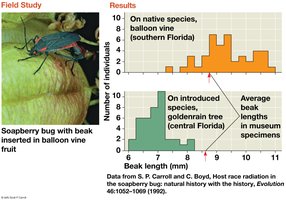
Soapberry Bugs: Beak length in soapberry bugs has evolved in response to changes in available food sources.
Descent with Modification
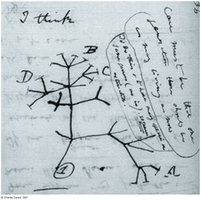
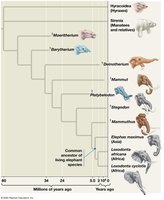
Darwin viewed the history of life as a tree, with a common trunk representing shared ancestry and branches representing diverging species. Fossils help fill in gaps between present-day groups.
Key Features of Natural Selection
Individuals with certain heritable traits survive and reproduce at higher rates.
Natural selection increases the frequency of favorable adaptations.
Populations, not individuals, evolve over time.
Natural selection acts on existing variation; it does not create new traits.
Microevolution: Evolution in Action
Peppered Moths
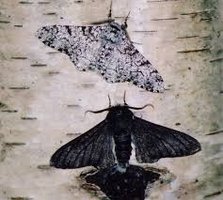
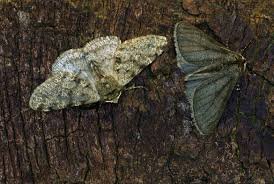
The classic example of microevolution is the change in coloration of peppered moths in response to industrial pollution. Dark-colored moths became more common in polluted areas due to increased survival from predation.
Evolution of Resistance
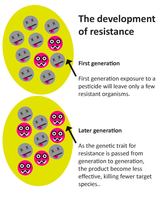
Pesticide Resistance: Insect populations can evolve resistance to pesticides through natural selection.
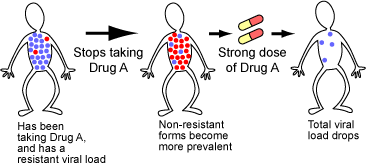
Drug Resistance in HIV: HIV populations can rapidly evolve resistance to antiviral drugs, making treatment challenging.
Types of Evolution
Convergent Evolution
Convergent evolution is the independent evolution of similar features in different lineages, often due to similar environmental pressures. These features are called analogous structures and do not indicate common ancestry.
Divergent Evolution and Speciation
Divergent evolution occurs when closely related species become more dissimilar due to different selective pressures. This process can lead to speciation, the formation of new species. Subspecies are populations of the same species that differ genetically due to different living conditions.
Evidence for Evolution
Embryonic Development
Similarities in embryonic development among different species provide evidence for common ancestry. For example, all vertebrate embryos have a post-anal tail and pharyngeal arches at some stage.
Biological Molecules
Similarities in DNA and protein sequences among species indicate evolutionary relationships. The more similar the sequences, the more closely related the species are.
Homology (Body Structures)
Homologous structures are anatomical features inherited from a common ancestor but may serve different functions in modern species. Vestigial structures are remnants of features that served important functions in ancestors but are no longer functional.
The Fossil Record
The fossil record provides evidence of gradual changes in species over time and documents the extinction of species. Paleontology, the study of fossils, helps reconstruct evolutionary history.
Biogeography
The geographic distribution of species supports evolutionary theory. Island species often resemble those on the nearest mainland, suggesting they evolved from common ancestors after colonization.
Models of Evolution
Gradualism and Punctuated Equilibrium
Gradualism: Evolution occurs slowly and steadily over long periods.
Punctuated Equilibrium: Evolution is characterized by long periods of stability interrupted by brief periods of rapid change.
Summary Table: Evidence for Evolution
Type of Evidence | Description | Example |
|---|---|---|
Fossil Record | Shows gradual changes in species over time | Transitional fossils |
Comparative Anatomy | Homologous structures suggest common ancestry | Forelimbs of vertebrates |
Genetics | DNA similarities across species | Human and chimpanzee DNA |
Embryology | Similar embryonic stages in different species | Pharyngeal arches in vertebrate embryos |
Biogeography | Geographic distribution supports evolutionary history | Island endemics |
