 Back
Back2.2 Evolution and Adaptation: Mechanisms and Case Studies
Study Guide - Smart Notes
 Tailored notes based on your materials, expanded with key definitions, examples, and context.
Evolution and Adaptation
Case Study: Trophy Hunting and Bighorn Sheep
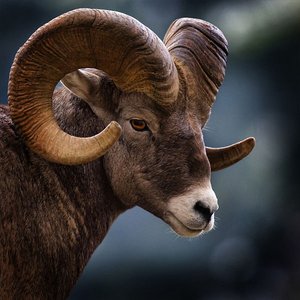
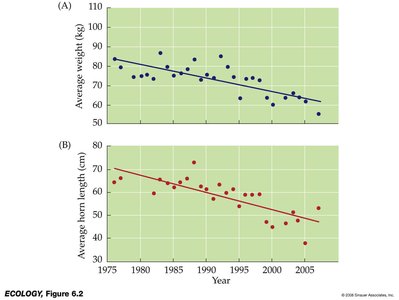
Trophy hunting has had significant evolutionary impacts on bighorn sheep populations. Overhunting, habitat loss, and the introduction of domestic cattle have reduced their numbers by 90%. In North America, hunting is now restricted, and permits to hunt large 'trophy rams' are extremely expensive. These human activities have led to observable evolutionary changes in the population, such as reduced average horn size and body weight over time, demonstrating the direct connection between ecology and evolution.
What is Evolution?
Definition and Key Concepts
Evolution is defined as the change in allele frequency in a population over time, also described as 'descent with modification.' This process explains how populations and species change genetically across generations.
Allele frequency: The proportion of different genetic variants (alleles) in a population.
Descent with modification: Offspring inherit traits from their ancestors, but these traits can change over generations.
Common Misconceptions about Evolution
Evolution does not explain the origin of life, but rather how life changes over time.
Evolution has been observed both in nature and in laboratory settings.
Evolution does not produce perfectly adapted organisms; adaptations are often compromises.
Evolution is not purely random; natural selection is a non-random process acting on variation.
History of Evolutionary Theory
Charles Darwin and Alfred Russel Wallace
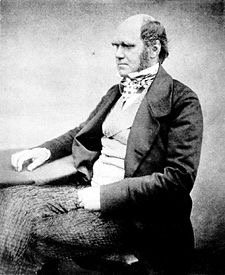
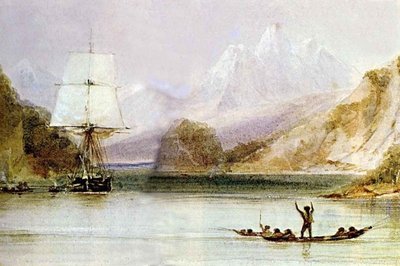
Charles Darwin (1809–1882), an English naturalist, and Alfred Russel Wallace independently developed the theory of evolution by natural selection. Darwin's observations during his voyage on the HMS Beagle were foundational. Their joint publication in 1858 and Darwin's book, On the Origin of Species, established natural selection as the main mechanism of evolution.
Mechanisms of Evolution: Natural Selection
Definition and Process
Natural selection is the process by which individuals with certain heritable traits survive and reproduce more successfully than others. This leads to an increase in the frequency of advantageous traits in the population over generations.
Genotype: The genetic makeup of an organism.
Phenotype: The observable characteristics of an organism, resulting from the interaction of its genotype with the environment.
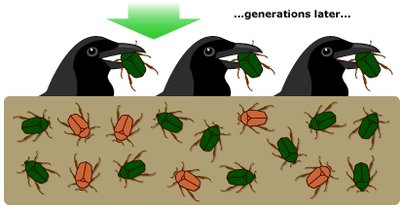
Conditions for Evolution by Natural Selection
Individuals in a population show variation in traits.
Some of this variation is heritable (passed from parents to offspring).
Certain traits confer differential survival or reproductive success (fitness).
Populations have the potential to grow rapidly, but most individuals do not survive to reproduce at maximum capacity.
Different ancestors leave different numbers of descendants, leading to changes in allele frequencies over time.
Darwin’s Finches: A Model of Natural Selection
Point 1: Variability
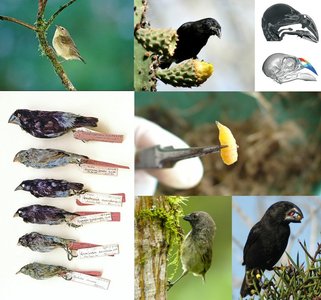
There is a range of beak sizes among finches on the Galápagos Islands, demonstrating variability within a population.
Point 2: Heritability
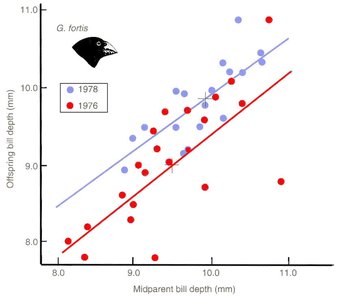
For natural selection to act, traits must be heritable. In Darwin’s finches, bill depth is a heritable trait, as shown by the correlation between parent and offspring bill depths.
Point 3: Competition
Resources such as food are limited, leading to competition among individuals. Only those best adapted to the environment survive and reproduce.
Point 4: Differential Survival or Fecundity
Individuals with certain beak sizes have higher survival rates during environmental changes, such as droughts, demonstrating directional selection.
Types of Natural Selection
Directional Selection
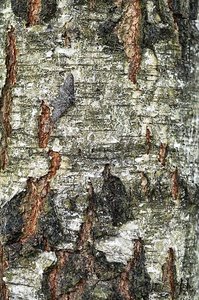
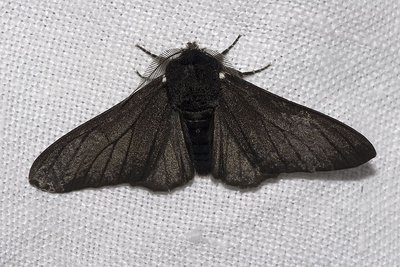
Directional selection favors individuals at one extreme of a trait distribution. An example is the increase in dark-colored (melanic) peppered moths during the Industrial Revolution ('industrial melanism').
Stabilizing Selection
Stabilizing selection favors intermediate phenotypes and reduces variation. It is common in stable environments, where extreme traits are selected against.
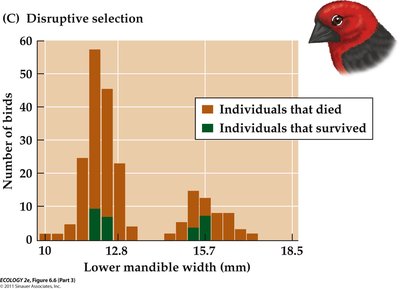
Disruptive Selection
Disruptive selection favors individuals at both extremes of a trait distribution, potentially leading to speciation.
Adaptation
Definition and Categories
Adaptation is a genetically determined trait that enhances the survival and reproduction of its bearers. Adaptations can be classified as:
Physiological: Traits involving biochemical processes (e.g., enzymes, toxins).
Morphological: Physical traits (e.g., long legs in frogs).
Behavioral: Inherited behaviors (e.g., nursing in mammal babies).
Limits to Adaptation
Gene flow: Movement of individuals between populations can reduce local adaptation.
Genetic constraints: Evolution requires genetic variation; evolutionary history can limit possible adaptations.
Tradeoffs: Adaptations to one factor may limit the ability to cope with another (e.g., sickle-cell anemia and malaria resistance).
Evolutionary Tradeoffs
Definition and Example
An evolutionary tradeoff occurs when adaptation to one environmental factor reduces the ability to cope with another. For example, the sickle-cell allele provides malaria resistance but can cause sickle-cell anemia in homozygotes.
Evolution and Ecology
Interconnections
Ecological interactions, such as predator-prey relationships, can drive evolutionary change. Conversely, evolutionary changes can alter ecological interactions, such as the evolution of water storage in plants enabling colonization of desert environments.
