 Back
BackEvolution and Diversity: Mechanisms, Evidence, and Applications
Study Guide - Smart Notes
 Tailored notes based on your materials, expanded with key definitions, examples, and context.
Evolution and Diversity
Introduction to Evolution and Diversity
Evolution is the process by which populations of organisms change over generations through variations in their genetic material. Biological diversity, or biodiversity, refers to the variety of life forms on Earth, shaped by evolutionary processes. Understanding evolution is fundamental to biology, as it explains the unity and diversity of life.
Evolution: The change in the heritable characteristics of biological populations over successive generations.
Diversity: The result of evolutionary processes leading to the variety of species, genes, and ecosystems.
Example: There are twice as many dinosaur species known than mammal species alive today, highlighting the dynamic nature of biodiversity through time.
Why Evolution Matters
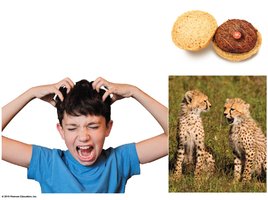
Evolutionary principles are crucial for addressing real-world problems, such as disease resistance and food production. Human activities, such as the use of pesticides and antibiotics, drive rapid evolutionary changes in other organisms.
Pesticide Resistance: Human parasites and pests are evolving resistance to chemicals designed to control them.
Artificial Selection: Humans have selectively bred plants and animals, such as large tomatoes, corn, and various dog breeds.
Genetic Diversity: Species like cheetahs are at risk due to low genetic diversity, making them vulnerable to environmental changes.
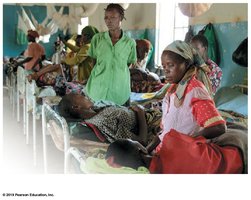
Antibiotic Resistance: Pathogens like those causing malaria are evolving resistance to antibiotics, posing significant health threats.
Evidence for Evolution
Taxonomy and Classification
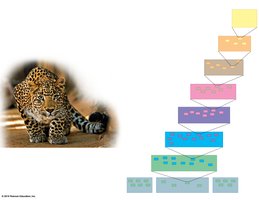
Taxonomy is the science of finding, naming, and classifying organisms. It organizes biological diversity into hierarchical categories based on shared characteristics and evolutionary relationships.
Hierarchical Classification: Domain, Kingdom, Phylum, Class, Order, Family, Genus, Species.
Binomial Nomenclature: Each species is given a two-part scientific name (e.g., Panthera pardus for the leopard).
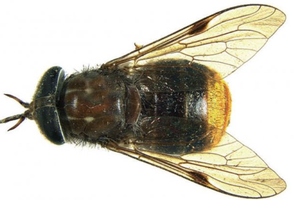
Example: The fly named after a celebrity demonstrates the ongoing discovery and classification of new species.
Fossil Evidence
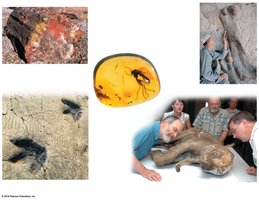
Fossils are preserved remains or traces of ancient organisms, providing direct evidence of past life and evolutionary transitions.
Formation: Most fossils form in sedimentary rock, where minerals replace organic material.
Types: Body fossils (bones, shells), trace fossils (footprints), and preserved remains (amber, ice).
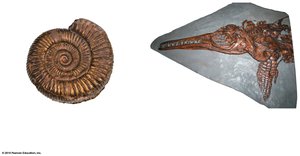
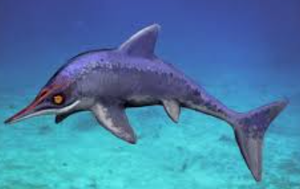
Example: The "snakestone" ammonite and ichthyosaur fossils illustrate extinct marine life.
Darwin’s Voyage and Observations
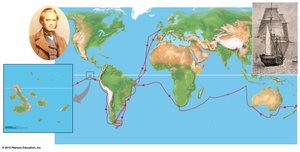
Charles Darwin’s journey on the HMS Beagle provided critical observations that led to the development of the theory of evolution by natural selection.
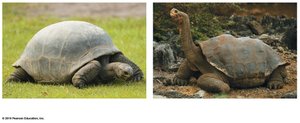
Galápagos Islands: Darwin observed unique species adapted to different environments, such as giant tortoises with varying shell shapes.
Descent with Modification: Species change over time, giving rise to new species while sharing common ancestors.
Phylogenetic Trees: Diagrams that depict evolutionary relationships among species.
Comparative Anatomy and Embryology
Comparing anatomical structures and embryonic development across species reveals evolutionary relationships.
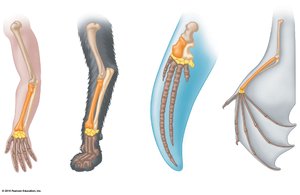
Homologous Structures: Body parts with similar origin but different functions (e.g., human arm, cat leg, whale flipper, bat wing).
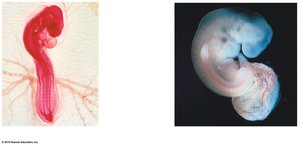
Comparative Embryology: Embryos of different species show similar features, such as pharyngeal pouches and post-anal tails, indicating common ancestry.
Phylogenetic Relationships
Phylogenetic trees illustrate evolutionary relationships, showing how groups of organisms share common ancestors and derived traits.
Branch Points: Represent common ancestors.
Homologous Traits: Shared by all groups to the right of a branch point.
Example: Birds are classified as dinosaurs based on shared evolutionary traits.
Mechanisms of Evolution
Genetic Variation
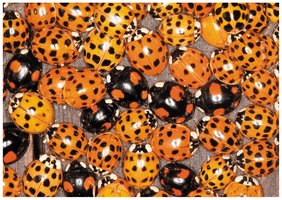
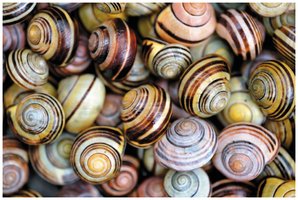
Variation within populations is the raw material for evolution. It arises from mutations, sexual reproduction, and genetic recombination.
Mutation: Random changes in DNA that introduce new alleles.
Sexual Reproduction: Shuffles alleles, creating new genetic combinations.
Genetic Exchange: Especially common in prokaryotes through processes like conjugation.
Natural Selection
Natural selection is the process by which individuals with advantageous traits are more likely to survive and reproduce, leading to the accumulation of those traits in the population.
Observations: Overproduction of offspring and individual variation.
Conclusion: Unequal reproductive success leads to adaptation.
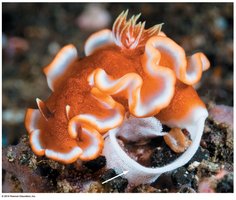
Example: Some nudibranch offspring may survive better in changing environments due to natural variation.

Artificial Selection
Artificial selection is the intentional breeding of organisms by humans for desired traits, which can lead to rapid evolutionary changes.
Example: Selective breeding in crops and domestic animals.
Unintentional Artificial Selection and Resistance
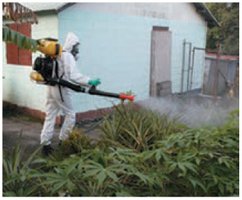
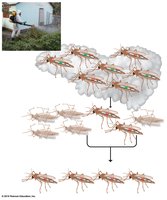
Human activities can unintentionally select for traits such as pesticide or antibiotic resistance in pests and pathogens.
Pesticide Resistance: Some insects survive pesticide application due to resistant alleles, reproduce, and increase resistance in the population.
Antibiotic Resistance: Overuse of antibiotics selects for resistant bacteria, making infections harder to treat.
Population Genetics and the Hardy-Weinberg Principle
Population genetics studies the genetic composition of populations and how it changes over time. The Hardy-Weinberg equilibrium provides a mathematical model for a non-evolving population.
Allele Frequencies: Proportion of different alleles in a population (p and q).
Genotype Frequencies: Proportion of different genotypes (p2, 2pq, q2).
Equation:
Application: Used to predict genotype frequencies from allele frequencies in a population.
Microevolution and Macroevolution
Microevolution refers to small-scale changes in allele frequencies within a population, while macroevolution involves the formation of new species and higher taxonomic groups.
Sources of Variation: Mutation, sexual reproduction, and genetic exchange.
Population: A group of interbreeding organisms of the same species in a given area.
Genetic Drift and Bottlenecks
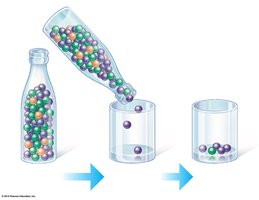
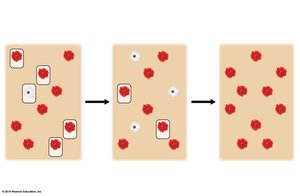
Genetic drift is the random fluctuation of allele frequencies in small populations, which can lead to significant evolutionary changes. Bottleneck events drastically reduce population size and genetic diversity.
Bottleneck Effect: A sharp reduction in population size due to environmental events (e.g., volcanic eruptions).
Example: The Mount Toba supervolcano caused a human population bottleneck about 74,000 years ago.
Modes of Selection
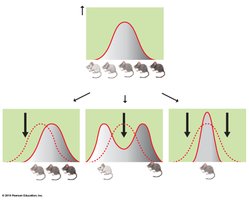
Natural selection can take different forms, shaping the distribution of traits in a population.
Type of Selection | Description | Example |
|---|---|---|
Directional Selection | Favors one extreme phenotype | Darker fur color in mice in a dark environment |
Disruptive Selection | Favors both extreme phenotypes | Light and dark mice favored over intermediate color |
Stabilizing Selection | Favors intermediate phenotype | Average fur color favored in a stable environment |
Sexual Selection and Sexual Dimorphism
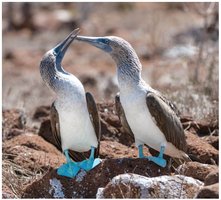
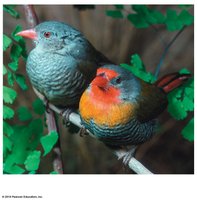
Sexual selection is a form of natural selection where certain traits increase an individual's chances of mating. This can lead to sexual dimorphism, where males and females of a species look different.
Example: Female boobies prefer males with bright blue feet; finch species show differences between sexes.
Research on Natural Selection: Galápagos Finches
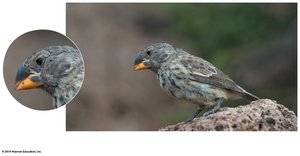
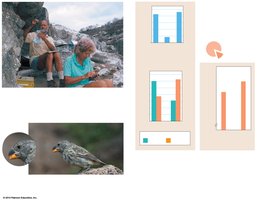
Studies on Galápagos finches have provided direct evidence for natural selection in action, particularly in response to environmental changes such as droughts.
Beak Depth: Changes in beak size and shape correspond to changes in available food resources.
Example: During droughts, finches with deeper beaks survived better due to their ability to eat tougher seeds.
Antibiotic Resistance: A Modern Evolutionary Challenge
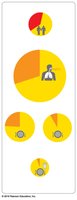
The evolution of antibiotic resistance in bacteria is a pressing example of evolution in action, with significant implications for public health.
Mechanism: Bacteria with resistance genes survive antibiotic treatment and proliferate.
Impact: Increasing proportions of infections are caused by resistant strains, making treatment more difficult.
Conclusion
Evolution is a unifying concept in biology, explaining the diversity of life and providing insights into current challenges such as disease resistance and conservation. Understanding the mechanisms and evidence for evolution is essential for addressing biological and societal issues.
