 Back
BackEvolution and Diversity of Land Plants: From Algae to Angiosperms
Study Guide - Smart Notes
 Tailored notes based on your materials, expanded with key definitions, examples, and context.
Plant Evolution and Diversity
Introduction to Plant Evolution
Plants are a diverse group of photosynthetic eukaryotes that have evolved a variety of adaptations for life on land. Their evolutionary history is marked by major innovations that allowed them to colonize terrestrial environments and diversify into the forms we see today.
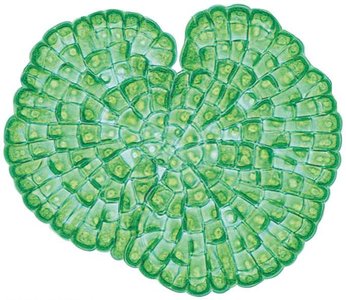
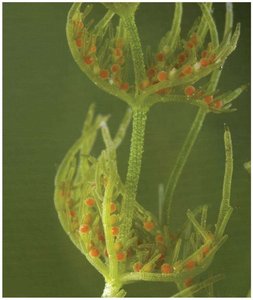
Common ancestry: Plants and green algae (charophytes) share a common ancestor, complex multicellular bodies, and photosynthetic capabilities.
Key genera: Chara (elaborate charophyte) and Coleochaete (simple charophyte) are examples of green algae closely related to land plants.
Key Traits and Adaptations of Land Plants
Five Key Traits of Land Plants
Land plants possess several derived traits that distinguish them from their algal ancestors. These adaptations are crucial for survival and reproduction in terrestrial habitats.
Alternation of generations: Life cycle alternates between multicellular haploid (gametophyte) and diploid (sporophyte) stages.
Multicellular, dependent embryos: Embryos develop within parental tissues, receiving nutrients and protection.
Walled spores produced in sporangia: Spores are encased in tough walls, aiding in dispersal and survival.
Multicellular gametangia: Specialized organs (archegonia and antheridia) produce gametes.
Apical meristems: Regions of cell division at tips of roots and shoots enable growth.
Additional derived traits: Cuticle (waxy covering), stomata (gas exchange pores), and mycorrhizae (fungal associations for nutrient uptake).
Alternation of Generations
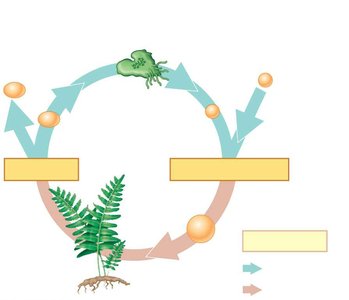
The alternation of generations is a defining feature of the plant life cycle, involving two distinct multicellular stages:
Gametophyte (n): Produces gametes by mitosis.
Sporophyte (2n): Develops from the fusion of gametes and produces spores by meiosis.
Key processes:
Meiosis produces haploid spores from diploid sporophytes.
Fertilization restores diploidy, forming the sporophyte.
Adaptations for Terrestrial Life
Plants evolved several adaptations to thrive on land:
Maintaining moisture (cuticle, stomata)
Structural support (lignified tissues, vascular systems)
Reproduction without water (pollen, seeds)
Anchorage and resource acquisition (roots, mycorrhizae)
Major Events in Plant Evolution
Three Key Events in Plant History
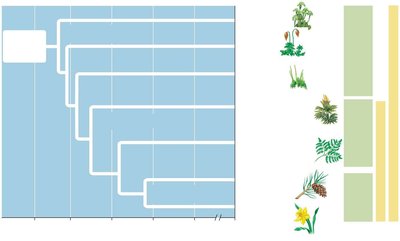
The evolution of plants is marked by three major events:
Origin of land plants: Nonvascular plants (bryophytes: mosses, liverworts, hornworts)
Origin of vascular plants: Seedless vascular plants (ferns, lycophytes)
Origin of seed plants: Gymnosperms and angiosperms
Nonvascular Plants (Bryophytes)
Bryophyte Diversity and Life Cycle
Bryophytes are small, nonwoody plants with life cycles dominated by the gametophyte stage. They include three phyla:
Liverworts (Hepatophyta)
Mosses (Bryophyta)
Hornworts (Anthocerophyta)
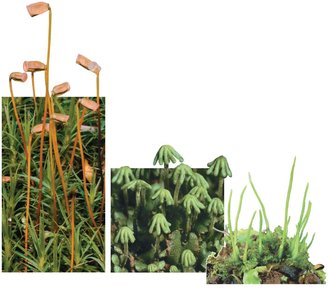
Key features: Gametophytes are larger and longer-lived than sporophytes. Structures include rhizoids (anchoring), protonema (early growth), and sporangia (spore production).
Seedless Vascular Plants
Adaptations of Vascular Plants
Vascular plants evolved specialized tissues for transport and support, enabling greater size and complexity.
Xylem: Conducts water and minerals; contains lignin for strength.
Phloem: Transports sugars and organic products.
Roots: Anchor plants and absorb water/nutrients.
Leaves: Increase surface area for photosynthesis; classified as microphylls (single vein) or megaphylls (branched veins).
Sporophylls: Modified leaves bearing sporangia; can form clusters (sori) or cones (strobili).
Seedless Vascular Plant Groups
Lycophytes: Club mosses, spike mosses, quillworts (mostly small, herbaceous)
Monilophytes: Ferns (most diverse), horsetails, whisk ferns
Most are homosporous (one spore type), but some are heterosporous (distinct male and female spores).
Seed Plants: Gymnosperms and Angiosperms
Adaptations of Seed Plants
Seed plants possess several key adaptations that contributed to their evolutionary success:
Seeds: Embryo and nutrient supply encased in a protective coat; can remain dormant and disperse widely.
Pollen: Male gametophyte enclosed in a tough wall; enables fertilization without water.
Reduced gametophytes: Microscopic, protected within sporophyte tissues.
Heterospory: Production of megaspores (female) and microspores (male).
Ovules: Structures containing the female gametophyte and egg cell.
Gymnosperms
Gymnosperms are seed plants with "naked seeds" (not enclosed in ovaries). Major groups include:
Cycadophyta: Cycads (palm-like, large cones)
Ginkgophyta: Ginkgo biloba (fan-shaped leaves, pollution tolerant)
Gnetophyta: Gnetum, Ephedra, Welwitschia (diverse habitats)
Coniferophyta: Conifers (pines, firs, redwoods; most are evergreens)
Angiosperms
Angiosperms (flowering plants) are the most diverse group of land plants. Their reproductive structures are flowers and fruits.
Flowers: Sites of pollination and fertilization; contain male (stamens) and female (carpels) organs.
Fruits: Mature ovaries that aid in seed dispersal.
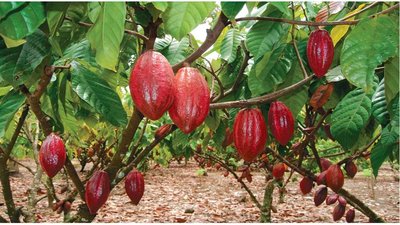
Example: The cacao tree (Theobroma cacao) produces large, fleshy fruits (pods) that contain seeds used to make chocolate. This illustrates the angiosperm adaptation of fruit for seed protection and dispersal.
Angiosperm Life Cycle
The angiosperm life cycle includes:
Gametophyte development (male: pollen grain; female: embryo sac)
Pollination (transfer of pollen to stigma)
Double fertilization (one sperm fertilizes egg, another forms endosperm)
Seed and fruit development
Significance of Plant Diversity
Ecological and Economic Importance
Plant diversity is vital for ecosystem function, food supply, and human society. Angiosperms provide most of the world's food, including grains, fruits, and spices. Loss of plant biodiversity threatens food security and ecosystem stability.
Summary Table: Major Plant Groups and Key Features
Group | Vascular Tissue | Seeds | Flowers/Fruits | Dominant Generation |
|---|---|---|---|---|
Bryophytes | No | No | No | Gametophyte |
Seedless Vascular Plants | Yes | No | No | Sporophyte |
Gymnosperms | Yes | Yes | No | Sporophyte |
Angiosperms | Yes | Yes | Yes | Sporophyte |
Additional info: This summary integrates and expands upon the provided lecture slides, filling in academic context for a comprehensive overview of plant evolution and diversity.
