 Back
BackEvolution and Diversity of Vertebrates: Chordates, Jaws, Limbs, Amniotes, and Mammals
Study Guide - Smart Notes
 Tailored notes based on your materials, expanded with key definitions, examples, and context.
Phylum Chordata and Vertebrate Evolution
Defining Features of Chordates
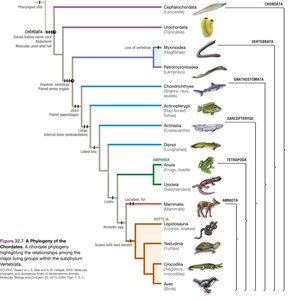
Chordates are a diverse phylum of animals characterized by several key features present at some stage of development. These features are foundational to understanding vertebrate evolution.
Notochord: A flexible, rod-shaped structure that provides support.
Dorsal hollow nerve cord: Develops into the central nervous system (brain and spinal cord).
Pharyngeal slits or clefts: Openings in the pharynx that function in filter-feeding or gas exchange.
Post-anal tail: An extension of the body past the anal opening.
Features Defining Vertebrates
Vertebrates are a subphylum of chordates distinguished by the presence of a backbone or vertebral column. This innovation supports greater size and mobility.
Vertebral column: Replaces the notochord in most adults, protecting the spinal cord.
Skull: Protects the brain.
Complex organ systems: Including advanced nervous, circulatory, and digestive systems.
Major Innovations in Vertebrate Evolution
Evolution of the Jaw (Gnathostomes)
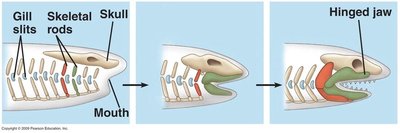
The evolution of jaws was a major event in vertebrate history, allowing for more efficient feeding strategies. Jaws are hypothesized to have evolved from skeletal rods supporting pharyngeal slits.
Evidence for jaw evolution:
Similar structure of bone or cartilage tissue in jaws and gill supports.
Developmental evidence: the same embryonic cells form jaws, gills, and associated muscles.
Gnathostomes: Jawed vertebrates, including fishes, amphibians, reptiles, birds, and mammals.
Origins of Bones and Teeth
Mineralized bone is a defining feature of most vertebrates. The earliest mineralization occurred in the mouth, leading to the development of teeth and jaws.
Human skeleton: Composed primarily of mineralized bone; cartilage is limited to specific areas (nose, ears, joints).
Teeth: Evolved as mineralized structures for feeding.
Evolution of Lungs and Buoyancy Control
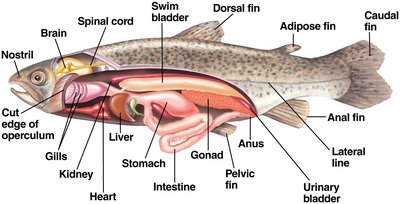
Lungs and swim bladders are important adaptations for gas exchange and buoyancy in aquatic vertebrates. Early ray-finned fishes had lungs that later evolved into swim bladders in some lineages.
Lungs: Supplemented gill-based gas exchange in early fishes.
Swim bladder: Evolved from lungs, providing buoyancy control.
Protective bony flap (operculum): Covers and protects the gills.
The Evolution of Tetrapods
Evolution of Limbs
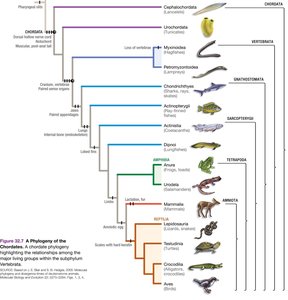
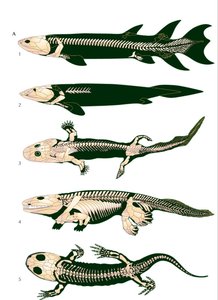
Tetrapods are vertebrates with limbs. The transition from aquatic to terrestrial life required significant anatomical changes, including the development of limbs with digits and a neck for head movement.
Derived characteristics:
Four limbs with digits
Neck with one or more vertebrae for increased mobility
Loss of gills in adults; development of ears and glands
Class Amphibia
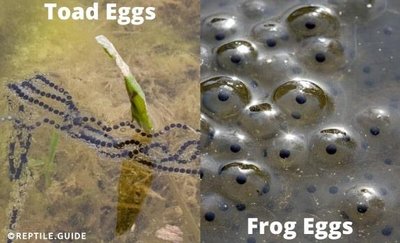
Amphibians are the earliest tetrapods, typically requiring aquatic environments for reproduction. They exhibit external fertilization and lay jelly-like eggs, making them sensitive to environmental changes.
External fertilization: Males stimulate egg release by grasping females.
Eggs: Lack a protective shell, requiring moist habitats.
Global decline: Amphibian populations are threatened by disease, habitat loss, climate change, and pollution.
Amniotes and the Amniotic Egg
Structure and Function of the Amniotic Egg
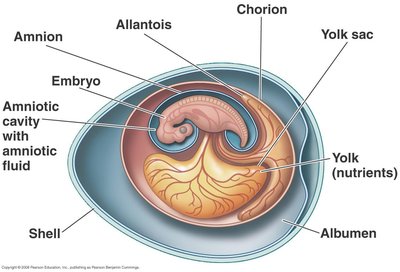
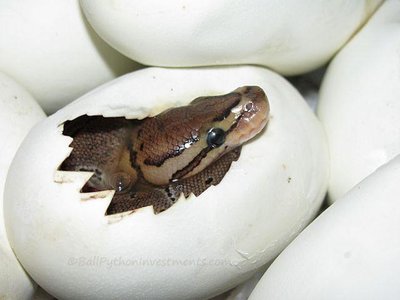
The amniotic egg is a key adaptation that allowed vertebrates to reproduce on land. It contains specialized membranes for protection, gas exchange, waste removal, and nutrition.
Amnion: Fluid-filled sac that cushions the embryo.
Chorion: Facilitates gas exchange.
Allantois: Stores waste produced by the embryo.
Yolk sac: Provides nutrients.
Albumen: Supplies additional protein (egg white).
Reptilia Clade
Reptiles, including birds, are amniotes that lay shelled eggs and exhibit internal fertilization. Most reptiles are ectothermic, relying on external heat sources, while birds are endothermic.
Egg types:
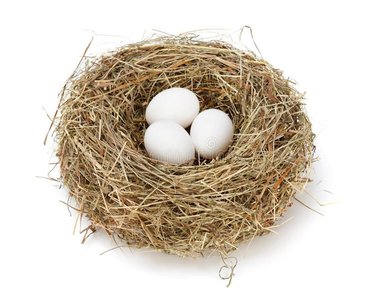
Birds: Inflexible, calcium carbonate shells
Other reptiles: Flexible, leathery shells
Ectothermy: Reduces food requirements compared to endotherms.
Birds: Only reptilian group that is endothermic (maintain body temperature metabolically).
Derived Features of Mammals
Key Mammalian Characteristics
Mammals are a diverse group of amniotes with several unique derived traits that distinguish them from other vertebrates.
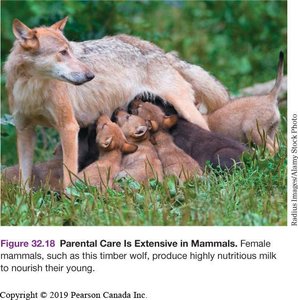
Mammary glands: Produce milk to nourish young.
Hair or fur: Provides insulation.
Fat layer under skin: Aids in temperature regulation.
Diaphragm: Muscle that assists in ventilating the lungs.
Long parental care: Offspring are cared for over extended periods.
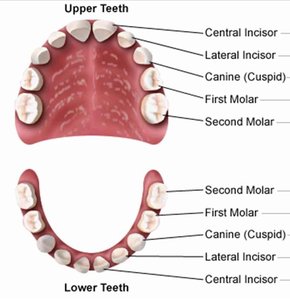
Differentiated teeth: Specialized for different functions (incisors, canines, molars).
Mammalian Lineages and Birthing Modes
Mammals are classified into three main groups based on their reproductive strategies:
Group | Key Features | Example |
|---|---|---|
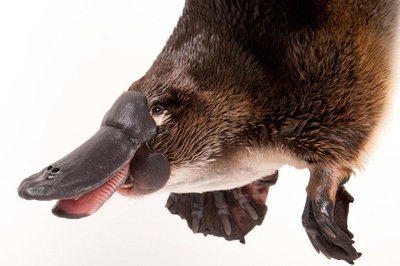
Monotremes | Lay eggs, produce milk, lack nipples | Platypus, spiny anteater |
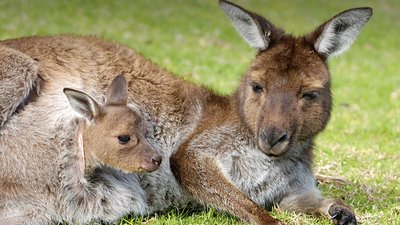
Marsupials | Birth live young, development completed in pouch (marsupium) | Kangaroo, koala, opossum |
Eutherians | Placental mammals, complete embryonic development in uterus | Humans, elephants, rodents |
Summary Table: Major Vertebrate Innovations
Innovation | Function | Major Groups |
|---|---|---|
Jaws | Efficient feeding, predation | Gnathostomes (jawed vertebrates) |
Lungs/Swim Bladder | Gas exchange, buoyancy | Ray-finned and lobe-finned fishes |
Limbs with Digits | Movement on land | Tetrapods |
Amniotic Egg | Reproduction on land | Amniotes (reptiles, birds, mammals) |
Hair, Mammary Glands | Insulation, nourishment of young | Mammals |
Learning Objectives
Describe the features that define chordates.
List the features that define vertebrates and describe the relationships among the major vertebrate lineages.
Describe the innovations that occurred during vertebrate evolution: jaws, lungs, limbs, amniotic egg, flight, parental care.
Identify and describe the derived traits of mammals, including different birthing modes.
