 Back
Evolution and Population Genetics: Study Notes with Key Evidence and Mechanisms
Study Guide - Smart Notes
 Tailored notes based on your materials, expanded with key definitions, examples, and context.
Evolution: Pre-Darwinian Ideas and Darwin's Voyage
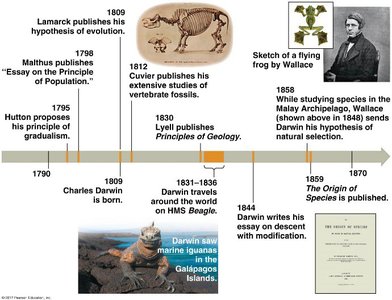
Pre-Darwinian Ideas about Change Over Time
Before Darwin, several scientists proposed theories to explain the diversity and change of life on Earth. These ideas laid the foundation for evolutionary theory.
Lamarck's Hypothesis: Suggested that organisms could acquire traits during their lifetime and pass them to offspring (inheritance of acquired characteristics).
Hutton and Lyell: Proposed gradualism and uniformitarianism, emphasizing slow geological processes shaping Earth over time.
Malthus: Argued that populations grow faster than resources, leading to competition.
Cuvier: Studied fossils and extinction, supporting the idea that life changes over time.
Darwin's Voyage on the HMS Beagle and Formulation of Natural Selection
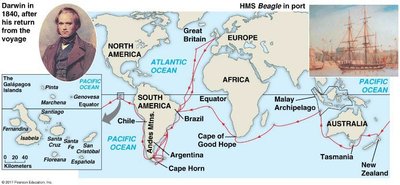
Charles Darwin's journey on the HMS Beagle (1831–1836) was pivotal in developing his theory of natural selection. He observed diverse species and their adaptations, especially in the Galápagos Islands.
Key Observations: Species varied from island to island; finches had different beak shapes suited to their diets.
Natural Selection: Darwin proposed that individuals with advantageous traits survive and reproduce, passing those traits to offspring.
Publication: Darwin published "On the Origin of Species" in 1859, introducing descent with modification and natural selection.
Mechanisms and Evidence for Evolution
Evolution through Natural Selection and Population Changes
Natural selection acts on variation within populations, leading to adaptation and changes in allele frequencies over generations.
Variation: Individuals differ in traits; some variations are heritable.
Selection: Environmental pressures favor certain traits.
Population Change: Over time, advantageous traits become more common.
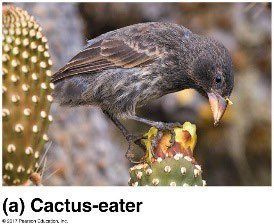
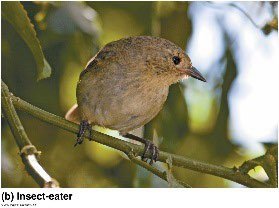
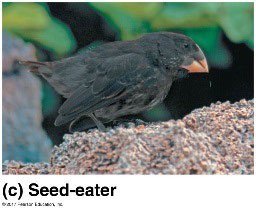
Example: Darwin's finches demonstrate adaptive radiation, where beak shape evolved to exploit different food sources.
Evidence for Evolution
Multiple lines of evidence support the theory of evolution:
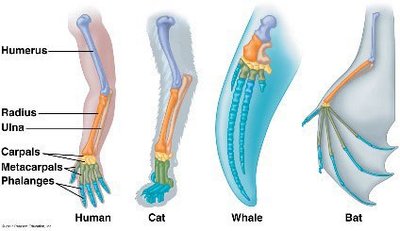
Homologous Structures: Anatomical similarities among species indicate common ancestry.
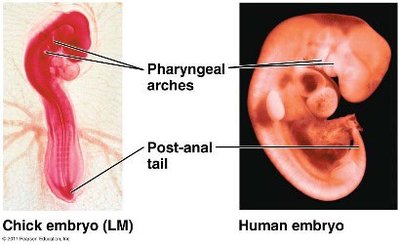
Embryological Evidence: Similar embryonic features (e.g., pharyngeal arches, post-anal tail) in vertebrates suggest shared ancestry.
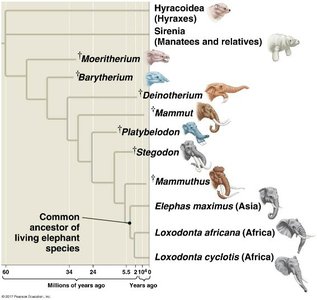
Fossil Record: Transitional fossils document gradual changes and speciation events.
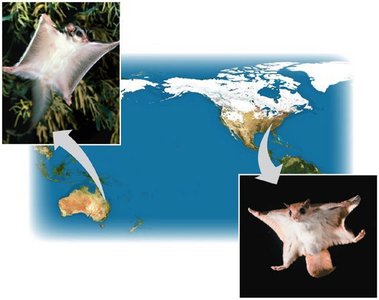
Biogeography: Geographic distribution of species reflects evolutionary history and adaptation.
Molecular Evidence: DNA and protein similarities reveal evolutionary relationships.
Population Genetics
Sources of Genetic Variation
Genetic variation is essential for evolution and arises from several sources:
Mutation: Random changes in DNA sequence.
Recombination: Shuffling of alleles during meiosis.
Gene Flow: Movement of alleles between populations.
Hardy-Weinberg Equilibrium (HWE)
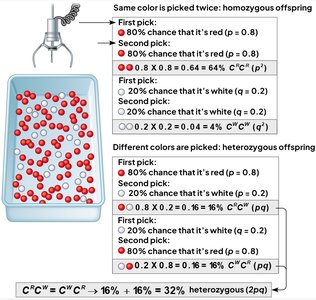
The Hardy-Weinberg principle describes a population that is not evolving. Allele and genotype frequencies remain constant if certain conditions are met:
No mutation
No migration (gene flow)
Random mating
No selection
Large population size
Equation:
Where p and q are allele frequencies.
Genetic Drift, Bottleneck Effect, Founder Effect, and Gene Flow
These mechanisms alter allele frequencies in populations:
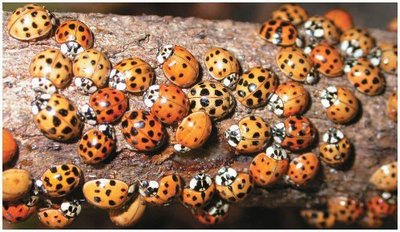
Genetic Drift: Random changes in allele frequencies, especially in small populations.
Bottleneck Effect: Drastic reduction in population size leads to loss of genetic diversity.
Founder Effect: New population established by a few individuals; reduced genetic variation.
Gene Flow: Exchange of genes between populations increases genetic diversity.
Relative Fitness and Types of Natural Selection
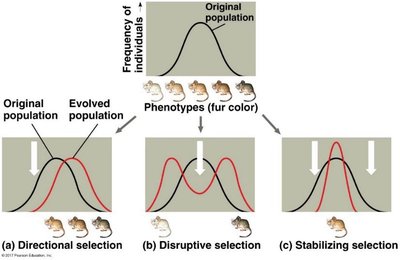
Relative fitness measures an individual's reproductive success compared to others. Natural selection can act in different ways:
Directional Selection: Favors one extreme phenotype.
Disruptive Selection: Favors both extreme phenotypes.
Stabilizing Selection: Favors intermediate phenotypes.
Speciation and Phylogeny
Species Concepts and Reproductive Isolation
Speciation is the process by which new species arise. Three main species concepts are used:
Biological Species Concept: Species are groups of interbreeding populations that produce viable, fertile offspring.
Morphological Species Concept: Species are defined by structural features.
Ecological Species Concept: Species are defined by their ecological niche.
Phylogenetic Trees and Cladistics
Phylogenetic trees illustrate evolutionary relationships. Cladistics classifies organisms based on shared derived characteristics.
Summary Table: Types of Evidence for Evolution
Type of Evidence | Description | Example |
|---|---|---|
Homologous Structures | Similar anatomy due to common ancestry | Forelimbs of human, cat, whale, bat |
Embryology | Similar embryonic features | Pharyngeal arches in chick and human embryos |
Fossil Record | Transitional fossils | Evolution of elephants |
Biogeography | Distribution of species | Gliding mammals in Australia and North America |
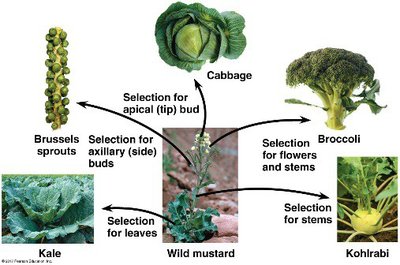
Artificial Selection | Human-driven selection | Wild mustard varieties |
Conclusion
Evolution is supported by multiple lines of evidence and explained by mechanisms such as natural selection, genetic drift, and gene flow. Population genetics provides a mathematical framework for understanding allele frequency changes, while speciation and phylogeny reveal the diversity and relationships among living organisms.
