 Back
BackEvolution and the Evolution of Populations: Mechanisms, Evidence, and Hardy-Weinberg Equilibrium
Study Guide - Smart Notes
 Tailored notes based on your materials, expanded with key definitions, examples, and context.
Evolution: Descent with Modification
Introduction to Evolutionary Theory
Evolution is defined as descent with modification, meaning that species change over time. The theory of evolution is a widely accepted scientific explanation that is broader than a hypothesis, generates new hypotheses, and is supported by a large body of evidence. The discovery of new species during the 1800s, especially through global travel, raised questions about the similarities and differences among isolated species.
Theory: A comprehensive explanation supported by evidence and capable of generating new hypotheses.
Comparative Morphology: The study of anatomical patterns among organisms, which was the primary method for classification before molecular techniques.
Fossils: Remnants of features that served important functions in ancestors, providing evidence for evolutionary change.
Convergent Evolution and Comparative Morphology
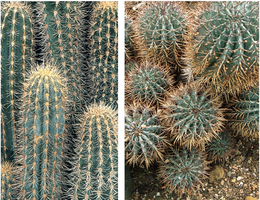
Comparative morphology revealed that some organisms are outwardly similar but internally different, complicating classification. Convergent evolution explains why unrelated species in similar environments develop similar adaptations.
Convergent Evolution: The independent evolution of similar features in species of different lineages.
Example: The milk barrel cactus (Africa) and the saguaro cactus (North America) are similar in appearance but evolved independently.
Darwin’s Theory of Evolution
Historical Context and Alternative Theories
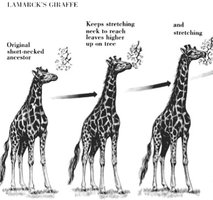
Before Darwin, Jean-Baptiste Lamarck proposed that species change over time by acquiring traits through use or disuse, which are then inherited by offspring. However, this mechanism was later disproven.
Lamarck’s Theory: Traits acquired during an organism’s lifetime are passed to offspring.
Example: Giraffes stretching their necks to reach higher leaves, resulting in longer-necked offspring.
Darwin’s Observations and Natural Selection
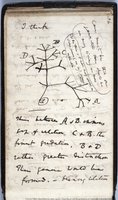
Charles Darwin’s observations of geology, fossils, and living organisms led him to propose natural selection as the mechanism of evolution. He noted similarities between extinct and living species, such as Glyptodons and armadillos, suggesting common ancestry.
Natural Selection: The process by which individuals with advantageous traits are more likely to survive and reproduce.
Adaptation: An inherited trait that enhances an organism’s ability to survive and reproduce in a specific environment.
Economic Ideas and the Struggle for Existence
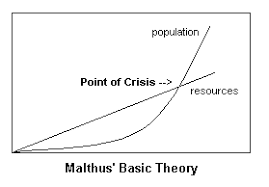
Darwin was influenced by economist Thomas Malthus, who observed that populations grow faster than resources, leading to competition. Darwin applied this concept to all organisms, recognizing that only those best suited to their environment survive and reproduce.
Struggle for Resources: Competition for limited resources drives natural selection.
Fitness: The ability of an organism to survive and reproduce in its environment.
Artificial Selection as a Model
Artificial selection, or selective breeding by humans, demonstrates how selection can change species over generations. This process is seen in the development of various breeds of dogs, cats, and cultivated plants.
Artificial Selection: Human-directed breeding to enhance desirable traits in plants and animals.
Evidence for Evolution
Multiple lines of evidence support the theory of evolution, including:
Fossil Evidence: Shows changes in species over time and the existence of extinct forms.
Homologous Structures: Anatomical features with similar structures but different functions, indicating common ancestry.
Analogous Structures: Features with similar functions but different evolutionary origins.
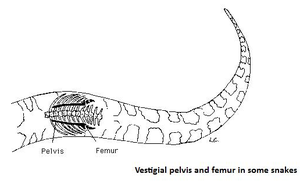
Vestigial Structures: Remnants of features that served important functions in ancestors but are now reduced or unused.
Comparative Embryology: Similarities in embryonic development among different species.
Biochemical Evidence: Similarities in DNA and protein sequences among species.
The Evolution of Populations
Populations, Not Individuals, Evolve
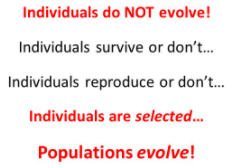
It is a common misconception that individuals evolve. In reality, evolution occurs at the population level, as allele frequencies change over generations.
Population: A group of organisms of the same species living in a specific area, interbreeding more frequently with each other than with outsiders.
Key Point: Individuals are selected, but populations evolve.
Sources of Genetic Variation
Genetic variation is essential for evolution and arises from several sources:
Mutation: Random changes in DNA that can increase, decrease, or have no effect on fitness.
Gene Shuffling: Occurs during meiosis and fertilization, creating new combinations of alleles.
Crossing Over: Exchange of genetic material during prophase I of meiosis, increasing genetic diversity.
Allele and Genotype Frequencies
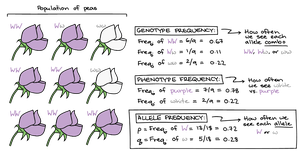
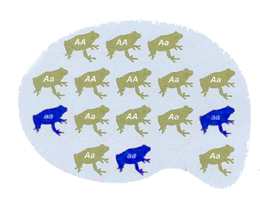
The gene pool of a population consists of all the alleles present. Allele frequency is the proportion of a specific allele among all alleles for a gene in the population. Genotype frequency is the proportion of a specific genotype among all individuals.
Allele Frequency: Expressed as a percentage or ratio (e.g., A or a).
Genotype Frequency: Proportion of AA, Aa, or aa genotypes.
Phenotype Frequency: Proportion of individuals with a particular physical trait.
Microevolution and Genetic Equilibrium
Microevolution refers to small changes in allele frequencies within a population over time. If allele frequencies remain constant, the population is in genetic equilibrium. The Hardy-Weinberg principle describes the conditions required for equilibrium:
No mutations
Infinitely large population
No migration
Random mating
No natural selection (equal reproductive success)
Hardy-Weinberg Equations
The Hardy-Weinberg equations allow calculation of allele and genotype frequencies in a population:
Allele Frequency Equation:
Genotype Frequency Equation:
Where p is the frequency of the dominant allele and q is the frequency of the recessive allele.
Example Calculation:
If 36% of a population is homozygous recessive (aa), then , so and .
Frequency of AA genotype:
Frequency of Aa genotype:
Application of Hardy-Weinberg Law
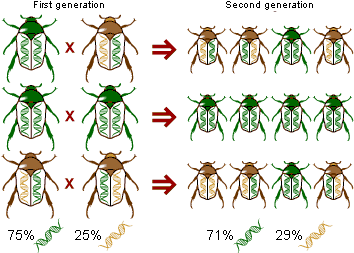
Changes in allele or genotype frequencies over generations indicate that evolution is occurring. The Hardy-Weinberg principle provides a baseline for detecting evolutionary change.
Summary Table: Hardy-Weinberg Principle
Parameter | Symbol | Equation |
|---|---|---|
Dominant allele frequency | p | |
Recessive allele frequency | q | |
Homozygous dominant genotype | p^2 | |
Heterozygous genotype | 2pq | |
Homozygous recessive genotype | q^2 |
Updated Definition of Evolution
Evolution is the change of a population’s allele frequencies or genotype frequencies over time.
