 Back
BackUnit 5
Study Guide - Smart Notes
 Tailored notes based on your materials, expanded with key definitions, examples, and context.
Evolutionary Theory and the Modern Synthesis
Foundations of Evolutionary Biology
The modern synthesis integrates Darwinian evolution, Mendelian genetics, and molecular biology to explain how populations change over time. It emphasizes the role of alleles and DNA in inheritance and population-level changes.
Evolution: Defined as a change in allele frequency in a population over time.
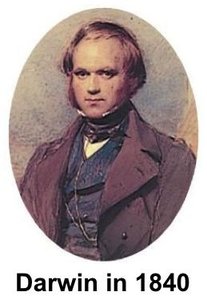
Darwin's Contribution: Introduced the concept of descent with modification and natural selection as the mechanism for evolution.
Mendel's Contribution: Described modes of inheritance at the individual level, providing a genetic basis for variation.
Darwin and the Age of Discovery
Darwin's voyage on the HMS Beagle led to key observations about species diversity and adaptation, especially in the Galapagos Islands.
Species were uniquely adapted to their environments.
Geographic proximity influenced similarities among species.
Competition and relative fitness drove natural selection.
Artificial Selection and Natural Selection
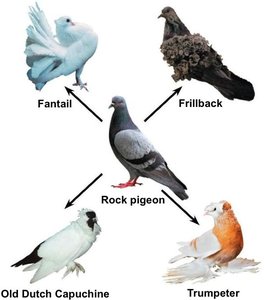
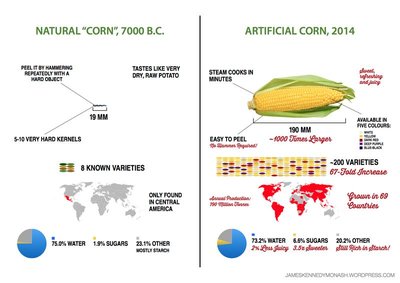
Artificial selection demonstrates how humans can drive evolution by selecting for desirable traits in crops and animals. Natural selection operates similarly in nature, favoring traits that enhance survival and reproduction.
Artificial selection depends on pre-existing, heritable variation.
Natural selection acts as the 'breeder' in nature, enriching adaptive traits over generations.
Natural Selection in Action
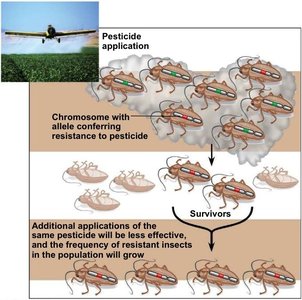
Natural selection can be observed in real-world scenarios, such as the evolution of pesticide resistance in insects.
Individuals with resistance alleles survive pesticide application.
Subsequent generations become increasingly resistant.
Evidence for Evolution
The Fossil Record
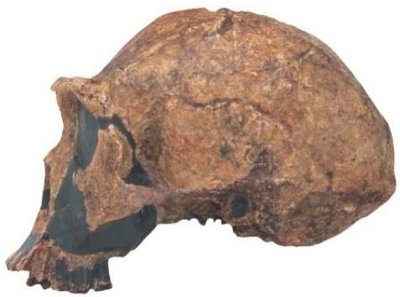
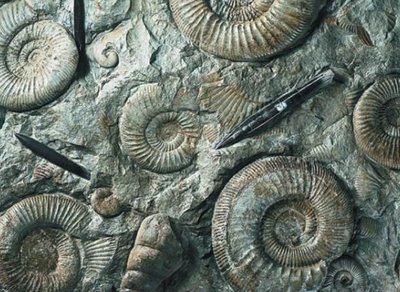
Fossils provide direct evidence of ancient organisms and document evolutionary transitions.
Mineralization and preservation processes create fossils.
Fossil organisms are similar to but distinct from modern species.
Transitional Forms
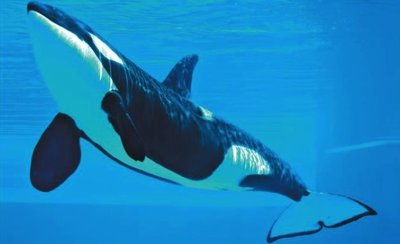
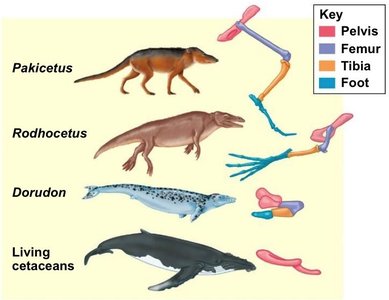
Transitional fossils illustrate evolutionary changes, such as the transition from land mammals to whales.
Predicted by Darwin, confirmed by fossil discoveries.
Homology
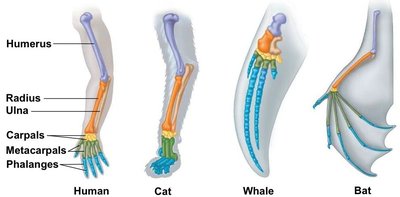
Homologous structures are anatomical features derived from a common ancestor, despite different functions.
Suggests modification of ancestral forms rather than independent design.
DNA and a Common Genetic Code
All living organisms share a universal genetic code, supporting the hypothesis of common ancestry.
Genes such as rRNA, aquaporins, and glycolysis are found in all life forms.
Homology extends to DNA sequences.
Comparative Embryology
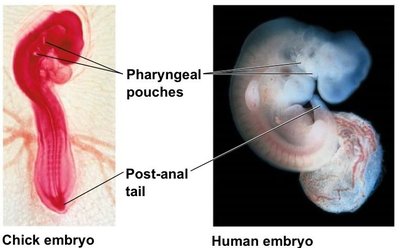
Embryological similarities reveal evolutionary relationships, such as pharyngeal pouches and post-anal tails in vertebrate embryos.
Structures may develop into different functions in adults.
Vestigial structures are remnants of evolutionary history.

Evolution of Populations
Genetic Variation and Mechanisms
Populations evolve through changes in allele frequencies, driven by several mechanisms:
Mutation: The ultimate source of genetic variation.
Sexual Reproduction: Generates variation via random fertilization, independent assortment, and crossing over.
Natural Selection: Acts on heritable traits, enriching adaptive alleles.
Genetic Drift: Random changes in allele frequencies, significant in small populations.
Gene Flow: Movement of alleles between populations.
Sexual Selection: Differential reproductive success based on mate choice.
Allele Frequency and Hardy-Weinberg Equilibrium
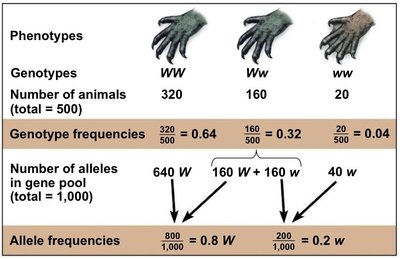
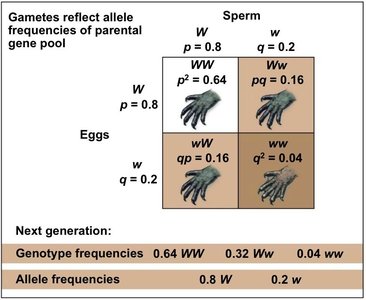
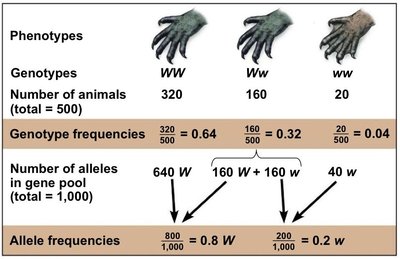
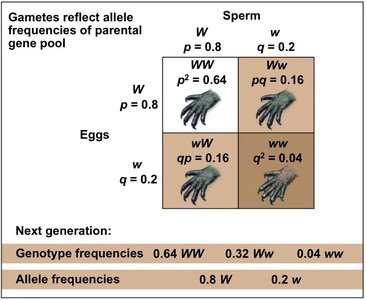
Allele frequencies in a population can be calculated and predicted using the Hardy-Weinberg principle.
Allele frequency: (for two alleles)
Genotype frequency: (homozygote), (heterozygote), (homozygote)
Hardy-Weinberg equilibrium: No change in allele frequency means no evolution.
Mechanisms of Evolution
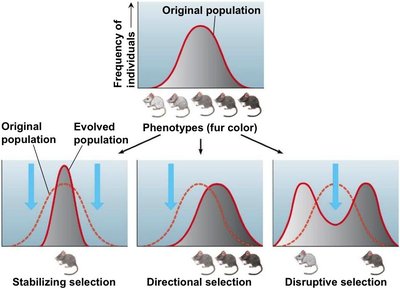
Natural Selection
Natural selection leads to adaptation by favoring traits that increase fitness.

Genetic Drift
Genetic drift is driven by random events and is most significant in small populations. Two special cases are:
Bottleneck Effect: Sudden reduction in population size alters allele frequencies.
Founder Effect: A new population started by a few individuals has different allele frequencies than the original.
Gene Flow
Gene flow involves the movement of alleles between populations, making them more genetically similar.
Sexual Selection
Sexual selection results in sexual dimorphism and can drive speciation through mate choice.
Intrasexual selection: Competition among males.
Intersexual selection: Female choice based on male traits.
Speciation: The Origin of Species
What is a Species?
The biological species concept defines species as populations that interbreed and produce fertile offspring. Other concepts include morphological, ecological, and taxonomic species concepts.
Reproductive Barriers and Speciation
Reproductive barriers prevent interbreeding and are essential for speciation. Speciation can occur via:
Allopatric Speciation: Geographic separation leads to divergence.
Sympatric Speciation: Occurs without geographic separation, often through habitat differentiation or polyploidy (especially in plants).
Hybrid Polyploid Speciation
Hybridization and errors in cell division can create new plant species with multiple sets of chromosomes (polyploidy).
Adaptive Radiation and Hybrid Zones
Adaptive radiation occurs when a single ancestral species gives rise to many new species, often in isolated environments like islands. Hybrid zones are regions where related species can interbreed.
Major Events in the History of Life and Phylogeny
Origin of Life and Early Earth
Experiments like the Miller-Urey experiment simulate early Earth conditions and demonstrate the formation of organic molecules.
Steps Toward Life
Formation of polymers
Protocells
Self-replicating RNA
Phylogeny and Systematics
Phylogeny is the study of evolutionary relationships. Taxonomy and cladistics classify organisms based on shared characteristics and evolutionary history.
Homologous vs. Analogous Structures
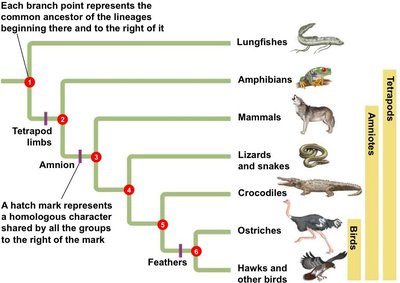
Homologous structures arise from common ancestry (divergent evolution), while analogous structures result from adaptation to similar environments (convergent evolution).
Building a Phylogenetic Tree
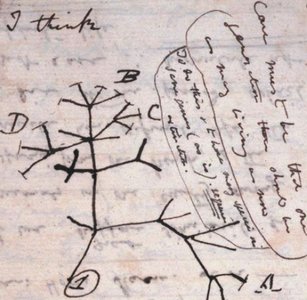
Phylogenetic trees are constructed based on homologies and trace evolutionary history from past to present.
Summary
Evolution is driven by genetic variation, natural selection, genetic drift, gene flow, and sexual selection.
Evidence for evolution includes fossils, transitional forms, homology, DNA, embryology, and vestigial structures.
Speciation occurs through reproductive barriers, geographic isolation, and polyploidy.
Phylogeny and systematics classify organisms based on evolutionary relationships.
