 Back
Evolution by Natural Selection and Evidence for Evolution
Study Guide - Smart Notes
 Tailored notes based on your materials, expanded with key definitions, examples, and context.
I Evolution by Natural Selection
Introduction to Evolution and Phylogenetic Trees
Evolution is the process by which species of organisms change over time through descent with inherited modification. The relationships among species and their evolutionary history are often visualized using phylogenetic trees, which are diagrams that represent hypotheses about the evolutionary ancestry of different species or groups based on shared characteristics or genetic data.
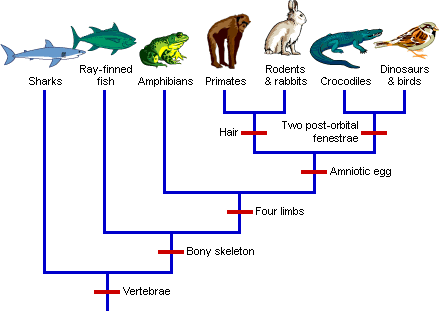
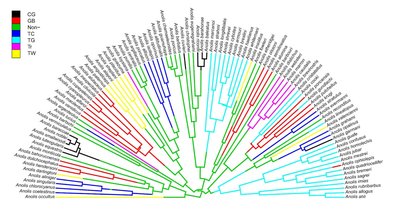
Branch points (nodes) represent common ancestors.
Phylogenetic trees can be constructed using morphological (phenotypic) or genetic data.
In laboratory settings, students may construct trees by comparing similarities and differences in phenotypes among organisms.
Evidence for Evolution
Multiple lines of evidence support the theory that species change over time and are related by common ancestry. These include:
Vastness of Geological Time: Radiometric dating measures the decay of radioactive elements in rocks and fossils, providing evidence that Earth is billions of years old.
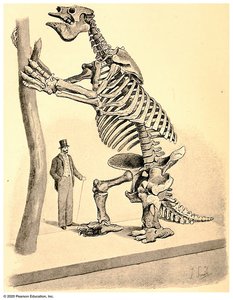
Extinction: The existence of extinct species demonstrates that species are not immutable and can change or disappear over time.
Transitional Features: Fossils with intermediate characteristics (e.g., lobe-finned fish to early tetrapods) link older and younger species, documenting evolutionary transitions.
Vestigial Traits: Structures that have lost their original function (e.g., human appendix, whale pelvis) indicate evolutionary remnants from ancestors.
Species Changing Today: Direct observations of evolution, such as changes in allele frequencies in populations, provide real-time evidence.
Biogeography: Similar species are often found in the same geographic area, reflecting their evolutionary history and the movement of continents.
Homology: Related species share homologous traits due to shared ancestry. Homologies can be anatomical, developmental, or molecular.
Formation of New Species: Speciation events have been observed, demonstrating the ongoing process of evolution.

Definitions and Key Concepts
Fossil: Any physical trace of an organism that existed in the past.
Homology: Similarity among organisms of different species due to shared ancestry.
Population: A group of organisms of the same interbreeding species living in the same geographic area at the same time.
Adaptation: An inherited trait that is advantageous for survival and reproduction in a particular environment.
Theory of Evolution by Natural Selection
Charles Darwin proposed natural selection as the mechanism by which evolution occurs. Natural selection is a process where individuals with heritable traits that increase their fitness are more likely to survive and reproduce, leading to the accumulation of adaptations over generations.
Natural: Occurs in the environment without human or supernatural direction.
Selection: Certain traits (genotypes and phenotypes) are favored and passed down to the next generation.
Scientific Theory vs. Everyday Theory
In science, a theory is a well-supported explanation based on evidence and repeated testing, not just a guess or hypothesis.
Theories can be modified or rejected with new evidence.
Darwin’s Four Postulates (Criteria for Natural Selection)
For evolution by natural selection to occur, four conditions must be met:
Variation: There is variation in traits among individuals within a population.
Heritability: Some of these traits are heritable (passed from parents to offspring).
Differential Survival and Reproduction: Not all individuals survive or reproduce equally (differential reproductive success).
Non-random Survival and Reproduction: Individuals with traits better suited to the environment are more likely to survive and reproduce.
If all four criteria are met, evolution by natural selection will occur in the population.
Key Terms: Evolutionary vs. Everyday Definitions
Term | Everyday Definition | Evolutionary Definition |
|---|---|---|
Fitness | Physical strength or health | The ability of an individual to survive and produce fertile offspring |
Adaptation | Adjustment to new conditions | A heritable trait that increases fitness in a particular environment |
Selection | Choosing or picking | Environmental pressures "select" which traits are advantageous (passive process) |
Mechanisms of Genetic Variation
Genetic Recombination: Crossing over during meiosis and independent assortment of homologous chromosomes create new combinations of alleles.
Mutation: Changes in the DNA sequence, caused by errors in replication or environmental factors (e.g., chemicals, UV light), introduce new genetic variation.
Examples of Natural Selection
Natural selection can be illustrated with real-world examples, such as the evolution of coloration in peppered moths in England. Before the industrial revolution, light-colored moths were common. After pollution darkened tree bark, dark-colored moths became more common due to selective predation.
Populations, not individuals, evolve. Natural selection acts on individuals, but only populations change genetically over generations.
Selective pressures (e.g., predators, environmental changes) determine which traits are advantageous.
Summary Table: Evidence for Evolution
Evidence | Description | Example |
|---|---|---|
Geological Time | Earth is billions of years old | Radiometric dating |
Extinction | Species can disappear | Fossil record of extinct animals |
Transitional Features | Intermediate forms in fossils | Lobe-finned fish to tetrapods |
Vestigial Traits | Structures with reduced function | Human appendix |
Direct Observation | Evolution observed today | Peppered moths |
Biogeography | Distribution reflects history | Darwin's finches |
Homology | Shared traits from ancestry | Forelimb bones in mammals |
Speciation | New species formation | Observed in finches |
Conclusion
Evolution by natural selection is a foundational concept in biology, supported by extensive evidence from fossils, genetics, and direct observation. Understanding the mechanisms and evidence for evolution is essential for interpreting the diversity of life on Earth.
