 Back
Evolution by Natural Selection: Concepts, Evidence, and Misconceptions
Study Guide - Smart Notes
 Tailored notes based on your materials, expanded with key definitions, examples, and context.
Evolution by Natural Selection
Introduction to Evolution and Natural Selection
Evolution by natural selection is a foundational concept in biology, explaining how populations change over time due to differential survival and reproduction. Natural selection acts on heritable variation within populations, leading to adaptation and evolutionary change.
Fitness: The likelihood that an individual contributes offspring to the next generation. Fitness is determined by both survival and reproductive success.
Adaptation: A trait that makes an organism well-suited to its environment, increasing its fitness.
Relationship: Natural selection is the mechanism by which evolution occurs. Evolution is the change in populations over generations, while natural selection explains how certain traits become more common.
Example: Camouflaged caterpillars are more likely to survive and reproduce, illustrating natural selection.
Typological vs. Population Thinking
Biologists distinguish between typological thinking (viewing species as fixed types) and population thinking (recognizing variation within populations).
Typological Thinking: Species are compared to an ideal type; variation is seen as deviation from the ideal.
Population Thinking: Variation among individuals is important; species descriptions include diversity and change over time.
Importance: Population thinking is essential for understanding evolution, as it considers the full range of variation present in nature.
Example: Dog breed standards reflect typological thinking, while population thinking considers the variation within breeds.
Ladder vs. Tree Thinking
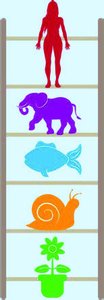
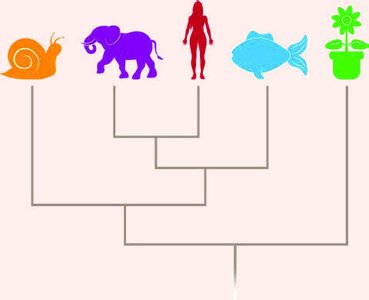
Historically, species were viewed as arranged in a hierarchy (ladder thinking), but modern biology uses tree thinking to represent evolutionary relationships.
Ladder Thinking: Species are ranked from low to high complexity; species are seen as unchanging.
Tree Thinking: Species are related through common descent; evolutionary histories explain variation.
Example: Tree diagrams (phylogenetic trees) show how species diverge from common ancestors.
Reading Phylogenetic Trees
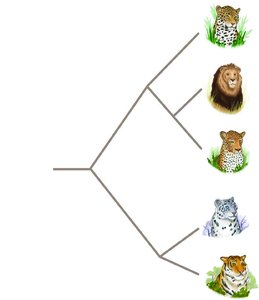
Phylogenetic trees are diagrams that represent evolutionary relationships based on common descent. Branches indicate divergence over time, and nodes represent common ancestors.
Relatedness: Determined by how recently two species share a common ancestor.
Application: Phylogenetic trees help identify which species are most closely related and predict shared traits.
History of Evolutionary Thought
Geological Thinking and Uniformitarianism
Geological concepts such as uniformitarianism influenced evolutionary theory by demonstrating that Earth is ancient and changes gradually.
Uniformitarianism: Geological processes observed today are the same as those in the past; change is slow and continuous.
Key Figures: James Hutton (idea of an old Earth), Charles Lyell (popularized uniformitarianism), Georges Cuvier (father of paleontology).
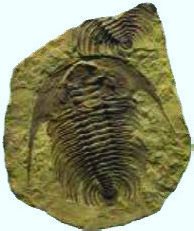
Fossil Evidence: Fossils show extinct organisms and evolutionary change over time.

Lamarck and the Inheritance of Acquired Traits
Jean-Baptiste de Lamarck proposed that traits acquired during an organism's lifetime could be inherited, but this idea was later disproven by genetics.
Use and Disuse: Traits become more or less developed depending on their use.
Inheritance of Acquired Traits: Traits developed through use or disuse are passed to offspring (incorrect).
Modern Understanding: Only genetic traits are inherited; acquired traits are not passed to offspring.
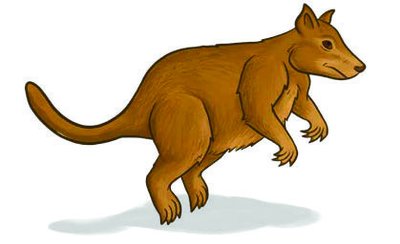
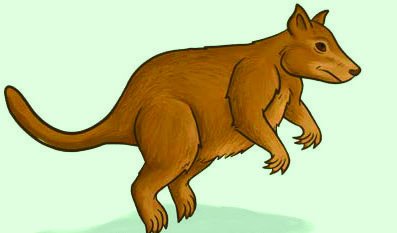
Example: Kangaroos' large hind limbs explained by use and disuse, but genetics shows this is not inherited.
Darwin and Wallace: The Theory of Natural Selection
Charles Darwin and Alfred Russel Wallace independently developed the theory of natural selection, explaining how evolution occurs through differential survival and reproduction.
Darwin: Traveled on HMS Beagle, observed unique organisms, developed theory over many years.
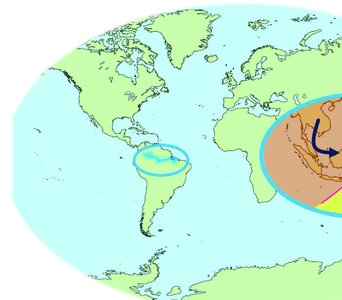
Wallace: Observed species distribution in the Malay Archipelago, independently formulated natural selection.
Publication: Both theories were published jointly in 1858; Darwin's "On the Origin of Species" followed in 1859.
Natural Selection: Mechanism and Evidence
Key Insights for Understanding Natural Selection
Natural selection operates on variation within populations, leading to adaptation and evolutionary change.
Variation: Essential for natural selection; must be heritable.
Overproduction: More offspring are produced than can survive.
Selection: Individuals with advantageous traits are more likely to survive and reproduce.
Evolution: Populations evolve, not individuals.
Fitness: Depends on survival and reproduction in the current environment.
Evidence for Natural Selection
Natural selection can be observed in real time, such as the evolution of antibiotic resistance in bacteria and color changes in animal populations.
Antibiotic Resistance: Bacteria with resistance genes survive and reproduce, leading to resistant populations.
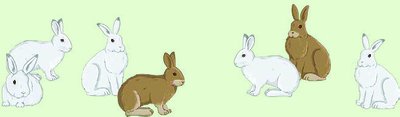
Industrial Melanism: Peppered moths changed color in response to environmental pollution, demonstrating natural selection.
Artificial Selection: Humans selectively breed organisms for desired traits, providing a model for natural selection.
Comparison of Natural and Artificial Selection
Feature | Natural Selection | Artificial Selection |
|---|---|---|
Agent of Selection | Environment | Humans |
Variation Required | Yes | Yes |
Goal | No specific goal | Specific traits |
Example | Antibiotic resistance | Dog breeds, kale |
Homology and Analogy
Homology refers to traits inherited from a common ancestor, while analogy refers to traits with similar functions but different evolutionary origins.
Homology: Similar structure due to common ancestry (e.g., limb bones in tetrapods).
Analogy: Similar function but different origin (e.g., wings in birds and bats).
Types of Homologies: Vestigial structures, embryological homology, molecular homology.
Types of Homologies
Type | Description | Example |
|---|---|---|
Vestigial Structure | Lost most or all function | Human goosebumps |
Embryological Homology | Shared traits as embryos | Pharyngeal arches |
Molecular Homology | Similar DNA/protein sequences | MC1R gene in mammals |
Fossil Evidence
Fossils provide evidence for evolutionary change and common descent. Sedimentary rock layers help determine the age and sequence of fossils.
Transitional Fossils: Show intermediate forms between groups (e.g., Archaeopteryx between dinosaurs and birds).
Geologic Layers: Older fossils are found in deeper layers; demonstrate both extinction and evolutionary change.
Common Misconceptions about Evolution
Clarifying Misconceptions
Several misconceptions persist about evolution and natural selection. It is important to understand the scientific meaning of terms and the mechanisms involved.
"Theory" in Science: Refers to a well-supported explanation, not a guess.
Individuals vs. Populations: Individuals do not evolve; populations do.
Fitness: Refers to reproductive success, not just strength or survival.
Adaptation: Occurs over generations, not within an individual's lifetime.
Natural Selection: Acts on existing variation; does not create new traits on demand.
