 Back
BackEvolution by Natural Selection: Foundations, Evidence, and Key Figures
Study Guide - Smart Notes
 Tailored notes based on your materials, expanded with key definitions, examples, and context.
Evolution by Natural Selection
Defining Evolution
Evolution is a central concept in biology, describing how living organisms change over generations. This process, known as descent with modification, involves the inheritance of traits from parents to offspring, with variations that allow adaptation to different environments. Over time, these changes explain the vast diversity of life on Earth, all of which traces back to a single common ancestor.
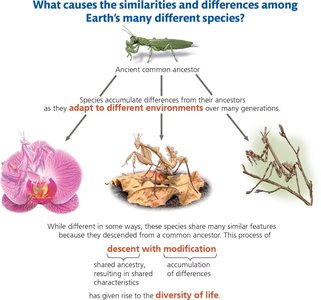
Descent with modification: The process by which organisms inherit traits from their ancestors, with changes accumulating over generations.
Diversity of life: The result of evolutionary processes acting on populations over long periods.
Adaptation: Traits that improve an organism's ability to survive and reproduce in a particular environment.
Historical Context and Key Figures
Before 1859, most people believed that species were unchanging. The idea of evolution as an explanation for the diversity of life was not widely accepted until the work of several key figures, most notably Charles Darwin and Alfred Russel Wallace.
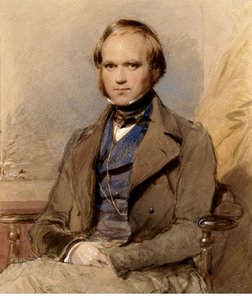
Charles Darwin (1809–1882): Published On the Origin of Species in 1859, outlining the process of natural selection as the mechanism for evolution. He observed that individuals with advantageous traits have higher fitness and are more likely to pass those traits to offspring.
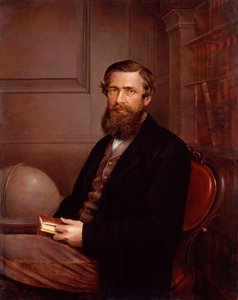
Alfred Russel Wallace (1823–1913): Independently arrived at similar conclusions about evolution and natural selection. Both Darwin and Wallace's ideas were presented in 1858, but Darwin is more widely credited due to his comprehensive publication.
Darwin's Voyage and Observations
Darwin's five-year voyage on the HMS Beagle (1831–1836) was critical to his development of evolutionary theory. He made extensive observations of plants, animals, fossils, and geology, noting both similarities and differences among species and their adaptations to specific environments. The finches of the Galapagos Islands are a famous example, illustrating how species can diverge to fill different ecological niches.
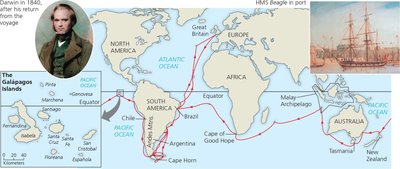
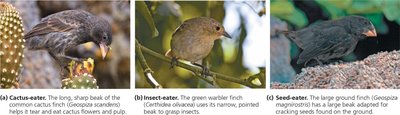
Key observation: Species on islands often resemble those on the nearest mainland but have unique adaptations.
Example: Galapagos finches have different beak shapes adapted to their specific diets.
Descent with Modification and the Tree of Life
In On the Origin of Species, Darwin described how species differ through key traits but also share characteristics due to common ancestry. He hypothesized that all living things have descended from a single common ancestor, with speciation occurring through branching evolutionary paths. This concept is often illustrated as a tree of life.
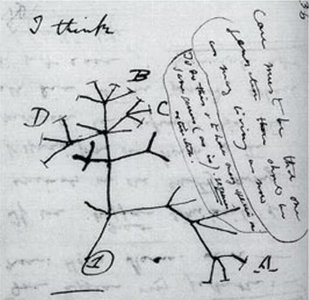
Speciation: The formation of new and distinct species through evolutionary processes.
Phylogeny: The evolutionary history and relationships among species.
Evidence of Evolution
Direct Observations of Evolution
Since Darwin, biologists have gathered extensive evidence supporting evolution. Direct observations include changes in traits within populations in response to environmental changes, such as shifts in beak length in soapberry bugs when a new food source is introduced.
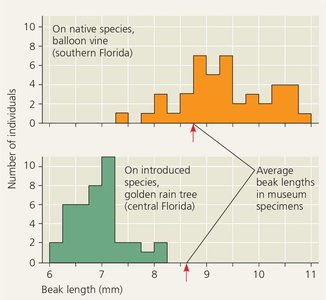
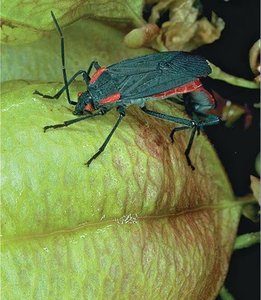
Example: Soapberry bugs in Florida evolved different beak lengths depending on the available food source.
Evolution of Drug Resistance
Evolution can also be observed in bacteria that become resistant to antibiotics. The frequent use of antibiotics selects for bacterial strains with resistance genes, such as Staphylococcus aureus strains resistant to methicillin.
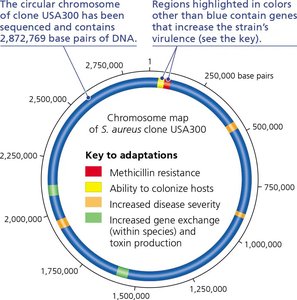
Antibiotic resistance: The ability of bacteria to survive and multiply despite the presence of drugs designed to kill them.
Mechanism: Resistance genes can be acquired through mutation or horizontal gene transfer.
Homology: Shared Traits Due to Common Ancestry
Homologies are traits shared by different species due to shared ancestry. For example, the forelimb bones of mammals (humans, cats, whales, bats) have the same basic structure, despite serving different functions.
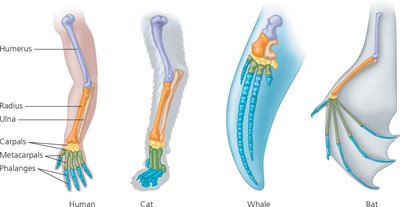
Homology: Similarity in traits due to inheritance from a common ancestor.
Example: The humerus, radius, and ulna are present in the forelimbs of many mammals.
Convergent Evolution
Not all similar traits are due to common ancestry. Convergent evolution occurs when distantly related species independently evolve similar traits as adaptations to similar environments or ecological roles. This can make physical traits misleading when inferring evolutionary relationships.
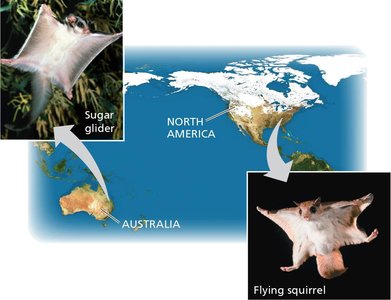
Example: Sugar gliders (Australia) and flying squirrels (North America) both have gliding membranes but are not closely related.
The Fossil Record
The fossil record provides critical evidence for evolution, documenting the existence of extinct species and the accumulation of key traits over time. Fossils are typically preserved in sedimentary rock, with durable materials like bones and teeth most likely to fossilize.
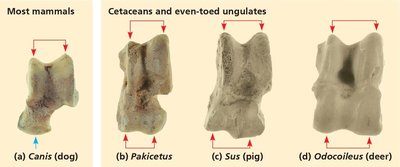
Fossil: Preserved remains or traces of ancient organisms.
Importance: Fossils help reconstruct evolutionary lineages and document transitions, such as the evolution of whales from terrestrial ancestors.
Whale Evolution: A Case Study
Fossils allow scientists to trace the evolutionary history of modern whales, showing their transition from land-dwelling ancestors to fully aquatic forms. This is mapped using phylogenetic trees, which illustrate relationships and trait changes over time.
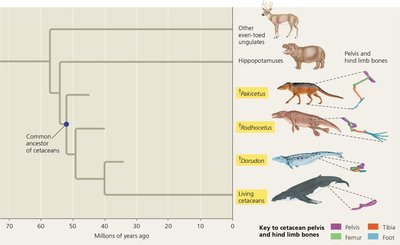
Key transition: Reduction of hind limbs and adaptation to aquatic life.
Paleontology and Key Contributors
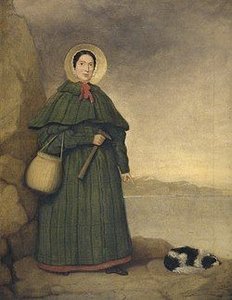
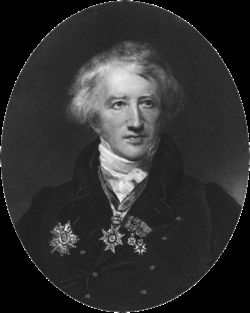
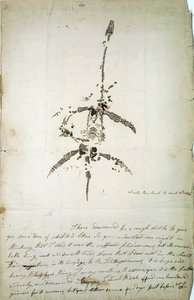
Paleontology is the study of fossils and extinct lineages. Georges Cuvier is considered the "father of paleontology," having established the concept of extinction. Mary Anning made significant contributions by discovering and describing important fossils, despite being excluded from the scientific community due to her gender.
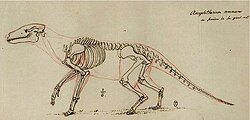
Extinction: The permanent loss of a species.
Contribution: Fossil discoveries have expanded our understanding of life's history and evolutionary transitions.
Biogeography
Biogeography is the study of the geographic distribution of species. The concept of continental drift, supported by plate tectonics, explains how related species can be found in widely separated regions. Charles Lyell, a geologist, influenced Darwin's thinking about gradual changes over time.
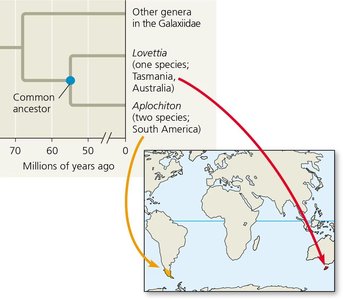
Continental drift: The slow movement of Earth's continents over time.
Example: Closely related fish species found in both South America and Australia due to ancient land connections.
The Genetic Revolution
Modern genetics has revolutionized the study of evolution. By comparing DNA sequences, scientists can quantify genetic similarities and differences between species. The greater the percentage of shared DNA, the more closely related two species are. For example, humans share about 99% of their DNA with bonobos and chimpanzees.
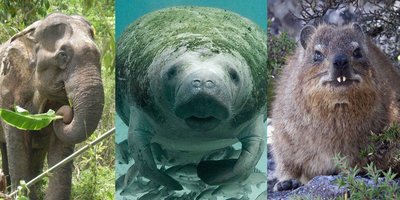
Genetic evidence: Confirms and refines evolutionary relationships inferred from morphology and fossils.
Summary of Key Points
The concepts of evolution, natural selection, and descent with modification were first described in detail by Charles Darwin in 1859.
Darwin's ideas were influenced by his own observations and the work of geologists and paleontologists.
Multiple lines of evidence support evolution, including fossils, biogeography, genetics, and direct observations.
Scientific inquiry and careful observation continue to expand our understanding of the diversity and history of life on Earth.
