 Back
Evolution: Descent with Modification and Evidence for Evolution
Study Guide - Smart Notes
 Tailored notes based on your materials, expanded with key definitions, examples, and context.
Evolution—Descent with Modification
Introduction to Evolution
Evolution is the process by which populations and species undergo heritable changes in their characteristics over generations. This concept, known as descent with modification, forms the foundation of modern biology and explains the diversity of life on Earth.
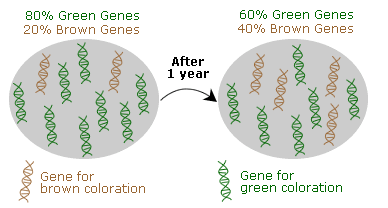
Evolution: Heritable change in one or more characteristics of a population or species from one generation to the next.
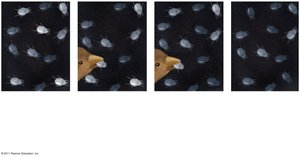
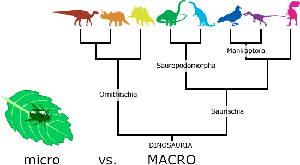
Microevolution: Small-scale changes within a population, often involving changes in a single gene.
Macroevolution: Large-scale changes that result in the formation of new species or groups of species.
Historical Context and Key Contributors
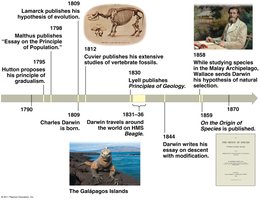
The theory of evolution was shaped by contributions from several scientists and thinkers.
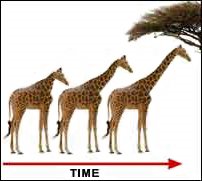
Jean-Baptiste Lamarck: Proposed the inheritance of acquired characteristics (e.g., giraffes stretching their necks).
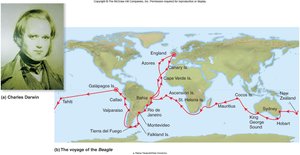
Charles Darwin: Developed the theory of natural selection, explaining how species change over time due to differential survival and reproduction.
Alfred Russel Wallace: Independently conceived the mechanism of natural selection and contributed to biogeography.
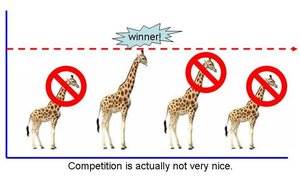
Thomas Malthus: Highlighted the role of population pressure and competition for resources.
Darwin's Observations and Natural Selection
Darwin's observations during his voyage to the Galápagos Islands led him to propose natural selection as the mechanism of evolution.
Natural Selection: The process by which individuals with advantageous traits are more likely to survive and reproduce, passing those traits to the next generation.
Adaptation: Traits that enhance survival and reproduction become more common in the population.
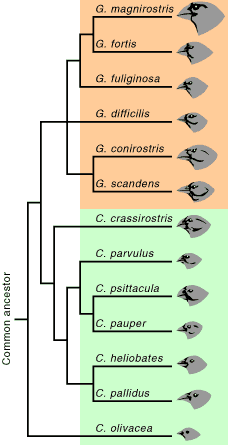
Example: Finches in the Galápagos adapted to different environmental niches, leading to diversity in beak size and shape.
Population Pressure and Competition
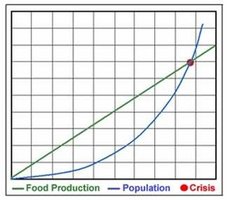
Darwin was influenced by Malthus's ideas about population growth and resource limitation.
Food supply is finite, leading to competition among individuals.
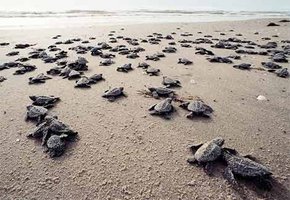
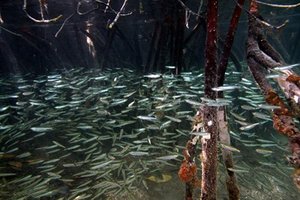
Many offspring die before reaching adulthood, only the best adapted survive.
Mechanism of Natural Selection
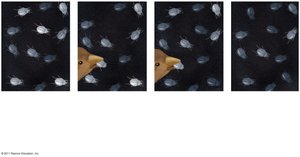
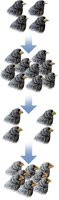
Natural selection operates through several key steps:
Variation in traits exists within a population.
Traits are heritable and passed from parent to offspring.
More offspring are produced than can survive.
Individuals compete for limited resources.
Those with better traits survive and reproduce, increasing the frequency of those traits.
Evidence Supporting Evolution
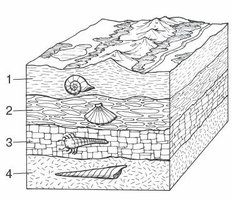
Fossil Record
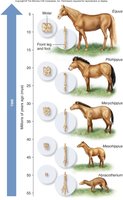
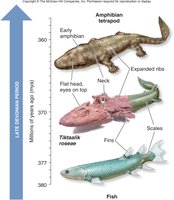
Fossils provide traces of past organisms and show gradual evolutionary change over time.
Transitional Forms: Intermediate forms between ancestral and descendant species.
Example: Adaptive changes in horses (size, foot anatomy, tooth morphology).
Biogeography
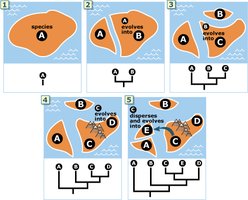
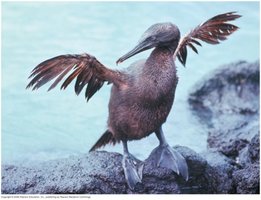
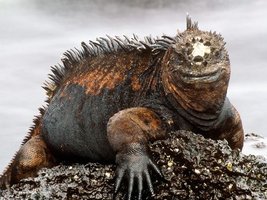
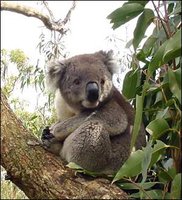
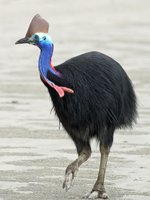
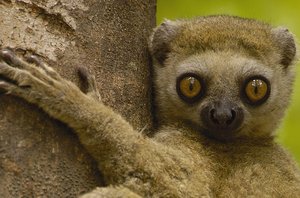
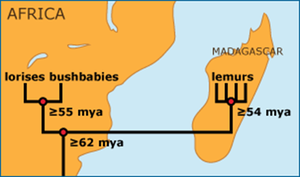
Biogeography is the spatial record of evolution, showing how species are distributed across continents and islands.
Isolated continents and islands have many endemic species.
Similar species on distant continents suggest past physical connections.
Natural and Artificial Selection
Natural Selection: Observed in ecosystems where environmental pressures favor certain traits.
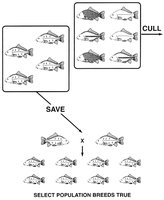
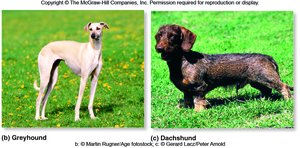
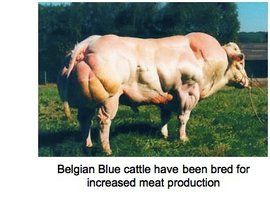
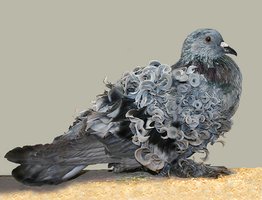
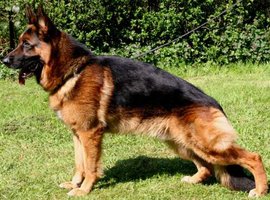
Artificial Selection: Human-driven selection, such as selective breeding of animals and plants.
Physical differences among breeds are caused by genetic differences.
Homologies
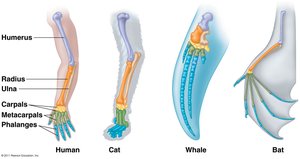
Homology refers to fundamental similarities due to descent from a common ancestor.
Anatomical Homology: Similar structures in different species (e.g., forelimbs of humans, cats, whales, bats).
Developmental Homology: Similar embryonic development patterns.
Molecular Homology: Similar DNA sequences among closely related species.
Convergent and Analogous Structures
Convergent Evolution: Two species from different lineages show similar characteristics because they occupy similar environments.
Analogous Structures: Structures with similar function but different evolutionary origins (e.g., wings of birds and insects).
Genetic Variation and Evolution
Sources of Genetic Variation
Genetic variation is essential for evolution and arises from several mechanisms:
Random Mutations: Changes in DNA sequence.
Exon Shuffling: Rearrangement of genetic material.
Horizontal Gene Transfer: Transfer of genes between different species.
Key Terms and Definitions
Descent with Modification: The passing of traits from parent to offspring, with changes accumulating over generations.
Homology: Similarity due to shared ancestry.
Homologous Structure: Anatomical features with similar origin but possibly different functions.
Analogous Structure: Features with similar function but different evolutionary origins.
Convergent Evolution: Independent evolution of similar traits in unrelated lineages.
Fossil: Preserved remains or traces of ancient organisms.
Vestigial Structure: Reduced or nonfunctional structures inherited from ancestors.
Evolutionary Tree: Diagram showing relationships among species.
Biogeography: Study of the geographic distribution of species.
Artificial Selection: Human-driven selection of traits.
Adaptation: Trait that increases an organism's fitness.
Evolution: Change in the genetic composition of a population over time.
Summary Table: Types of Evidence for Evolution
Type of Evidence | Description | Example |
|---|---|---|
Fossil Record | Traces of past organisms, showing gradual change | Horse evolution, transitional forms |
Biogeography | Distribution of species across continents and islands | Endemic species in Galápagos, Madagascar |
Natural Selection | Observed changes in populations due to environmental pressures | Finch beak size during drought |
Artificial Selection | Human-driven selection of traits | Dog breeds, cattle, pigeons |
Homologies | Similarities due to common ancestry | Forelimb structure in mammals |
Convergent Evolution | Similar traits in unrelated species | Wings of birds and insects |
Conclusion
Evolution is supported by multiple lines of evidence, including the fossil record, biogeography, natural and artificial selection, and homologies. Understanding these concepts is essential for grasping the mechanisms that drive the diversity of life on Earth. Key equations:
Hardy-Weinberg Principle:
Allele frequency:
Additional info: The notes include expanded academic context and examples to ensure completeness and clarity for exam preparation.
