 Back
Evolution: Descent with Modification and Evidence for Evolution
Study Guide - Smart Notes
 Tailored notes based on your materials, expanded with key definitions, examples, and context.
Evolution: Descent with Modification
Darwin’s Reflection and the Concept of Evolution
Charles Darwin poetically described the diversity of life as a result of gradual change from simple beginnings, leading to the evolution of countless forms. Evolution is defined as descent with modification, where organisms change over generations, accumulating adaptations that enhance survival and reproduction.
Three Key Observations About Life
Adaptation to Environment: Organisms are well suited for their environments, often through specialized traits.
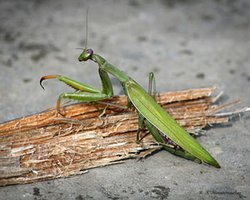
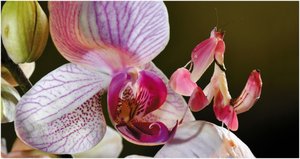
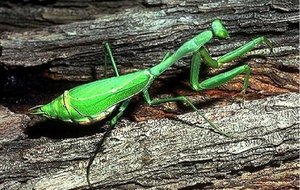
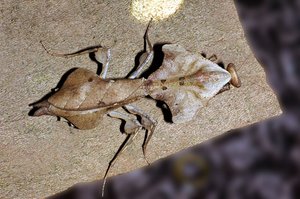
Unity of Life: Shared characteristics among organisms, such as the three pairs of legs, bulging eyes, triangular head, and flexible neck in Mantodea (praying mantises), indicate common ancestry.
Diversity of Life: Despite similarities, there is vast diversity, exemplified by the ~2400 species of Mantodea, each adapted to different environments.

History and Development of Evolutionary Theory
Pre-Darwinian Ideas
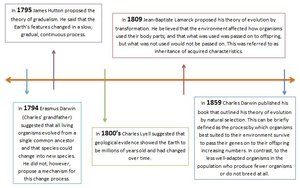
Before Darwin, several thinkers proposed that species could change, but the mechanisms were unclear. Early theories included gradual geological change (Hutton), inheritance of acquired characteristics (Lamarck), and the idea that all living organisms evolved from a common ancestor (Erasmus Darwin).
Darwin’s Journey and Observations
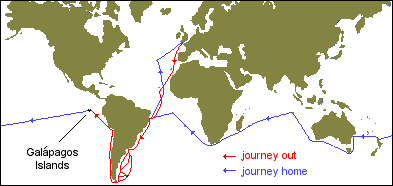
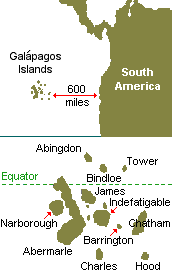
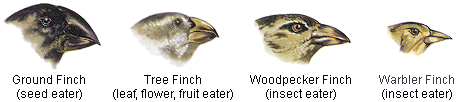
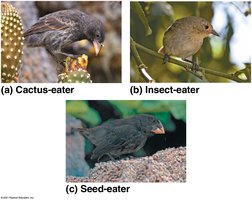
Darwin’s voyage on the HMS Beagle, especially his studies in the Galapagos Islands, provided key insights into the diversity and adaptation of species. He observed unique groups of plants and animals, such as finches with different beak shapes adapted to specific diets.
Evolution as Pattern and Process
Pattern and Process
Evolution is both a pattern (revealed by scientific data showing life has changed over time) and a process (mechanisms such as natural selection that drive change).
Darwin’s Major Ideas
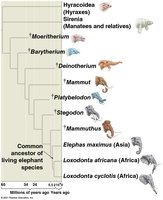
Common Descent: All organisms descend from common ancestors, with gradual accumulation of adaptations leading to new species.
Adaptations: Inherited characteristics that enhance survival and reproduction in specific environments.
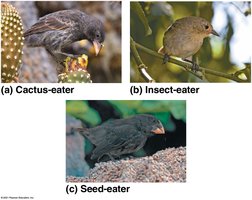
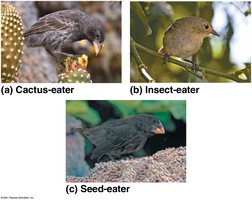
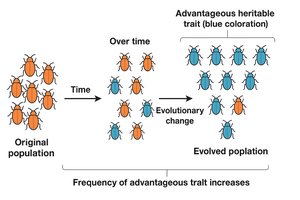
Natural Selection: The chief agent of modification, acting on individual variation in inherited traits. Differential survival and reproductive success leads to accumulation of favorable traits.
Tree of Life: Darwin viewed life’s history as a branching tree, with extant organisms on labeled branches and extinct organisms on unlabeled branches.
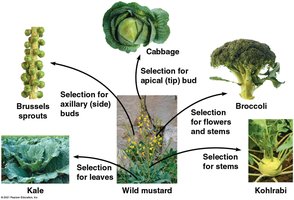
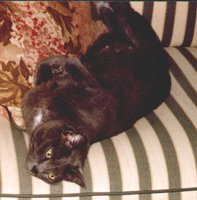
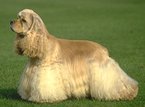
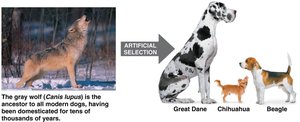
Artificial Selection: Humans select traits in domesticated plants and animals, demonstrating the power of selection.
Darwin’s Observations and Inferences
Observations
Variation: Members of a population often vary in their inherited traits.
Overproduction: All species produce more offspring than the environment can support; many fail to survive and reproduce.
Inferences
Survival and Reproduction: Individuals with traits that increase survival and reproduction tend to produce more offspring, increasing the frequency of those traits in the next generation.
Accumulation of Favorable Traits: The unequal ability to survive and reproduce leads to the accumulation of favorable traits over generations.
Evidence for Evolution
Fossils
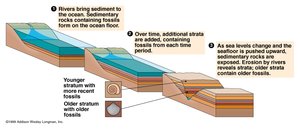
Fossils are remains or imprints of past life, preserved in sedimentary strata. They provide direct evidence of evolutionary change and the succession of life forms.
Taxonomy and Classification
The hierarchical classification system developed by Linnaeus groups organisms based on relatedness: Domain, Kingdom, Phylum, Class, Order, Family, Genus, Species. This structure reflects evolutionary relationships and descent.
Comparative Anatomy
Comparative anatomy examines anatomical structures across species. Homologous structures are similar due to shared ancestry but may serve different functions. Analogous structures have similar functions but different evolutionary origins.
Comparative Embryology
Embryos of vertebrates show similar features, such as post-anal tails and gill-like throat arches, indicating shared ancestry.
Biogeography
Biogeography is the study of the geographic distribution of species. Isolated areas often have unique species, and closely related species are found in distinct regions, supporting the concept of descent with modification.
Modern Evolutionary Theory
Microevolution and Macroevolution
Microevolution: Changes in allele frequencies within populations, driven by natural selection, genetic drift, and gene flow.
Macroevolution: Broad patterns of evolutionary change above the species level, including the origin of new structures, trends, and mass extinctions.
Summary Table: Evidence for Evolution
Type of Evidence | Description | Example |
|---|---|---|
Fossils | Remains or imprints of past life, preserved in strata | Transitional forms in sedimentary rock |
Taxonomy | Hierarchical classification based on relatedness | Family tree of bears, bees, canines |
Comparative Anatomy | Homologous and analogous structures | Forelimbs of vertebrates, ear bones |
Comparative Embryology | Similar features in embryos due to shared ancestry | Post-anal tail, branchial arches in vertebrates |
Biogeography | Geographic distribution of species | Unique species on Galapagos, Australia, Madagascar |
Key Terms and Definitions
Evolution: Descent with modification; change in organisms over generations.
Adaptation: Inherited trait that enhances survival and reproduction.
Natural Selection: Process where individuals with favorable traits reproduce more successfully.
Homologous Structures: Anatomical features inherited from a common ancestor.
Analogous Structures: Features with similar functions but different evolutionary origins.
Microevolution: Small-scale changes in allele frequencies within populations.
Macroevolution: Large-scale evolutionary changes above the species level.
Equations and Models
Population genetics uses mathematical models to describe evolutionary change. The Hardy-Weinberg equation is fundamental:
Where p and q are the frequencies of two alleles in a population.
