 Back
Evolution: Descent with Modification – Mechanisms and Evidence
Study Guide - Smart Notes
 Tailored notes based on your materials, expanded with key definitions, examples, and context.
Evolution: Descent with Modification
Introduction to Evolution
Evolution is the heritable change in one or more characteristics of a population or species from one generation to the next. It is a central concept in biology, explaining the diversity of life and the adaptation of organisms to their environments.
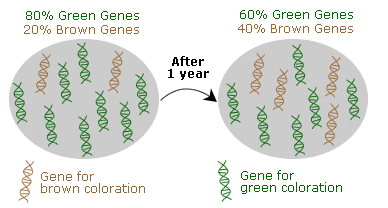
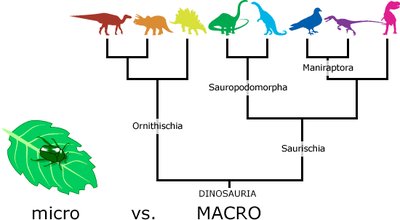
Microevolution: Small-scale changes within a population, often involving changes in allele frequencies of a single gene over time.
Macroevolution: Large-scale evolutionary changes that result in the formation of new species or groups of species.
Major Theories of Darwinism
Ernst Mayr summarized Darwinism into five major theories:
Perpetual Change: The world is not constant but always changing.
Common Descent: All organisms share a common ancestor.
Multiplication of Species: Species multiply over time, leading to biodiversity.
Gradualism: Evolutionary change occurs gradually over long periods.
Natural Selection: The mechanism by which better-adapted individuals survive and reproduce.
Mechanism of Natural Selection
Principles of Natural Selection
Natural selection is the process by which individuals with advantageous traits are more likely to survive and reproduce. Over time, these traits become more common in the population.
Variation: Individuals in a population vary in their traits.
Heredity: Many traits are inherited from parents to offspring.
Differential Reproductive Success: Individuals with traits better suited to the environment tend to survive and reproduce more successfully.
Adaptive Radiation
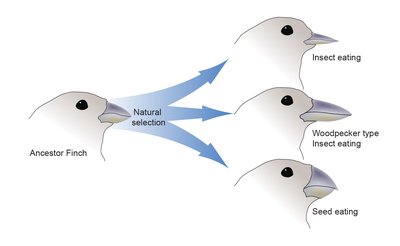
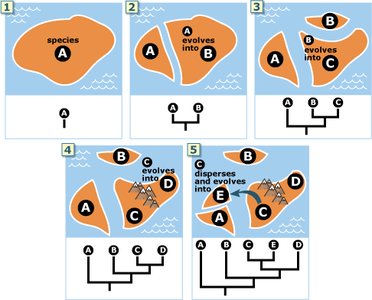
Adaptive radiation is the rapid evolution of several ecologically diverse species from a common ancestral species, often occurring in a short geological time frame.
Historical Context: Darwin and Wallace
Charles Darwin
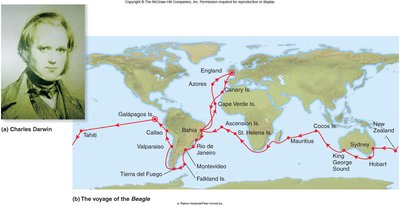
Charles Darwin (1809–1882) was a British naturalist whose observations and studies led to the formulation of the theory of natural selection. His voyage on the HMS Beagle and exposure to various fields such as geology and economics influenced his ideas.
Alfred Russel Wallace
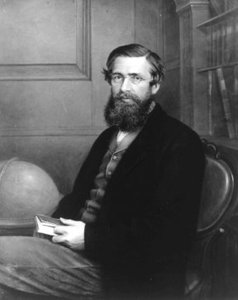
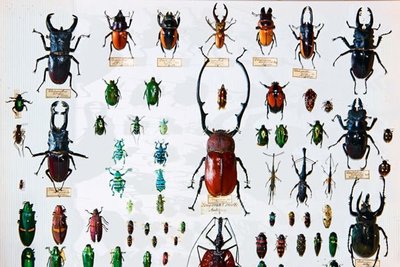
Alfred Russel Wallace independently conceived the mechanism of natural selection while working in the Amazon and Southeast Asia. Both Darwin and Wallace presented their ideas jointly in 1858.
Influence of Thomas Malthus
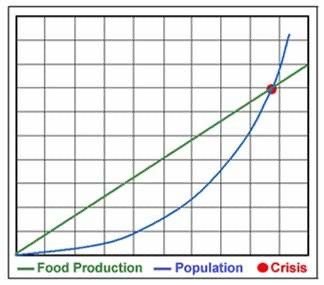
Darwin was influenced by Thomas Malthus's essay on population growth, which argued that populations grow exponentially while food supply increases linearly, leading to competition for resources.
Evidence for Evolution
Fossil Record
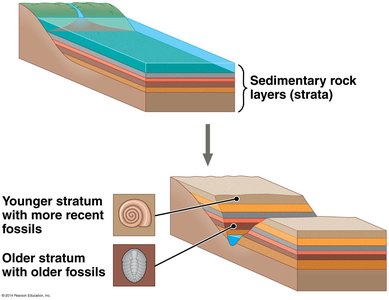
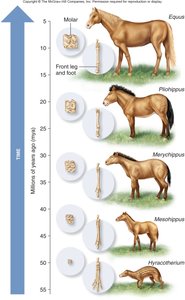
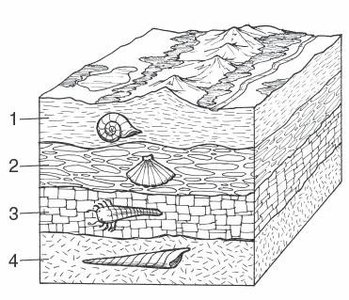
The fossil record provides evidence of gradual evolutionary change and the existence of transitional forms between ancestral and descendant species. Fossils are typically found in sedimentary rock layers (strata), and their depth can indicate their relative age.
Transitional Forms: Fossils that show intermediate characteristics between ancestral and descendant groups.
Biogeography
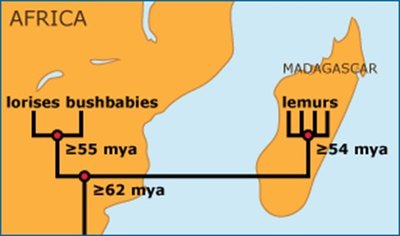
Biogeography is the study of the geographic distribution of species. Isolated continents and islands often have many endemic species, supporting the idea of evolution through geographic isolation and divergence.
Direct Observations: Natural and Artificial Selection
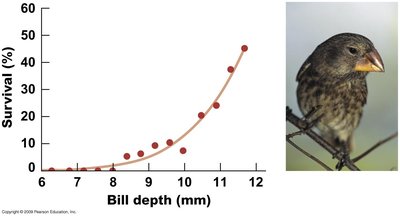
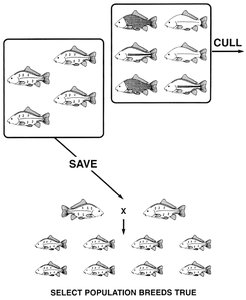
Direct observations of natural selection, such as changes in finch beak size during droughts, and artificial selection, where humans breed organisms for specific traits, provide strong evidence for evolution.
Artificial Selection: Selective breeding by humans can lead to significant changes in morphology over generations.
Homologies
Homology refers to similarities among organisms due to shared ancestry. There are three main types:
Anatomical Homology: Similar structures in different species (e.g., forelimbs of vertebrates).
Developmental Homology: Similarities in embryonic development (e.g., gill slits in human embryos).
Molecular Homology: Similarities in DNA and protein sequences among related species.
Convergent Evolution
Convergent evolution occurs when two species from different lineages independently evolve similar traits due to similar environmental pressures, resulting in analogous structures.
Key Terms and Definitions
Descent with Modification: The passing on of traits from parent organisms to their offspring, with changes accumulating over generations.
Homology: Similarity due to shared ancestry.
Homologous Structure: Structures derived from a common ancestor.
Analogous Structure: Structures with similar function but different evolutionary origins.
Vestigial Structure: Remnants of structures that served important functions in ancestors.
Evolutionary Tree: Diagram showing evolutionary relationships among species.
Biogeography: Study of the distribution of species and ecosystems in geographic space and through geological time.
Artificial Selection: Human-directed selective breeding.
Adaptation: A trait that increases an organism's fitness in a particular environment.
Sources of Genetic Variation
Genetic variation is essential for evolution and arises through several mechanisms:
Mutations: Random changes in DNA sequence.
Exon Shuffling: Rearrangement of exons within a gene.
Sexual Reproduction: Increases variation through recombination and independent assortment.
Horizontal Gene Transfer: Movement of genetic material between organisms other than by descent.
Summary Table: Evidence for Evolution
Evidence Type | Description | Example |
|---|---|---|
Fossil Record | Traces of past organisms preserved in rock | Transitional fossils, horse evolution |
Biogeography | Geographic distribution of species | Endemic species on islands |
Direct Observation | Changes observed in real time | Finch beak size, artificial selection in dogs |
Homologies | Similarities due to common ancestry | Vertebrate limbs, embryonic development |
Convergent Evolution | Similar traits in unrelated lineages | Wings in bats and birds |
Conclusion
Evolution is supported by multiple lines of evidence, including the fossil record, biogeography, direct observations, and homologies. The mechanism of natural selection, as described by Darwin and Wallace, explains how populations adapt and diversify over time. Understanding these concepts is fundamental to the study of biology.
