 Back
BackEvolution: Diversity of Life and the History of Evolutionary Thought
Study Guide - Smart Notes
 Tailored notes based on your materials, expanded with key definitions, examples, and context.
Evolution and Diversity of Life
History of Evolutionary Thought
The concept of evolution has developed over centuries, with early ideas focusing on the fixity of species and later theories introducing the possibility of change over time. The diversity of life is explained through evolutionary processes that shape species and their adaptations.
Aristotle's View: Species were considered fixed and arranged by complexity, a belief that persisted for nearly 2000 years.
Carolus Linnaeus: Introduced binomial nomenclature, grouping similar organisms and assigning them Latin names (e.g., Homo sapiens for humans).
Charles Lyell: Proposed uniformitarianism, suggesting geological processes occur at uniform rates and that Earth is millions of years old, allowing time for evolutionary change.
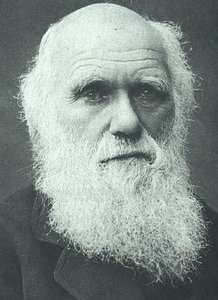
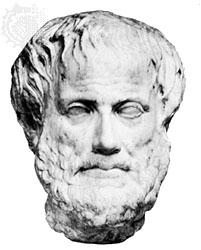
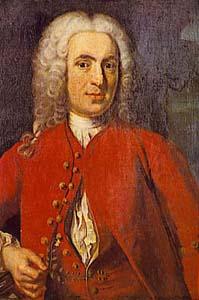
Principles of Geology and Darwin's Insights
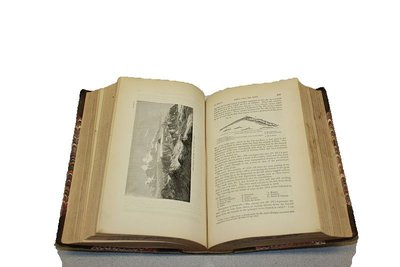
Lyell's work, Principles of Geology, influenced Darwin by explaining geological processes and expanding the perceived age of Earth. Darwin observed sea shells in the Andes mountains, supporting the idea of gradual change.
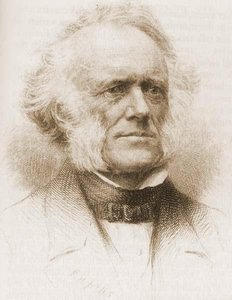
Lamarck's Theory of Evolution
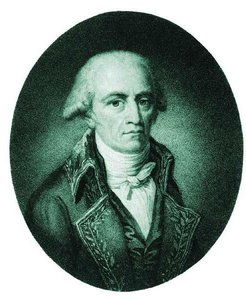
Jean-Baptiste Lamarck was among the first to propose that organisms change over time, suggesting adaptations acquired during an organism's lifetime could be passed to offspring. His Law of Use and Disuse posited that used body parts became stronger, while unused parts deteriorated.
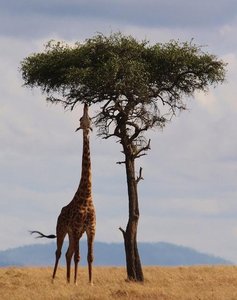
Examples: Blacksmiths' muscular arms, giraffes' elongated necks, snakes' reduced legs.
Mistakes: Lamarck did not understand genetic inheritance; traits are passed through genes, not acquired characteristics.
Lamarck's Contributions and Modern Theory
Lamarck recognized the role of the environment in shaping species, though his idea of striving for perfection was replaced by Darwin's theory of natural selection, which is based on random variation.
Population Growth and Malthus' Influence
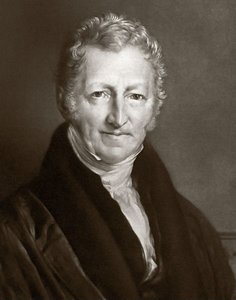
Thomas Malthus observed that population size is limited by resources. Darwin applied this principle to nature, noting that plants and animals produce more offspring than can survive, leading to competition.
Key Point: Death rate increases to balance population size and food supply.
Darwin's Observations and the Voyage of the Beagle
The Voyage of the Beagle
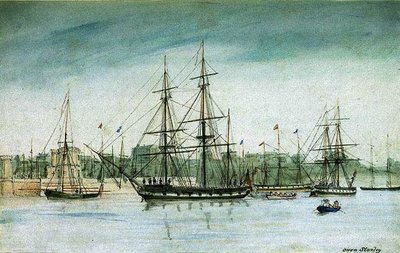
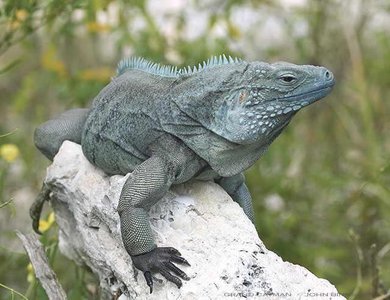
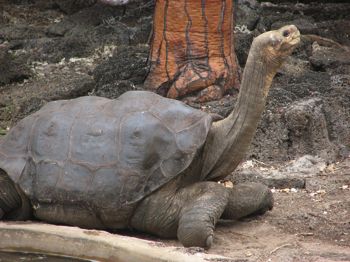
Darwin traveled on the HMS Beagle, observing unique species on the Galapagos Islands, such as tortoises, iguanas, and finches. These observations led to his theory of natural selection.
Galapagos Finches and Adaptive Radiation
Finches on the Galapagos Islands exhibited different beak shapes adapted to various food sources, illustrating adaptive radiation and the process of evolution from a common ancestor.
Darwin's Observations and Conclusions
Darwin noted that populations remain stable despite the potential for exponential growth, due to limited resources and competition. Individuals vary extensively, and much of this variation is inheritable.
Survival of the Fittest: Only individuals best suited to their environment survive and reproduce.
Natural Selection: Acts on phenotypes within a population, not individuals.
Mechanisms of Evolution
Sources of Variation
Variation within populations arises from meiosis, fertilization, mutations, genetic drift, and migration/gene flow. These forces change genotypes, phenotypes, and genetic variation.
Gene Pool and Relative Frequency
The gene pool consists of all genetic material in a population. Relative frequency is the percentage of a particular allele compared to others in the gene pool.
Evolutionary Fitness
Evolutionary fitness is the ability of an individual to pass traits to the next generation. Populations, not individuals, evolve as allele frequencies change over time.
Adaptation
An adaptation is an inherited characteristic that increases an organism's chance for survival. Adaptations can be physical (e.g., speed, camouflage) or behavioral (e.g., social structure).
Mimicry and Camouflage
Mimicry occurs when one species resembles another to deter predators. Camouflage allows organisms to blend into their environment for protection or predation.
Natural Variation, Artificial Selection, and Sexual Selection
Natural Variation: Differences among individuals of a species.
Artificial Selection: Selective breeding to enhance desired traits.
Sexual Selection: Mate choice based on physical characteristics.
Polygenic Traits and Natural Selection
Polygenic traits are controlled by multiple genes, resulting in a range of phenotypes. Natural selection can act in three ways:
Directional Selection: Favors one extreme phenotype.
Stabilizing Selection: Favors intermediate phenotypes.
Disruptive Selection: Favors both extremes, creating two peaks.
Genetic Drift
Genetic drift is evolution by chance, affecting allele frequencies randomly. It is more dramatic in small populations and can lead to decreased variation or new species.
Population Bottleneck: Sudden decrease in population size reduces variation.
Founder Effect: Small group forms a new population with reduced variability.
Hardy-Weinberg Equilibrium
Genetic equilibrium occurs when allele frequencies remain constant. Five conditions must be met: random mating, large population, no immigration/emigration, no mutations, and no natural selection.
Equations:
Where p is the dominant allele frequency and q is the recessive allele frequency.
Speciation and Extinction
Speciation
Speciation is the formation of new species, driven by divergence. Barriers to speciation include geographic, prezygotic, and postzygotic mechanisms.
Geographic Isolation: Physical barriers prevent mating.
Prezygotic Barriers: Temporal, mechanical, and behavioral differences prevent mating.
Postzygotic Barriers: Zygote mortality and hybrid sterility.
Extinction and Adaptive Radiation
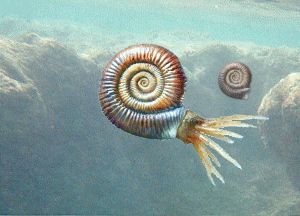
Extinction occurs when organisms fail to adapt or their environment collapses. Adaptive radiation follows mass extinctions, as surviving species diversify to fill new niches.
Models of Evolution
Gradualism: Slow, continuous change over time.
Punctuated Equilibrium: Rapid bursts of change separated by periods of stability.
Evidence for Evolution
Microevolution
Microevolution refers to observable changes in gene frequencies within populations over short time scales, such as antibiotic resistance and pesticide resistance.
Biological Molecules
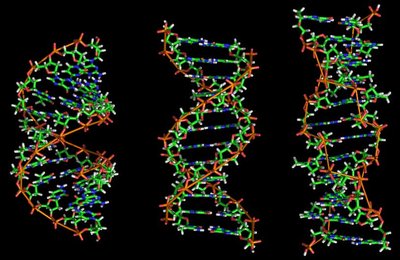
Similarities in DNA and amino acid sequences indicate evolutionary relationships. The more alike two organisms are, the more similar their genetic material.
Homologous and Vestigial Structures
Homologous structures are inherited from a common ancestor and may differ in form or function. Vestigial structures serve no apparent purpose but indicate evolutionary history.
Embryonic Development
Similarities in embryonic development among vertebrates provide evidence for common ancestry.
The Fossil Record
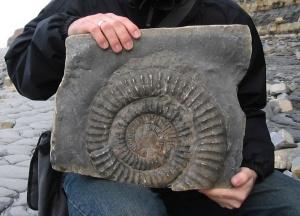
The fossil record documents the history of life on Earth, though it is incomplete. Over 99% of all species that have ever lived are now extinct.
Cladograms and Phylogenetic Trees
Cladograms
Cladograms are evolutionary trees with equal branch distances, showing relationships among clades. Derived traits are used to construct these diagrams.
Phylogenetic Trees
Phylogenetic trees show evolutionary relationships with varying branch distances, indicating the amount of evolutionary change.
Both diagrams: Show hypotheses about common ancestry and evolutionary relationships.
How to Draw and Read Cladograms
Identify the outgroup (most distantly related organism).
Plug in derived traits that increase fitness.
Branches represent speciation events.
Species sharing a branch are more closely related in time. Speciation is indicated by the fork in the diagram, and unique characteristics are found in each descendant.
