 Back
BackEvolution, Extinction, and Adaptive Radiation - Not on Exam 3
Study Guide - Smart Notes
 Tailored notes based on your materials, expanded with key definitions, examples, and context.
Evolution and the History of Life
Climate Change and Mass Extinctions
Climate change has played a significant role in shaping the diversity of life on Earth. Fluctuations in global temperature have led to periods of mass extinction, followed by adaptive radiations that fill newly available ecological niches.
Mass Extinctions: Events such as the Permian (252 million years ago, caused by volcanic activity and increased CO2) and Cretaceous (66 million years ago, caused by an asteroid impact) extinctions drastically reduced biodiversity.
Climate Data: The Earth's climate has alternated between periods with and without polar caps, influencing the evolution and extinction of species.
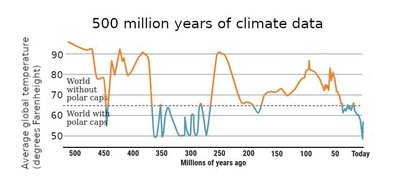
Example: The rise of atmospheric O2 due to cyanobacterial photosynthesis about 3 billion years ago led to the extinction of many anaerobic organisms but enabled the evolution of aerobic respiration and more complex life forms.
The Cambrian Explosion and Life on Land
The Cambrian explosion (535–525 million years ago) marked a dramatic increase in animal diversity, with the appearance of new body plans and ecological strategies.
Key Transitions:
Arthropods: First colonized land ~450 million years ago.
Plants (with fungi): Colonized land ~420 million years ago.
Tetrapods: First appeared on land ~365 million years ago.
Mechanisms of Evolution
Alleles, Gene Expression, and Evolutionary Change
Evolution is driven by changes in allele frequencies within populations. These changes can result from mutations, gene expression regulation, and sexual reproduction, which increases genetic diversity.
Mutation: Random changes in DNA that can introduce new traits.
Gene Regulation: Changes in when and where genes are expressed can lead to dramatic differences in form and function.
Sexual Reproduction: Shuffles alleles, increasing variation and the potential for adaptation.
Adaptive Radiation
Adaptive radiation is the rapid evolution of diverse species from a common ancestor, often following mass extinction events or the colonization of new environments.
Definition: Speciation that allows for the filling of available ecological niches.
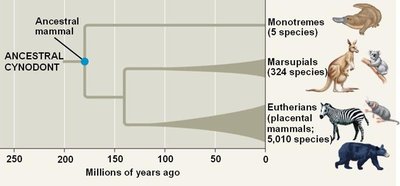
Example: The diversification of mammals after the extinction of the dinosaurs.
Experimental Evolution: E. coli Case Study
Long-term Evolution Experiment
Researchers studied the evolution of Escherichia coli in a low-glucose environment over 20,000 generations. Each day, a small sample was transferred to fresh medium, and growth rates were measured.
Findings: The evolved populations became nearly twice as efficient at reproducing in low-glucose conditions.
Trade-offs: Adaptation to one environment often reduces fitness in others, as shown by decreased growth in alternative carbon sources.
Carbon Source | 2,000 generations | 10,000 generations | 20,000 generations |
|---|---|---|---|
Bromosuccinic acid | 7 | 11 | 12 |
D-alanine | 1 | 3 | 6 |
D-malic acid | 12 | 12 | 12 |
D-ribose | 9 | 11 | 12 |
D-saccharic acid | 11 | 12 | 12 |
D-serine | 12 | 12 | 12 |
D-sorbitol | 12 | 12 | 12 |
Fructose-6-phosphate | 11 | 10 | 9 |
Fumaric acid | 12 | 12 | 12 |
Glucose-1-phosphate | 12 | 12 | 12 |
Glucose-6-phosphate | 12 | 12 | 12 |
Glucuronamide | 12 | 12 | 12 |
L-asparagine | 8 | 9 | 12 |
L-aspartic acid | 9 | 12 | 12 |
L-glutamine | 12 | 12 | 12 |
L-lactic acid | 11 | 12 | 12 |
L-malic acid | 12 | 12 | 12 |
Mono-methylsuccinate | 12 | 12 | 12 |
Mucic acid | 5 | 8 | 12 |
P-hydroxyphenylacetic acid | 12 | 12 | 12 |
Succinic acid | 9 | 12 | 12 |
Uridine | 12 | 12 | 12 |
Sum of parallel losses | 9 | 16 | 16 |
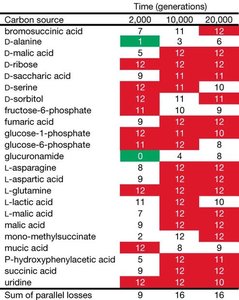
Additional info: Green indicates improved growth, red indicates reduced growth compared to the ancestor.
Phylogeny and Evolutionary Relationships
Drawing Phylogenetic Trees
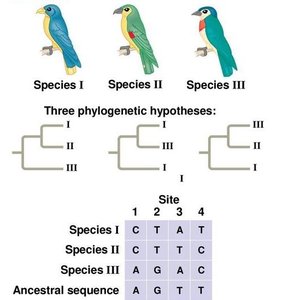
Phylogenetic trees are hypotheses about the evolutionary relationships among species, constructed using morphological and molecular data. Incomplete information can make tree construction challenging.
Shared Ancestry: Organisms are grouped based on common ancestry, which may not always align with superficial similarities.
DNA Analysis: Comparing DNA sequences helps infer evolutionary relationships and distinguish between convergent evolution and migration.
Adaptive Radiation vs. Convergent Evolution
Both processes can produce similar traits in different species, but their evolutionary origins differ.
Adaptive Radiation: A single ancestral species diversifies into multiple species, each adapted to a different niche.
Convergent Evolution: Unrelated species independently evolve similar traits due to similar environmental pressures.
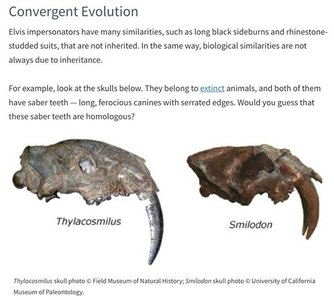
Example: Anole lizards in the Caribbean have diversified through adaptive radiation, while saber-toothed mammals (marsupials and placentals) are an example of convergent evolution.
Case Study: Anole Lizards in the Caribbean
Diversity and Ecological Niches
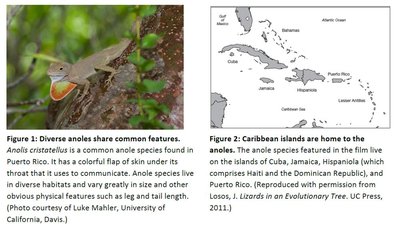
Anole lizards exhibit remarkable diversity in morphology and habitat use across Caribbean islands. This diversity is a result of both adaptive radiation and, in some cases, convergent evolution.
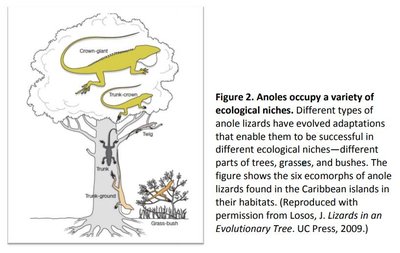
Ecological Niches: Different anole species have evolved to occupy specific parts of the environment, such as tree canopies, trunks, and ground vegetation.
Migration vs. Convergent Evolution: DNA evidence can help determine whether similar forms on different islands arose from migration or independent adaptation.
Research and Evidence
Studies of anole lizards, including field observations and genetic analyses, have revealed that similar ecological types (ecomorphs) have evolved independently on different islands—a classic example of convergent evolution.
Key Findings:
Each island's anole community contains similar sets of ecomorphs, but these evolved independently.
Genetic data supports multiple origins rather than a single migration event.
Summary Table: Adaptive Radiation vs. Convergent Evolution
Process | Definition | Example |
|---|---|---|
Adaptive Radiation | Rapid diversification from a common ancestor into a variety of forms adapted to different niches | Darwin's finches, Caribbean anole lizards |
Convergent Evolution | Independent evolution of similar traits in unrelated lineages due to similar environmental pressures | Saber-toothed mammals, streamlined bodies in dolphins and sharks |
Conclusion
Evolutionary processes such as mutation, gene regulation, adaptive radiation, and convergent evolution have shaped the diversity of life on Earth. By studying fossils, DNA, and living organisms, biologists reconstruct the history of life and the mechanisms driving evolutionary change.
