 Back
Evolution: Historical Foundations, Mechanisms, and Evidence
Study Guide - Smart Notes
 Tailored notes based on your materials, expanded with key definitions, examples, and context.
Evolution: Historical Foundations, Mechanisms, and Evidence
Contributions of Early Thinkers to Evolutionary Theory
The development of evolutionary theory was influenced by several key figures whose ideas shaped Darwin's thinking. Understanding their contributions provides context for the emergence of modern evolutionary biology.
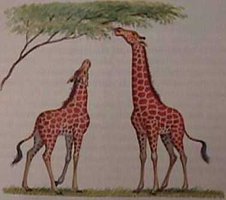
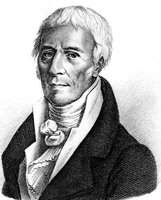
Jean-Baptiste Lamarck: Proposed that organisms change over time through use and disuse of body parts and that these acquired traits are inherited by offspring. This concept is known as the inheritance of acquired characteristics.
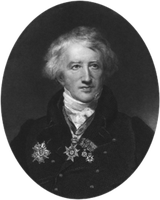
Georges Cuvier: Founder of paleontology, emphasized the importance of fossils and extinction in understanding life's history.
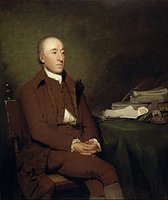
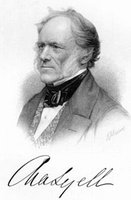
James Hutton & Charles Lyell: Geologists who introduced the idea of gradualism—the notion that Earth's features developed slowly over time. Lyell's Principles of Geology influenced Darwin's thinking about gradual change.
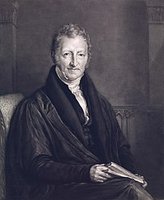
Thomas Malthus: Argued that populations grow faster than resources, leading to competition and survival of the fittest.
Darwin's Voyage and the Development of Evolutionary Theory
Charles Darwin's voyage on the HMS Beagle (1831–1836) provided critical observations that led to the formulation of the theory of evolution by natural selection. Darwin noted variation among species and the influence of environmental factors on adaptation.
Natural Selection: The process by which organisms with favorable traits are more likely to survive and reproduce, leading to the accumulation of advantageous adaptations in populations.
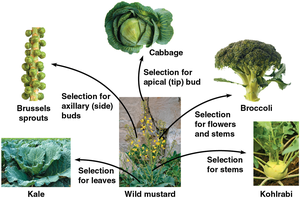
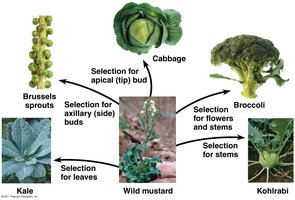
Artificial Selection: Humans selectively breed organisms for desired traits, providing a model for natural selection.
Key Concepts in Evolution
Evolution is defined as the change in the genetic composition of a population over time. It can be studied at different scales:
Microevolution: Changes in allele frequencies within a population (below the species level).
Macroevolution: Evolutionary changes at or above the species level, including speciation and mass extinctions.
Descent with modification by natural selection explains:
The unity of life
The diversity of life
The ways organisms are suited to their environments
Mechanisms Behind Natural Selection
Natural selection operates through three main mechanisms:
Variability: Genetic variation exists within populations.
Heritability: Traits must be heritable to be passed to offspring.
Differential Reproductive Success: Individuals with advantageous traits reproduce more successfully.
Lines of Evidence Supporting Evolution
Multiple lines of evidence support the theory of evolution. Each provides unique insights into the process and history of evolutionary change.
1. Direct Observation
Examples include changes in soapberry bug beak length in response to food source changes.
2. Artificial Selection
Selective breeding of plants and animals demonstrates the power of selection to shape traits.
3. Homology
Comparative Anatomy: Homologous structures (e.g., mammalian forelimbs) indicate common ancestry.
Comparative Embryology: Anatomical similarities in embryos reveal evolutionary relationships.
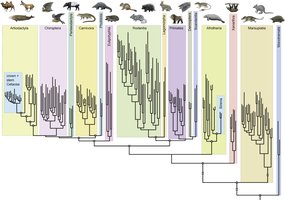
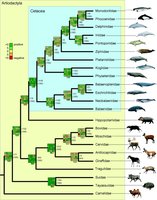
Molecular Homology: Similar gene sequences among species (e.g., whales and hippos) support shared ancestry.
Vestigial Structures: Remnants of features that served functions in ancestors but are no longer functional.
4. Fossil Record
Fossils document the existence of now-extinct species and reveal patterns of change over time.
5. Biogeography
The geographic distribution of species reflects their evolutionary history and the movement of continents (e.g., Pangaea).
Closely related species are often found in similar regions, but environmental differences can lead to divergence.
Summary Table: Types of Evidence for Evolution
Type of Evidence | Description | Example |
|---|---|---|
Direct Observation | Observable evolutionary changes in populations | Soapberry bug beak length |
Artificial Selection | Selective breeding by humans | Wild mustard varieties |
Homology | Similar structures due to common ancestry | Mammalian forelimbs, gene sequences |
Fossil Record | Evidence of extinct species and transitions | Transitional fossils |
Biogeography | Distribution of species across regions | Galaxiidae fish in South America and Australia |
Evolutionary Adaptation
Evolutionary adaptation is the accumulation of inherited characteristics that enhance an organism's ability to survive and reproduce in specific environments. Adaptations arise through the process of natural selection acting on variation within populations.
Conclusion
The theory of evolution is supported by a wide range of evidence from direct observation, artificial selection, homology, the fossil record, and biogeography. Understanding the mechanisms and evidence for evolution is fundamental to the study of biology.
