 Back
BackEvolution: History, Mechanisms, and Evidence
Study Guide - Smart Notes
 Tailored notes based on your materials, expanded with key definitions, examples, and context.
History of Evolutionary Thought
Early Ideas and Contributors
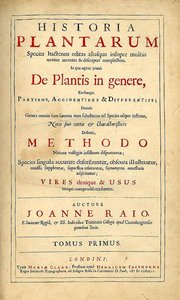
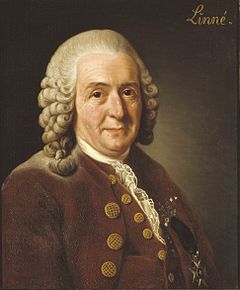
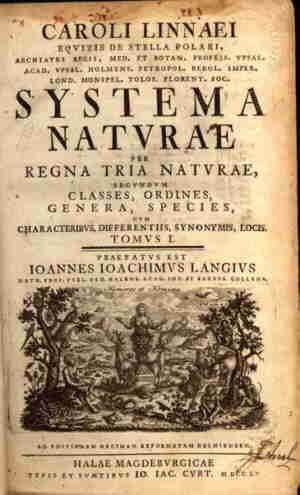
The concept of evolution has a rich history, with contributions from many thinkers predating Charles Darwin. Early Greek philosophers, such as those who proposed gradual change in life forms, influenced Western scientific thought, although Aristotle viewed species as fixed and arranged them in a hierarchical 'scala naturae.' John Ray advanced scientific empiricism and developed an early classification system based on anatomical and physiological similarities, establishing the modern concept of species. Carolus Linnaeus extended Ray's work, creating the binomial nomenclature system and grouping similar species into broader categories, but neither Ray nor Linnaeus proposed evolutionary change as the source of new species.
Empirical Thought: Emphasizes observation and experience as the basis for scientific knowledge.
Classification Systems: Early systems grouped organisms by similarities, laying groundwork for evolutionary studies.
Binomial Nomenclature: Linnaeus's two-part naming system (Genus species) is still used today.
Challenging Traditional Views
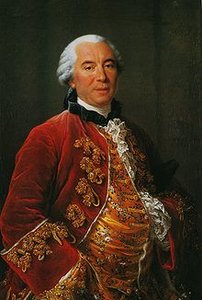
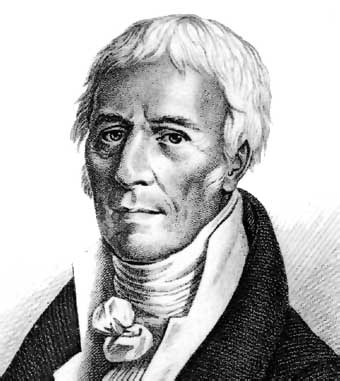
Georges Buffon questioned church dogma and the concept of special creation, arguing for an older Earth and promoting ideas of biogeography and comparative anatomy. Jean-Baptiste Lamarck was the first to propose a detailed naturalistic mechanism for evolutionary change, suggesting that adaptation to the environment and variation in populations were key to evolution. Although his mechanism of 'inheritance of acquired characteristics' was inaccurate, many of his observations were correct.
Biogeography: Study of the distribution of species and ecosystems in geographic space and through geological time.
Comparative Anatomy: Comparing anatomical structures across species to infer evolutionary relationships.
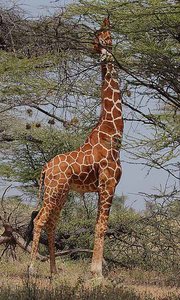
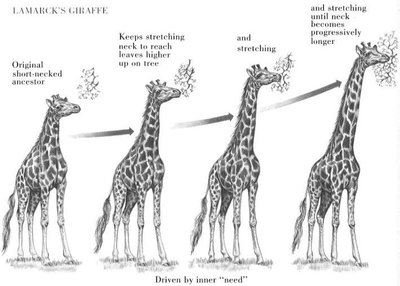
Lamarck's Mechanism: Proposed that traits acquired during an organism's lifetime could be passed to offspring (e.g., giraffes stretching their necks).
Charles Darwin and the Mechanism of Evolution
Darwin's Voyage and Observations
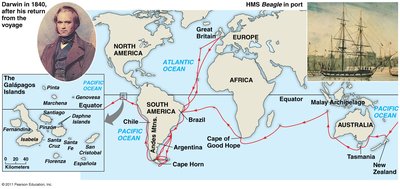
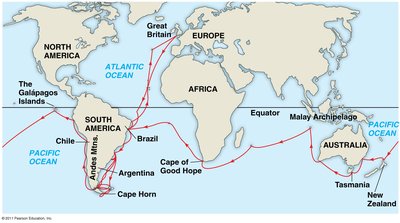
Charles Darwin spent five years as a naturalist aboard the H.M.S. Beagle, circumnavigating the globe and observing adaptations in diverse environments, especially in South America and the Galápagos Islands. His observations led him to conclude that evolution occurs and to propose natural selection as its mechanism.
Natural Selection: The process by which individuals with advantageous traits are more likely to survive and reproduce, leading to the accumulation of favorable traits in a population.
Unity and Diversity of Life: Darwin proposed that evolution explains both the unity and diversity of life.
Darwin's Predecessors and Influences
Darwin built upon the work of many predecessors, including Buffon, Lamarck, Ray, Linnaeus, Colonna, Steno, Cuvier, Hutton, Lyell, and Malthus. Notably, Lyell's concept of uniformitarianism and Malthus's ideas about population growth and resource limitation influenced Darwin's thinking about gradual change and the struggle for existence.
Uniformitarianism: The idea that geological processes occurring now have always operated in the past at similar rates.
Population Dynamics: Malthus observed that populations grow exponentially while resources grow linearly, leading to competition.
Natural Selection: Mechanism and Evidence
Logic of Natural Selection
Ernst Mayr summarized Darwin's theory of natural selection into three inferences based on five key observations:
All species have great potential fertility.
Populations tend to remain stable in size.
Environmental resources are limited.
Individuals vary extensively in their characteristics.
Much of this variation is heritable.
From these, the following inferences arise:
Inference 1: Production of more individuals than the environment can support leads to a struggle for existence.
Inference 2: Survival is not random; individuals with favorable traits are more likely to survive and reproduce.
Inference 3: Favorable traits accumulate in the population over generations, leading to evolutionary change.
Equation for Exponential Population Growth:
Where is the population size at time , is the initial population size, is the growth rate, and is the base of the natural logarithm.
Examples of Natural Selection
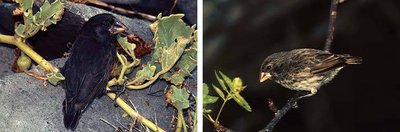
Darwin's finches in the Galápagos Islands are a classic example of adaptive radiation, where different species evolved to exploit different food sources. The Grants' long-term study of finch beak size demonstrated that environmental changes (such as drought) led to measurable evolutionary changes in beak size within a few generations.
Adaptive Radiation: The diversification of a group of organisms into forms filling different ecological niches.
Heritability: Traits such as beak size are genetically determined and subject to selection.
Artificial Selection
Artificial selection, a special case of natural selection, occurs when humans select individuals with desirable traits for reproduction. This process has produced various breeds of domestic animals and crops, such as dogs, corn (maize), and vegetables from wild ancestors.
Artificial Selection: Human-directed breeding for specific traits.
Rapid Change: Significant changes can occur in a short time due to strong selective pressure.
Evolution in Action: Case Studies
Several well-documented examples illustrate evolution by natural selection:
Peppered Moths: Industrial pollution in Britain led to a shift in moth coloration, with dark forms becoming more common in polluted environments and light forms returning as pollution decreased.
Drug-Resistant Bacteria: Bacterial populations evolve resistance to antibiotics, such as MRSA, through selection for resistant mutants already present in the population.
Soapberry Bugs: Changes in available fruit species led to rapid evolution of beak length in soapberry bug populations.
Controversy and Acceptance
Evolution and Religion
While evolution is deeply supported by scientific evidence, some religious beliefs are incompatible with evolutionary theory. However, many individuals, including religious leaders, accept the coexistence of evolution and religious faith.
Compatibility: Evolution and religion are not necessarily mutually exclusive.
Scientific Consensus: The occurrence of evolution is not controversial among scientists; debate exists only regarding the relative importance of different mechanisms.
Mechanisms of Evolution
Natural selection is a primary mechanism, but others include sexual selection, mutation, immigration, emigration, genetic drift, and horizontal gene flow. The modern synthesis integrates evolution and genetics, recognizing multiple mechanisms contributing to evolutionary change.
Sexual Selection: Selection based on traits that increase mating success.
Genetic Drift: Random changes in allele frequencies in a population.
Gene Flow: Movement of genes between populations.
Human Ancestry and Evolution
Humans are not the end result of predictable evolutionary progress, but rather a small branch on the tree of life. Evolutionary history is shaped by chance events and environmental pressures.
Phylogenetic Tree: Represents evolutionary relationships among species.
Contingency: Evolutionary outcomes are not predetermined.
References
Key references include works by Darwin, Campbell Biology, and studies on evolutionary change in finches, moths, and bacteria.
