 Back
BackEvolution I: Introduction to Evolution by Natural Selection and Sickle Cell Anemia
Study Guide - Smart Notes
 Tailored notes based on your materials, expanded with key definitions, examples, and context.
Evolution: An Introduction
Overview of Evolutionary Concepts
Evolution is a central theme in biology, describing how populations of organisms change over time through heritable modifications. This lecture introduces the foundational concepts of evolution, the history of evolutionary thought, and the relationship between genetics and evolutionary processes, using sickle cell anemia as a case study.
Sickle Cell Anemia and Evolution
Genetic and Pathophysiological Basis
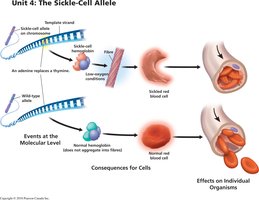
Sickle Cell Anemia is a genetic disorder affecting red blood cells (RBCs), resulting in abnormal hemoglobin (HbS) that causes cells to assume a sickle shape under low oxygen conditions.
Anemia refers to a deficiency of RBCs or hemoglobin, leading to symptoms such as lethargy and fatigue.
The disease is caused by a single nucleotide mutation in the gene encoding the β-globin chain of hemoglobin, substituting valine for glutamic acid at the sixth position.
Heterozygote Advantage and Malaria
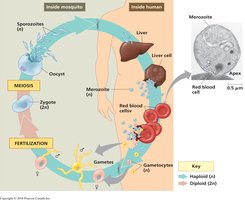
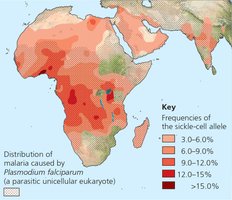
Individuals with one sickle cell allele (heterozygotes, HbA/HbS) are generally healthy and have increased resistance to malaria, a phenomenon known as heterozygote advantage.
This advantage explains the persistence of the sickle cell allele in populations exposed to malaria, particularly in regions where the Plasmodium parasite is prevalent.
Defining Evolution
Basic Definition and Distinction from Natural Selection
Evolution is defined as descent with modification, meaning that species change over time and these changes are heritable.
It is important to distinguish between evolution (the process of change in populations over generations) and natural selection (a mechanism that drives evolutionary change).
Historical Perspectives on Species and Change
Early views held that species were immutable and organized in a hierarchy, with humans at the top.
Modern biology recognizes that complexity and adaptation are not linear or hierarchical.
Development of Evolutionary Theory
Contributions from Geology and Paleontology
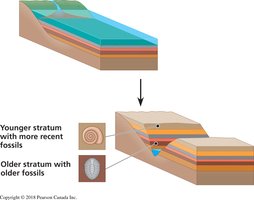
Georges Cuvier (1769–1832) pioneered paleontology, noting that different strata contain different fossils, indicating changes in species over time due to extinction and recolonization.
James Hutton and Charles Lyell argued for gradual geological processes shaping Earth, supporting the idea of slow, cumulative change.
Lamarck's Hypothesis of Evolution
Jean Baptiste Lamarck proposed that organisms change through use and disuse of traits, and that these acquired traits could be inherited.
He also suggested that adaptation to new environments leads to increased complexity.
Modern genetics has shown that acquired traits are not inherited, but Lamarck's emphasis on adaptation was influential.
Darwin’s Theory of Natural Selection
Key Principles
Darwin’s theory requires:
Variation in traits among individuals
Heritability of traits
Non-random survival and reproduction (differential fitness)
Evolution acts on populations, not individuals, and occurs over many generations.
Fitness is defined as the ability to pass on genes to the next generation.
Definitions of Key Terms
Allele: One of several alternative forms of a gene.
Gene: A sequence of DNA that codes for a product, usually a protein.
Evolution: Change in allele frequencies in a population over time.
Darwin’s Journey and Observations
The Voyage of the HMS Beagle
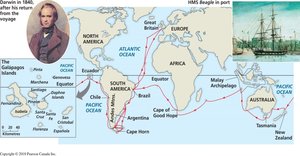
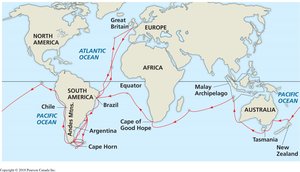
Darwin traveled as a naturalist on the HMS Beagle, collecting specimens and making observations around the world, especially in South America and the Galápagos Islands.
He noted similarities between fossils and living species, and between species on the mainland and on islands.
These observations led to the hypothesis that species colonized new areas and adapted to local conditions.
The Origin of Species and Descent with Modification
Publication and Impact
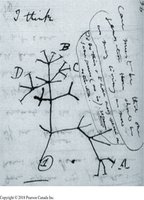
Darwin published The Origin of Species in 1859, introducing the concept of descent with modification—the idea that all organisms are related through common ancestry and have diverged over time.
The diversity of life is represented as a branching tree, not a linear hierarchy.
Artificial and Natural Selection
Human Influence on Evolution
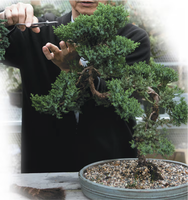
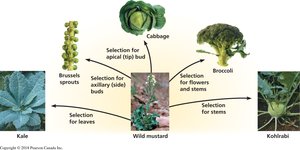
Artificial selection is the process by which humans breed plants and animals for desired traits, demonstrating that selection can cause significant changes in organisms over generations.
Natural selection operates similarly, but the environment, rather than humans, determines which traits are advantageous.
Darwin’s Observations and Inferences
Two Key Observations
Members of a population often vary in their inherited traits.
All species can produce more offspring than their environment can support.
These observations led Darwin to infer that individuals with advantageous traits are more likely to survive and reproduce, leading to the gradual accumulation of beneficial traits in the population.
Summary
Sickle cell anemia persists in certain populations due to the heterozygote advantage in malaria-endemic regions.
Evolution is defined as changes in allele frequencies over time, distinct from the mechanism of natural selection.
Historical and modern perspectives have shaped our understanding of evolution as descent with modification, driven by both natural and artificial selection.
