 Back
BackEvolution: Mechanisms, Evidence, and Comparative Anatomy
Study Guide - Smart Notes
 Tailored notes based on your materials, expanded with key definitions, examples, and context.
Evolution and the Diversity of Life
Introduction to Evolution
Evolution is the process by which the diversity of life on Earth has arisen. Charles Darwin's theory of evolution by natural selection explains how organisms adapt to their environments and how new species originate over time.
Natural Selection: Individuals with traits favorable for survival and reproduction are more likely to pass those traits to the next generation.
Adaptation: Over many generations, populations accumulate adaptations that enhance survival in specific environments, potentially leading to the emergence of new species.
Homology and Analogy
Definitions and Examples
Comparative anatomy reveals similarities and differences among organisms, which can be classified as homologous or analogous traits.
Homologous Structures: Traits inherited from a common ancestor. These structures may serve different functions in modern species but share an underlying anatomical similarity. Example: The forelimbs of humans, cats, bats, and frogs are structurally similar but adapted for different functions (grasping, walking, flying, jumping).
Analogous Structures: Traits that serve similar functions but evolved independently in unrelated lineages due to similar environmental pressures. Example: The wings of birds and butterflies are both used for flight but do not share a common evolutionary origin.
Divergent and Convergent Evolution
Divergent Evolution
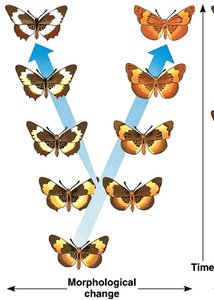
Divergent evolution occurs when two or more species sharing a common ancestor become more different over time, often due to adaptation to different environments (adaptive radiation).
Key Point: Many species arise from a single ancestral species, with homologous structures evolving different functions.
Example: The elephant and woolly mammoth share a common ancestor but evolved distinct traits in response to different environments.
Convergent Evolution
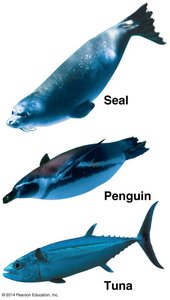
Convergent evolution describes the process by which unrelated organisms independently evolve similar traits as a result of adapting to similar environments or ecological niches.
Key Point: Similar structures (analogous) arise in unrelated species due to similar selective pressures, not shared ancestry.
Example: The streamlined bodies and fins/flippers of seals, penguins, and tuna are adaptations to aquatic life, despite their different evolutionary histories.
Comparative Anatomy: Evidence for Evolution
Homologous Structures in Limbs
Comparing the skeletal structure of vertebrate limbs reveals a common pattern, supporting the concept of descent from a common ancestor.
Example: The human arm, cat forelimb, bat wing, and frog forelimb all share the same basic bone structure, though modified for different functions.
Comparative Skull Anatomy
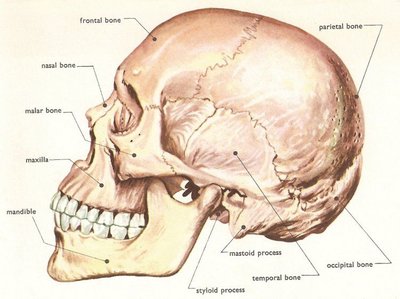
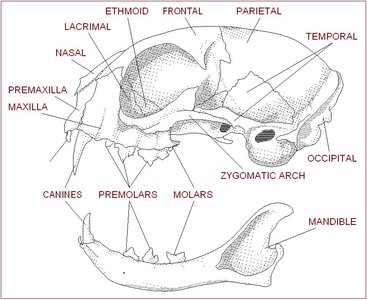
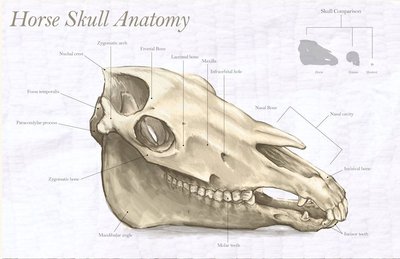
Skull morphology provides insight into evolutionary relationships among mammals and other vertebrates.
Key Point: The arrangement and structure of bones in the skull can be compared across species to infer evolutionary relationships.
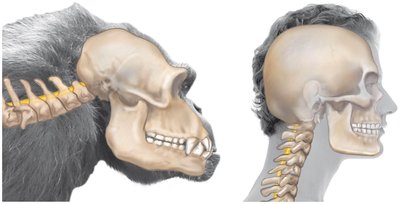
Spinal Cord Exit Angle
The angle at which the spinal cord exits the skull differs between species and reflects adaptations to posture and locomotion.
Example: The spinal cord exits at a more vertical angle in humans (bipedal) compared to chimpanzees (quadrupedal), reflecting differences in locomotion and posture.
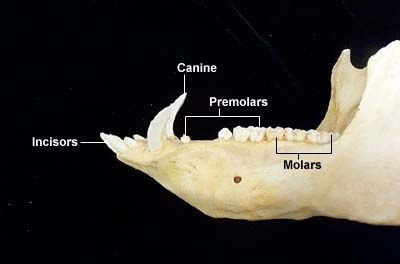
Dental Patterns
The arrangement and types of teeth (dental formula) provide evidence for dietary adaptations and evolutionary relationships among mammals.
Primitive Mammalian Dental Formula: (incisors : canines : premolars : molars)
Key Point: Variations in dental patterns reflect adaptation to different diets and ecological roles.
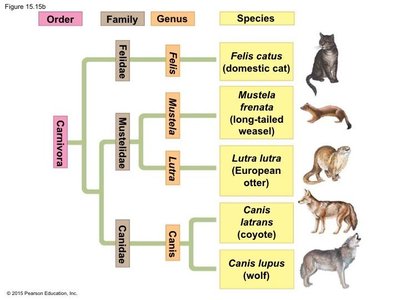
Taxonomy and Classification
Hierarchical Classification
Biological classification organizes species into a hierarchy based on evolutionary relationships: Domain, Kingdom, Phylum, Class, Order, Family, Genus, Species.
Example: The order Carnivora includes families such as Felidae (cats), Mustelidae (weasels, otters), and Canidae (dogs, wolves, coyotes). Each family contains multiple genera and species.
Summary Table: Homology vs. Analogy
Feature | Homologous Structures | Analogous Structures |
|---|---|---|
Evolutionary Origin | Common ancestor | Different ancestors |
Function | May differ | Usually similar |
Example | Forelimbs of mammals | Wings of birds and insects |
Key Terms
Evolution: Change in the heritable characteristics of biological populations over successive generations.
Natural Selection: Differential survival and reproduction of individuals due to differences in phenotype.
Homology: Similarity due to shared ancestry.
Analogy: Similarity due to convergent evolution, not common ancestry.
Divergent Evolution: Accumulation of differences between closely related species populations, leading to speciation.
Convergent Evolution: Independent evolution of similar features in species of different lineages.
