 Back
BackEvolution: Mechanisms, Evidence, and Patterns (Chapters 13-16)
Study Guide - Smart Notes
 Tailored notes based on your materials, expanded with key definitions, examples, and context.
Evolution: Mechanisms, Evidence, and Patterns
Introduction to Evolution
Evolution is the process by which populations of organisms change over time through variations in their genetic material. It is a central concept in biology, explaining both the diversity and unity of life. Evolution does not occur at the scale of individual organisms, but rather at the population level, as the frequency of alleles changes in response to environmental pressures.
Evolution: A change in the genetic composition of a population over successive generations.
Population: A group of individuals of the same species living in a specific area.
Allele Frequency: The proportion of a specific allele among all alleles for a gene in a population.
Historical Theories of Evolution
Jean-Baptiste Lamarck's Theory
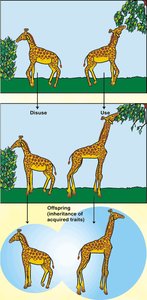
Lamarck proposed that organisms change over time through the use and disuse of organs, and that acquired characteristics could be inherited by offspring. For example, he suggested that giraffes developed long necks by stretching to reach higher leaves, and this trait was passed to their descendants.
Use and Disuse: Organs used frequently become larger and stronger; those not used deteriorate.
Inheritance of Acquired Characteristics: Traits acquired during an organism's lifetime are inherited by offspring.
Example: Giraffes' necks lengthen over generations due to stretching for food.
Charles Darwin's Theory of Natural Selection
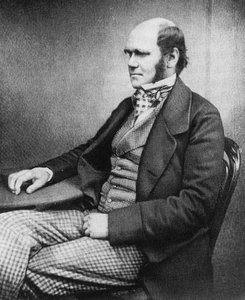
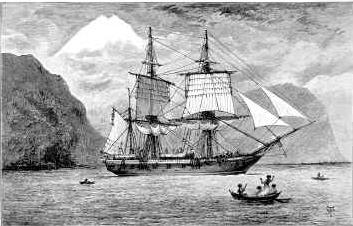
Darwin, a naturalist, developed the theory of natural selection based on his observations during the voyage of the H.M.S. Beagle, especially in the Galapagos Islands. He published "On the Origin of Species" in 1859, describing how environmental pressures select for traits that enhance survival and reproduction.
Natural Selection: The process by which organisms with advantageous traits are more likely to survive and reproduce.
Key Conditions:
Overproduction: More offspring are produced than can survive.
Limited Resources: Resources are finite, leading to competition.
Genetic Variation: Individuals vary in traits, some of which are inherited.
Selection: The environment selects for traits that enhance fitness.
Evolutionary Fitness: The ability of an organism to survive and reproduce in its environment.
Comparison: Lamarck vs. Darwin
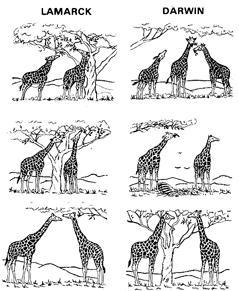
While Lamarck believed in the inheritance of acquired traits, Darwin emphasized variation and selection. Darwin's theory is supported by modern genetics, while Lamarck's is not.
Lamarck: Traits acquired during life are inherited.
Darwin: Traits are inherited, but only those that confer a survival advantage are selected.
Darwin's Observations in the Galapagos Islands
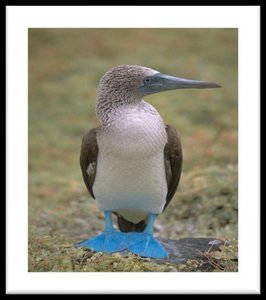
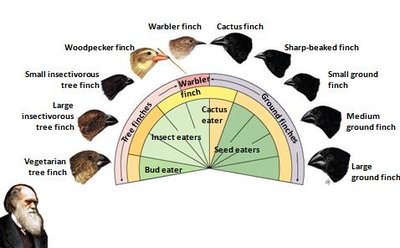
Darwin observed unique species, such as finches and the blue-footed booby, that had adapted to different ecological niches. The finches' beak shapes varied according to their food sources, illustrating adaptive radiation.
Adaptive Radiation: The diversification of a group of organisms into forms filling different ecological niches.
Example: Galapagos finches evolved different beak shapes for eating seeds, insects, or buds.
Mechanisms of Evolution
Natural Selection
Natural selection acts on genetic variation within a population. Advantageous traits increase in frequency, while less beneficial traits decrease.
Genetic Variation: Arises from mutations and sexual reproduction.
Selective Pressure: Environmental factors that influence which traits are advantageous.
Survival of the Fittest: Organisms best suited to their environment survive and reproduce.
Artificial Selection
Humans can influence evolution through selective breeding, choosing traits to propagate in domesticated species. This is not the same as natural selection, as it is directed by human preferences.
Artificial Selection: The intentional breeding of organisms for desired traits.
Example: Breeding dogs for specific coat colors or behaviors.
Evidence for Evolution
Fossil Record
The fossil record provides chronological evidence of evolutionary change, showing transitions between species and the emergence of new traits.
Transitional Fossils: Fossils that show intermediate states between ancestral and descendant groups.
Example: Tiktaalik, a fossil showing the transition from aquatic to terrestrial vertebrates.

Comparative Anatomy
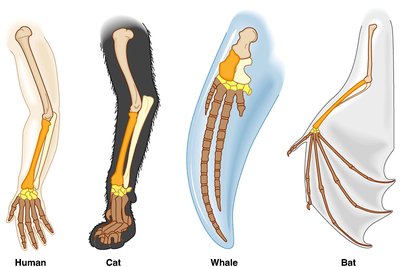
Comparing anatomical structures across species reveals homologous, analogous, and vestigial structures, providing insight into evolutionary relationships.
Homologous Structures: Anatomically similar structures inherited from a common ancestor, but may serve different functions.
Analogous Structures: Structures with similar functions but different evolutionary origins.
Vestigial Structures: Remnants of structures that served important functions in ancestors but are reduced or nonfunctional in descendants.
Comparative Embryology
Embryos of different species often show similarities, indicating common ancestry. For example, vertebrate embryos share features such as pharyngeal pouches and tails.
Molecular Biology
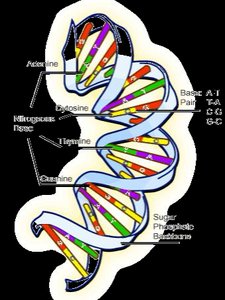
Comparing DNA and protein sequences across species reveals genetic similarities and differences, supporting evolutionary relationships.
DNA Codes for Proteins: The genetic code is universal among living organisms.
Protein Comparison: Similar proteins (e.g., hemoglobin, cytochromes) indicate shared ancestry.
Phylogenetic Trees and Cladograms
Phylogenetic trees and cladograms are diagrams that illustrate evolutionary relationships among species. Each branch represents a divergence, and derived characteristics define clades.
Cladogram: Diagram showing relationships based on shared derived traits.
Clade: A group of organisms sharing a common ancestor and distinct traits.
Derived Characteristics: Traits that appear in recent parts of a lineage but not in older members.

Patterns of Evolution
Divergent Evolution
Divergent evolution occurs when two or more species sharing a common ancestor become more different over time, often due to adaptation to different environments.
Example: The evolution of different limb structures in mammals.
Convergent Evolution
Convergent evolution occurs when unrelated species independently evolve similar traits as a result of adapting to similar environments or ecological niches.
Example: The wings of bats and birds, which serve the same function but evolved independently.
Parallel Evolution
Parallel evolution refers to the development of similar traits in related, but distinct, species occupying similar environments.
Coevolution
Coevolution is the process by which two or more species reciprocally affect each other's evolution. This often occurs in symbiotic relationships, such as between bacteria and humans, or predator-prey dynamics.
Example: E. coli in the human gut, cheetah and gazelle.
Natural Selection in Action
Natural selection can be observed in real time, such as the development of antibiotic resistance in bacteria or changes in moth coloration due to environmental pollution.
Example: MRSA bacteria resistant to antibiotics.
Peppered Moth: Coloration changed in response to industrial pollution.
Summary Table: Types of Evidence for Evolution
Type of Evidence | Description | Example |
|---|---|---|
Fossil Record | Chronological sequence of life forms | Tiktaalik, horse evolution |
Comparative Anatomy | Homologous, analogous, vestigial structures | Human, cat, whale, bat limbs |
Embryology | Similarities in early development | Vertebrate embryos |
Molecular Biology | DNA and protein sequence comparison | Hemoglobin, cytochromes |
Biogeography | Distribution of species | Galapagos finches |
Key Equations
Population genetics uses mathematical models to describe allele frequencies:
Hardy-Weinberg Equation:
Where p and q are the frequencies of two alleles in a population.
Conclusion
Evolution is a fundamental process that explains the diversity of life on Earth. It is driven by mechanisms such as natural selection, genetic drift, mutation, and gene flow, and is supported by multiple lines of evidence from fossils, anatomy, embryology, and molecular biology.
