 Back
Evolution of Populations and Speciation: Mechanisms and Patterns
Study Guide - Smart Notes
 Tailored notes based on your materials, expanded with key definitions, examples, and context.
Evolution of Populations and Speciation
Overview
This chapter explores the mechanisms that drive evolutionary change within populations and the processes that lead to the formation of new species. Key concepts include natural selection, genetic drift, gene flow, modes of selection, and the biological species concept.
Major Mechanisms of Evolutionary Change
Natural Selection
Natural selection is the process by which individuals with advantageous traits are more likely to survive and reproduce, passing those traits to the next generation. Over time, this leads to adaptive evolution, where populations become better suited to their environments.
Differential reproductive success leads to certain alleles increasing in frequency.
Example: Fruit flies developed resistance to DDT after widespread use in agriculture.
Natural selection is the only mechanism that consistently leads to adaptive evolution.
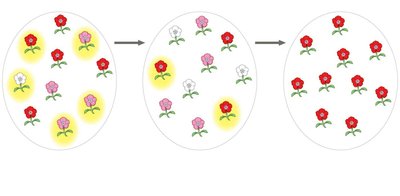
Genetic Drift
Genetic drift refers to random changes in allele frequencies, especially significant in small populations. It can lead to the loss of genetic variation and fixation of harmful alleles.
The Founder Effect: Occurs when a few individuals become isolated from a larger population, resulting in different allele frequencies in the new population.
The Bottleneck Effect: A sudden reduction in population size due to environmental change, causing a loss of genetic diversity.

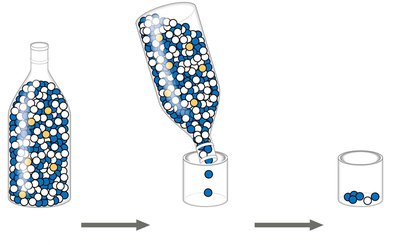
Case Study: Greater Prairie Chicken
Habitat loss caused a severe population decline in Illinois, leading to reduced genetic variation and low egg hatch rates. Introduction of birds from other populations increased genetic diversity and hatch rates.

Location | Population Size | Number of Alleles per Locus | Percentage of Eggs Hatched |
|---|---|---|---|
Illinois (1930–1960s) | 1,000–25,000 | 5.2 | 93 |
Illinois (1993) | <50 | 3.7 | <50 |
Kansas (1998) | 750,000 | 5.8 | 99 |
Nebraska (1998) | 75,000–200,000 | 5.8 | 96 |
Gene Flow
Gene flow is the movement of alleles between populations through migration of individuals or gametes. It can increase or decrease the fitness of populations and tends to reduce genetic differences between populations.
Example (Decreasing fitness): Immigration of mainland birds to an island population can introduce alleles that lower fitness.
Example (Increasing fitness): Spread of insecticide resistance alleles in mosquitoes increases population fitness where insecticides are used.

Relative Fitness and Modes of Selection
Relative Fitness
Relative fitness measures an individual's genetic contribution to the next generation compared to others. It is determined by reproductive success, not just survival.
Modes of Selection
Directional Selection: Favors individuals at one extreme of the phenotypic range.
Disruptive Selection: Favors individuals at both extremes over intermediates.
Stabilizing Selection: Favors intermediate variants and acts against extremes.
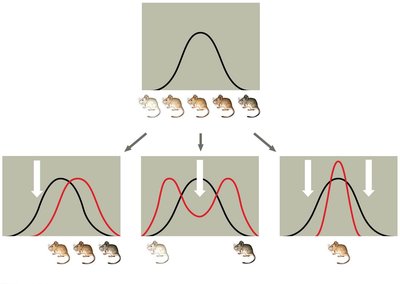
Sexual Selection and Balancing Selection
Sexual Selection
Sexual selection is a form of natural selection where individuals with certain traits are more likely to obtain mates. It can lead to sexual dimorphism—differences in appearance between sexes.
Male showiness can increase mating success but may reduce survival.
The "good genes" hypothesis suggests female preference evolves for traits indicating genetic quality.

Balancing Selection
Balancing selection maintains stable frequencies of two or more phenotypes in a population. Mechanisms include:
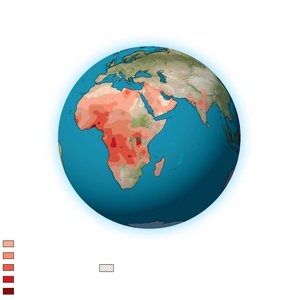
Heterozygote Advantage: Heterozygotes have higher fitness than either homozygote (e.g., sickle-cell allele confers malaria resistance).
Frequency-Dependent Selection: The fitness of a phenotype declines if it becomes too common (e.g., left- and right-mouthed fish).

Limitations of Natural Selection
Selection can only act on existing variation.
Evolution is limited by historical constraints.
Adaptations are often compromises.
Chance, natural selection, and the environment interact.
Speciation: The Origin of New Species
Microevolution vs. Macroevolution
Microevolution: Changes in allele frequency within a population over time.
Macroevolution: Broad patterns of evolutionary change above the species level.
The Biological Species Concept
A species is a group of populations whose members can interbreed and produce viable, fertile offspring. Reproductive isolation maintains species boundaries.
Gene flow holds a species together genetically.
Limitations: Cannot be applied to fossils or asexual organisms; gene flow can occur between distinct species (e.g., "grolar bears").
Reproductive Isolation
Barriers that prevent species from producing viable, fertile offspring are classified as prezygotic or postzygotic.
Prezygotic Barriers: Block fertilization (habitat, temporal, behavioral, mechanical, gametic isolation).
Postzygotic Barriers: Prevent hybrid offspring from developing into viable, fertile adults (reduced viability, reduced fertility, hybrid breakdown).
Allopatric and Sympatric Speciation
Allopatric Speciation: Occurs when populations are geographically separated, leading to divergence and reproductive isolation.
Sympatric Speciation: Occurs in overlapping populations, often due to polyploidy, sexual selection, or habitat differentiation.
Polyploidy
Polyploidy is the presence of extra chromosome sets due to errors in cell division. It is a common mechanism of speciation in plants.
Autopolyploid: Multiple chromosome sets from the same species.
Allopolyploid: Chromosome sets from different species.
Patterns and Pace of Speciation
Punctuated Equilibrium: Periods of stasis punctuated by rapid change.
Gradual Model: Species diverge gradually over time.
Genetic Basis of Speciation
Speciation can result from changes in a single gene or many genes. Examples include shell spiral direction in snails (single gene) and flower color in monkey flowers (two loci).
Additional info: This guide integrates foundational concepts from Chapters 23 and 24 of a typical General Biology curriculum, focusing on evolutionary mechanisms and speciation.
