 Back
Evolution of Populations: Mechanisms and Genetic Variation
Study Guide - Smart Notes
 Tailored notes based on your materials, expanded with key definitions, examples, and context.
The Evolution of Populations
Overview: The Smallest Unit of Evolution
Evolution is defined as a change in the genetic composition of a population over time. While natural selection acts on individuals, it is populations—not individuals—that evolve. Variation in heritable traits is essential for evolution to occur, as demonstrated by Mendel’s work on pea plants, which provided evidence for discrete heritable units known as genes.
Population: A group of individuals of the same species that can interbreed and produce fertile offspring.
Genetic Variation: The differences in DNA sequences among individuals, which can be measured at the gene or nucleotide level.
Example: The medium ground finches of the Galapagos Islands evolved larger beaks during a drought, as large-beaked birds were more likely to survive and reproduce.
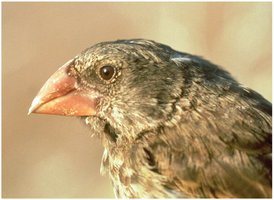
Genetic Variation and Its Measurement
Sources and Types of Genetic Variation
Genetic variation is the raw material for evolution. It arises from mutations, gene duplications, and sexual reproduction. Phenotypic variation can be binary (either-or) or continuous (gradation), depending on whether it is controlled by one gene or many genes.
Gene Variability: Quantified as the average percent of loci that are heterozygous in a population.
Nucleotide Variability: Measured as the average difference in nucleotide sequences between individuals.
Most nucleotide variation occurs in noncoding regions (introns) and rarely affects phenotype.
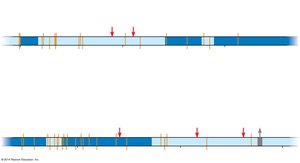
Phenotype and Heritability
The phenotype is the observable appearance of an organism, resulting from the interaction of its genotype and the environment. Only heritable genetic variation can be acted upon by natural selection.
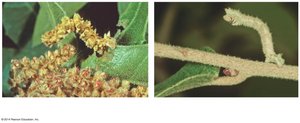
Formation of New Alleles
Mutation: A change in the nucleotide sequence of DNA. Only mutations in gamete-producing cells are heritable.
Point Mutation: A change in a single base pair in DNA, which can be neutral, harmful, or beneficial.
Gene Duplication: Duplication of small DNA segments can increase genome size and provide raw material for new functions.
Rapid Reproduction and Genetic Variation
Mutation rates are generally low in animals and plants but higher in viruses. Short generation times in prokaryotes and viruses allow mutations to accumulate rapidly.
Hardy-Weinberg Principle and Population Genetics
Gene Pools and Allele Frequencies
The gene pool of a population includes all alleles at all loci. An allele is considered "fixed" if all individuals are homozygous for it. Allele frequencies can be calculated using the Hardy-Weinberg equation, which provides a baseline for detecting evolutionary change.
Allele Frequency: The proportion of a specific allele among all alleles at a locus in a population.
Genotype Frequency: The proportion of a specific genotype among all individuals in a population.
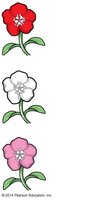
Calculating Allele and Genotype Frequencies
For a gene with two alleles (p and q):
p + q = 1 (sum of allele frequencies)
p2 + 2pq + q2 = 1 (sum of genotype frequencies)
Where:
p2: Frequency of homozygous dominant genotype
2pq: Frequency of heterozygous genotype
q2: Frequency of homozygous recessive genotype
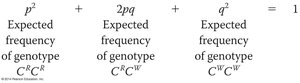
Equation in LaTeX:
Conditions for Hardy-Weinberg Equilibrium
No mutations
Random mating
No natural selection
Extremely large population size
No gene flow
These conditions are rarely met in nature, so Hardy-Weinberg equilibrium serves as a null hypothesis for detecting evolution.
Mechanisms of Evolutionary Change
Natural Selection
Natural selection is the only mechanism that consistently causes adaptive evolution. It increases the frequency of alleles that enhance survival and reproductive success.
Example: Resistance to DDT in insects increased after widespread use of the pesticide.
Genetic Drift
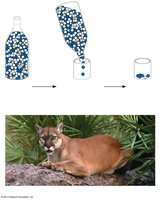
Genetic drift is the random fluctuation of allele frequencies, especially in small populations. It can lead to loss of genetic variation and fixation of harmful alleles.
Founder Effect: Occurs when a few individuals become isolated and establish a new population with different allele frequencies.
Bottleneck Effect: A drastic reduction in population size due to environmental change, resulting in a loss of genetic diversity.
Gene Flow
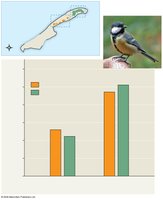
Gene flow is the movement of alleles between populations through migration of individuals or gametes. It tends to reduce genetic differences between populations and can either increase or decrease fitness.
Example: Immigration of birds from the mainland to an island population can introduce alleles that decrease or increase fitness, depending on the environment.
Modes of Natural Selection
Directional, Disruptive, and Stabilizing Selection
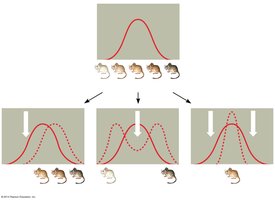
Natural selection can alter the frequency distribution of heritable traits in three ways:
Directional Selection: Favors individuals at one extreme of the phenotypic range.
Disruptive Selection: Favors individuals at both extremes over intermediates.
Stabilizing Selection: Favors intermediate variants and reduces extremes.
Sexual Selection and Balancing Selection
Sexual Selection
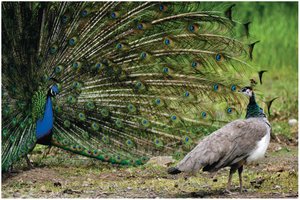
Sexual selection is a form of natural selection that favors traits increasing mating success. It can result in sexual dimorphism—differences in appearance between males and females.
Intrasexual Selection: Competition among individuals of one sex for mates.
Intersexual Selection (Mate Choice): Individuals of one sex are choosy in selecting mates.
Balancing Selection
Balancing selection maintains stable frequencies of two or more phenotypes in a population. It includes:
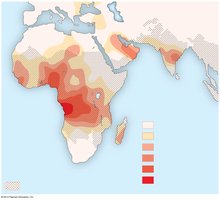
Heterozygote Advantage: Heterozygotes have higher fitness than either homozygote (e.g., sickle-cell allele confers malaria resistance).
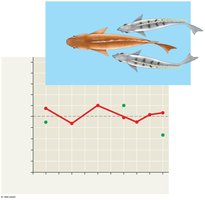
Frequency-Dependent Selection: The fitness of a phenotype declines if it becomes too common.
Limits of Natural Selection
Natural selection cannot produce perfect organisms due to several constraints:
Selection can only act on existing variation.
Evolution is limited by historical constraints.
Adaptations are often compromises.
Chance, natural selection, and the environment interact in complex ways.
