 Back
BackEvolution of Populations: Mechanisms, Genetic Variation, and Forces of Change
Study Guide - Smart Notes
 Tailored notes based on your materials, expanded with key definitions, examples, and context.
The Evolution of Populations
Genotype, Phenotype, and Evolution
The connection between genotype and phenotype is central to understanding evolution. Genotype refers to the genetic makeup of an organism, while phenotype is the observable physical or physiological traits. Evolution occurs when changes in genotype (allele frequencies) lead to changes in phenotype within a population over generations.
Natural selection acts on phenotypes, but only populations evolve, not individuals.
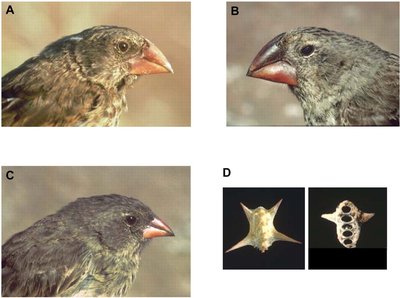
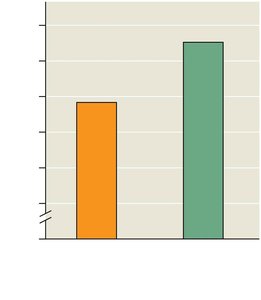
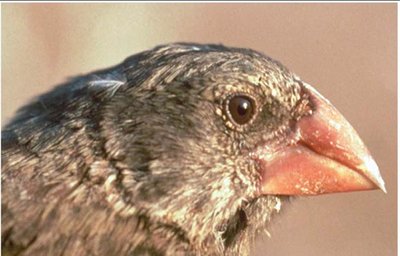
Example: During a drought, finches with larger beaks survived better, leading to a shift in population phenotype over generations.
The Role of Population in Evolution
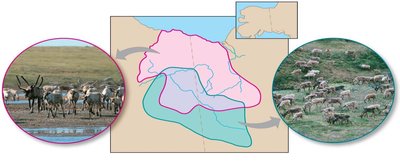
A population is a localized group of individuals capable of interbreeding and producing fertile offspring. Evolutionary change is measured by shifts in allele frequencies within populations, not individuals.
Populations are the smallest unit of evolution.
Gene pool: All alleles for all loci in a population.
Genetic Variation in Populations
Genetic variation is the foundation of evolution. It arises from mutations, gene duplications, and sexual recombination.
Mutation: Change in DNA sequence; can be point mutations (silent, missense, nonsense, neutral, disadvantageous, advantageous).
Gene duplication: Increases genome size, allowing new functions to evolve.
Sexual reproduction: Shuffles alleles via crossing over, independent assortment, and fertilization.
Calculating Allele and Genotype Frequencies
Allele frequencies can be calculated using the formula:
For diploid organisms: Total alleles at a locus = number of individuals × 2
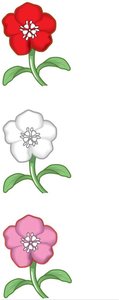
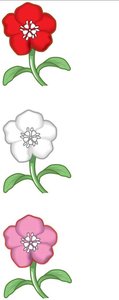
Example: In a population of 500 wildflowers with three genotypes (CRCR, CRCW, CWCW), calculate allele frequencies:
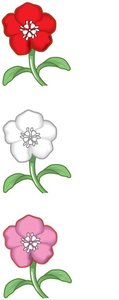
Hardy-Weinberg Equilibrium
The Hardy-Weinberg equilibrium describes a population where allele and genotype frequencies remain constant from generation to generation, provided certain conditions are met:
No mutations
Random mating
No natural selection
Extremely large population size
No gene flow
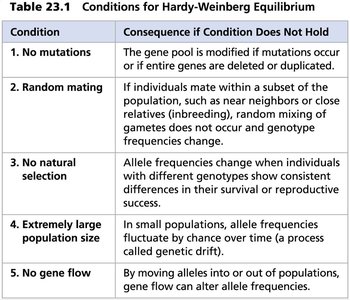
Condition | Consequence if Condition Does Not Hold |
|---|---|
No mutations | Gene pool is modified if mutations occur or if entire genes are deleted or duplicated. |
Random mating | Nonrandom mating alters genotype frequencies. |
No natural selection | Allele frequencies change when individuals with different genotypes show consistent differences in survival or reproductive success. |
Extremely large population size | Small populations experience genetic drift. |
No gene flow | Gene flow alters allele frequencies. |
Mechanisms of Evolutionary Change
Natural Selection
Natural selection is the only mechanism that consistently causes adaptive evolution. It acts on phenotypes, favoring alleles that enhance survival and reproduction.
Selection results in alleles being passed to the next generation in proportions that differ from the present generation.
Relative fitness: Contribution of an individual to the gene pool of the next generation relative to others.
Genetic Drift
Genetic drift is the random fluctuation of allele frequencies in a population, especially significant in small populations. It can lead to loss of genetic variation and fixation of harmful alleles.
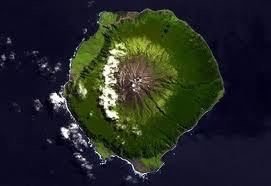
Founder effect: When a few individuals become isolated, their allele frequencies may differ from the parent population.
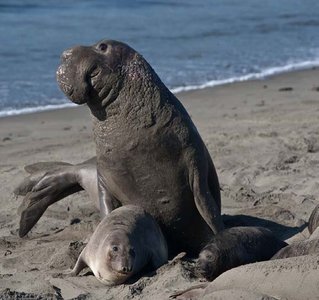
Bottleneck effect: Drastic reduction in population size alters the gene pool.
Gene Flow
Gene flow is the movement of alleles among populations via migration or gamete transfer. It tends to reduce variation between populations while increasing variation within populations.
Example: Migration of banded snakes from mainland to island populations maintains alleles for banded pattern.
Forms of Natural Selection
Modes of Selection
Natural selection can act in different ways on quantitative traits:
Directional selection: Favors individuals at one extreme.
Disruptive selection: Favors individuals at both extremes.
Stabilizing selection: Favors intermediate variants.
Example: Birth weight in humans is subject to stabilizing selection.
Sexual Selection and Dimorphism
Sexual selection is a form of natural selection for mating success. It can result in sexual dimorphism, marked differences between sexes in secondary sexual characteristics.
Intrasexual selection: Competition among individuals of one sex for mates.
Intersexual selection: Mate choice, often by females.
Balancing Selection
Balancing selection maintains stable frequencies of two or more phenotypic forms in a population.
Frequency-dependent selection: Fitness depends on how common a phenotype is.
Heterozygote advantage: Heterozygotes have higher fitness than homozygotes.
Applications and Implications
Human Health and Conservation
Evolutionary mechanisms have direct implications for human health, agriculture, and conservation biology.
Example: Overfishing leads to selection for smaller fish size.
Lactose tolerance in humans is an adaptation to dairy farming.
Conservation: Small population sizes increase inbreeding and genetic drift, leading to loss of genetic diversity and increased genetic diseases.
Summary Table: Conditions for Hardy-Weinberg Equilibrium
Condition | Consequence if Condition Does Not Hold |
|---|---|
No mutations | Gene pool is modified if mutations occur or if entire genes are deleted or duplicated. |
Random mating | Nonrandom mating alters genotype frequencies. |
No natural selection | Allele frequencies change when individuals with different genotypes show consistent differences in survival or reproductive success. |
Extremely large population size | Small populations experience genetic drift. |
No gene flow | Gene flow alters allele frequencies. |
Microevolution vs. Macroevolution
Microevolution refers to small-scale changes in allele frequencies within a species. Macroevolution involves the emergence of new species from a common ancestor.
Key Concepts for Exam Preparation
The connection between genotype, phenotype, and evolution
The role of population in evolution
Measurement of evolutionary change
Forces causing populations to evolve: natural selection, genetic drift, gene flow
Why only natural selection drives adaptive evolution
Forms of natural selection and sexual selection
Implications for conservation and human health
