 Back
BackEvolution of Populations: Mechanisms, Genetic Variation, and Hardy-Weinberg Equilibrium
Study Guide - Smart Notes
 Tailored notes based on your materials, expanded with key definitions, examples, and context.
Evolution of Populations
Introduction to Evolution in Populations
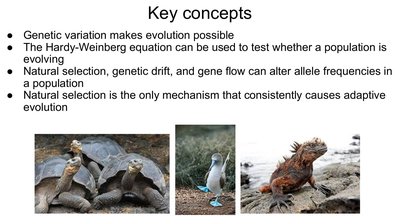
Evolution is a fundamental concept in biology, describing how populations change genetically over time. While natural selection acts on individuals, the observable effects of evolution occur at the population level. Individual organisms do not evolve; rather, the genetic composition of populations shifts across generations.
Key Point: Evolution is the change in allele frequencies within a population over generations (microevolution).
Example: The Galapagos finches, specifically the medium ground finch (Geospiza fortis), demonstrated population-level evolution during a drought, as the proportion of birds with larger beaks increased.
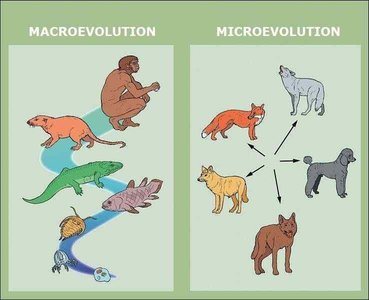
Microevolution vs. Macroevolution
Microevolution refers to small-scale changes in allele frequencies within a population, while macroevolution involves larger evolutionary changes that can result in the formation of new species.
Microevolution: Change in allele frequencies within a population.
Macroevolution: Broad patterns of evolutionary change above the species level.
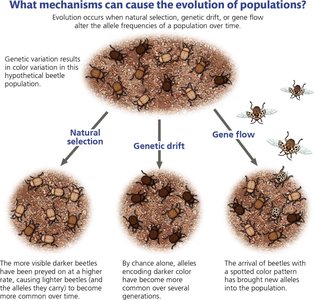
Mechanisms That Cause Changes In Allele Frequencies
Natural Selection, Genetic Drift, and Gene Flow
Three primary mechanisms drive changes in allele frequencies within populations:
Natural Selection: Individuals with advantageous traits survive and reproduce at higher rates, leading to adaptation.
Genetic Drift: Random events cause unpredictable changes in allele frequencies, especially in small populations.
Gene Flow: Movement of alleles between populations through migration of individuals or gametes.
Genetic Variation and Its Importance
Genetic Variation Makes Evolution Possible
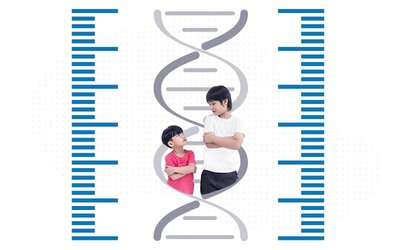
Genetic variation is the foundation of evolutionary change. It arises from differences in DNA sequences among individuals and is essential for populations to adapt to changing environments.
Key Point: Without genetic variation, evolution cannot occur.
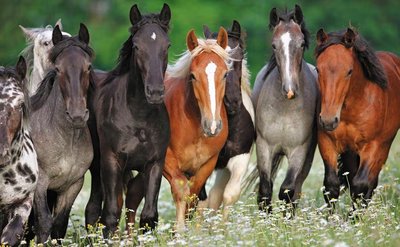
Phenotypic Variation: Can be discrete (e.g., flower color) or continuous (e.g., height).
Example: Variation in coat color among horses and height in humans.
Sources of Genetic Variation
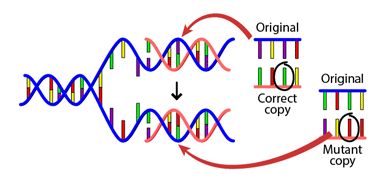
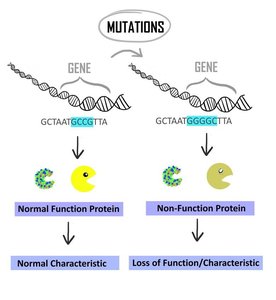
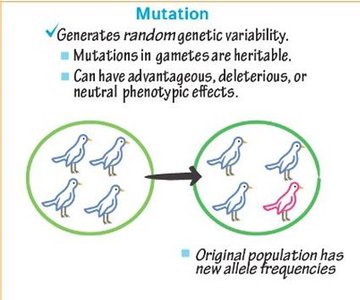
Genetic variation originates from mutations, gene duplications, and sexual reproduction.
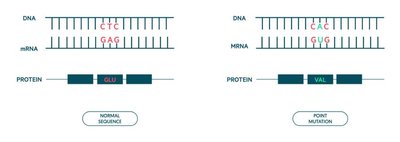
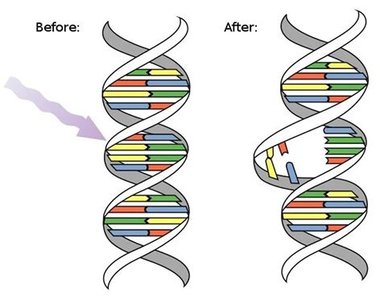
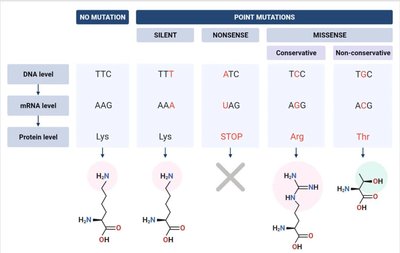
Mutation: A change in the nucleotide sequence of DNA, caused by errors in replication, exposure to UV light, radiation, or chemicals.
Gene Duplication: Can produce new genes.
Sexual Reproduction: Shuffles existing genes into new combinations.
Neutral Variation
Not all mutations affect an organism's fitness. Neutral variation refers to DNA sequence differences that do not confer a selective advantage or disadvantage.
Key Point: Neutral variation is often found in noncoding regions of DNA or due to redundancy in the genetic code.
The Hardy-Weinberg Principle
Hardy-Weinberg Equation and Equilibrium
The Hardy-Weinberg principle provides a mathematical model to test whether a population is evolving. It describes the expected frequencies of alleles and genotypes in a population that is not evolving.
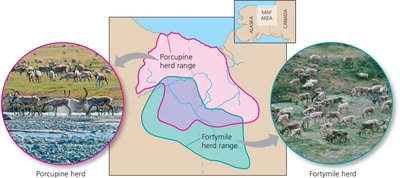
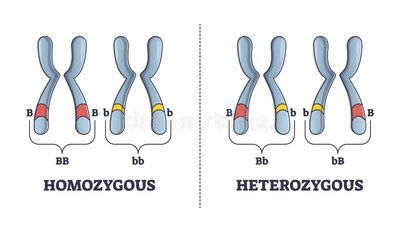
Gene Pool: All copies of every type of allele at every locus in all members of the population.
Allele Frequency: The proportion of a specific allele in the gene pool.
Genotype Frequency: The proportion of a specific genotype in the population.
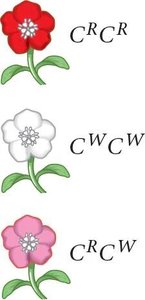
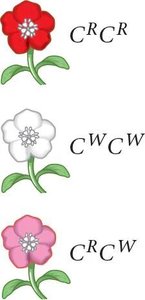
Calculating Allele Frequencies
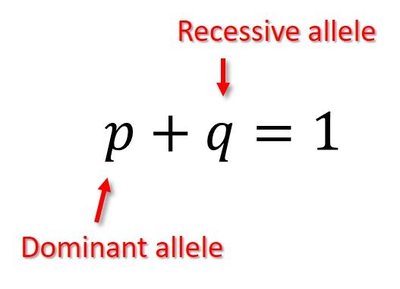
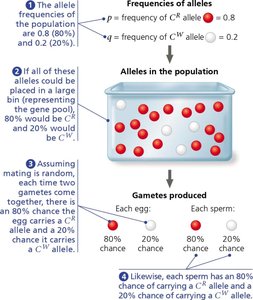
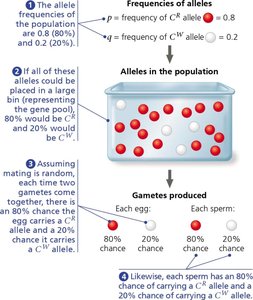
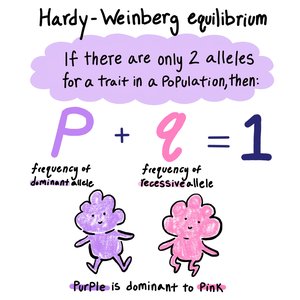
For a gene with two alleles, the sum of their frequencies must equal 1:
Equation:
Example: If the frequency of CR is 0.8, then CW is 0.2.
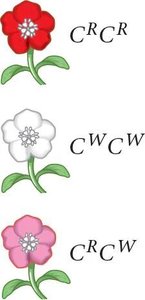
Hardy-Weinberg Genotype Frequencies
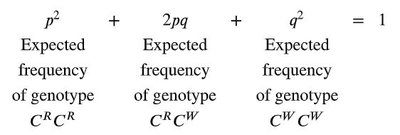
Genotype frequencies in a population at Hardy-Weinberg equilibrium are given by:
Equation:
Interpretation: is the frequency of homozygous dominant, is heterozygous, is homozygous recessive.
Conditions for Hardy-Weinberg Equilibrium
For a population to be in Hardy-Weinberg equilibrium, it must meet five conditions:
No mutations
Random mating
No natural selection
Extremely large population size
No gene flow
If any of these conditions are not met, allele and genotype frequencies may change, indicating evolution is occurring.
Mechanisms That Alter Allele Frequencies
Natural Selection
Natural selection is the only mechanism that consistently leads to adaptive evolution, increasing the frequency of alleles that enhance survival and reproduction.
Relative Fitness: The contribution an individual makes to the gene pool of the next generation relative to others.
Example: Moths with coloration that conceals them from predators have higher fitness.
Types of Selection
Directional Selection: Favors individuals at one extreme of a phenotypic range.
Disruptive Selection: Favors individuals at both extremes over intermediate phenotypes.
Stabilizing Selection: Favors intermediate variants, reducing variation.
Genetic Drift
Genetic drift is a random process that can cause unpredictable changes in allele frequencies, especially in small populations.
Founder Effect: Occurs when a few individuals establish a new population.
Bottleneck Effect: Occurs when population size is drastically reduced.
Effects: Loss of genetic variation, random fixation of alleles, and potential increase in harmful alleles.
Gene Flow
Gene flow is the movement of alleles between populations, which tends to reduce genetic differences and can introduce new alleles that affect adaptation.
Example: Spread of insecticide resistance alleles in mosquitoes.
Practice and Application
Applying Hardy-Weinberg Equation
The Hardy-Weinberg equation is used to estimate allele and genotype frequencies and to test whether evolution is occurring in a population. It also has medical applications, such as estimating the frequency of carriers for genetic diseases.
Example: Estimating the frequency of carriers for phenylketonuria (PKU) using .
Summary Table: Mechanisms of Evolution
Mechanism | Description | Effect on Population |
|---|---|---|
Natural Selection | Favors traits that increase survival/reproduction | Adaptive evolution |
Genetic Drift | Random changes in allele frequencies | Loss of variation, random fixation |
Gene Flow | Movement of alleles between populations | Reduces differences, introduces new alleles |
Additional info: These notes expand on the lecture content by providing definitions, examples, and equations for key concepts in population genetics and evolution, suitable for exam preparation in a college biology course.
