 Back
Evolutionary Mechanisms and Population Genetics: Study Notes
Study Guide - Smart Notes
 Tailored notes based on your materials, expanded with key definitions, examples, and context.
Evolutionary History and Genomic Evidence
Documenting Evolutionary History in Genomes
The evolutionary history of organisms is recorded in their genomes, allowing scientists to infer relationships by comparing nucleic acids and proteins. This approach reveals molecular homologies and helps trace evolutionary branching points.
rRNA genes change slowly, useful for studying ancient evolutionary events.
mtDNA evolves rapidly, suitable for recent evolutionary events.
Molecular homologies are similarities in DNA or protein sequences due to shared ancestry.
Gene Duplications and Gene Families
Gene duplication increases the number of genes in a genome, providing opportunities for evolutionary innovation. Repeated duplications create gene families, which can be traced to common ancestors.
Paralogous genes: Result from gene duplication within a species; can diverge and evolve new functions.
Orthologous genes: Found in a single copy per genome; homologous between species and diverge after speciation.
Example: Histone and hemoglobin gene families illustrate paralogous and orthologous relationships.

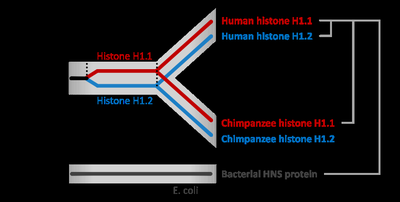

Additional info: Paralogous genes can evolve new functions, while orthologous genes maintain similar functions across species.
Gene Number and Complexity
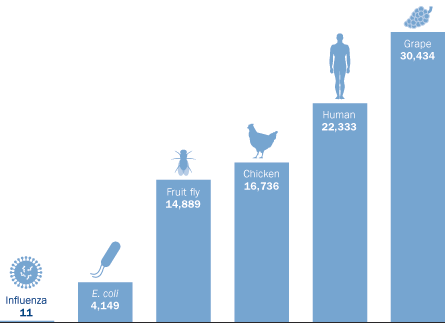
The number of genes is not strongly linked to organismal complexity. Genes in complex organisms are versatile, often encoding multiple proteins with diverse functions.
Molecular Clocks and Evolutionary Timing
Molecular Clocks
Molecular clocks use constant rates of genetic change to estimate the timing of evolutionary events. Substitution rates in orthologous and paralogous genes are proportional to divergence times.
In orthologous genes, substitutions reflect time since last common ancestor.
In paralogous genes, substitutions reflect time since gene duplication.
Applications and Limitations
Molecular clocks are calibrated using fossil records, but irregularities arise due to natural selection and varying mutation rates. Using multiple genes improves accuracy.

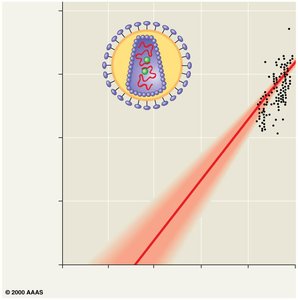
Example: Dating the origin of HIV using molecular clock analysis.
Horizontal Gene Transfer and the Tree of Life
Horizontal Gene Transfer (HGT)
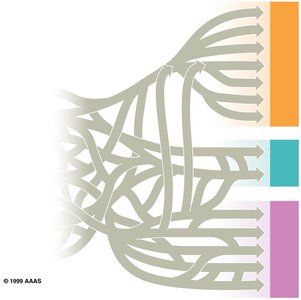
HGT is the movement of genes between genomes via mechanisms such as plasmid exchange, viral infection, and organism fusion. It has played a key role in the evolution of prokaryotes and eukaryotes.
HGT complicates the tree of life, sometimes creating a network of connected branches.
Substantial gene exchanges have occurred between domains (Bacteria, Archaea, Eukarya).

Darwin’s Theory and Natural Selection
Darwin’s Observations and Inferences
Darwin explained the unity and diversity of life, and the match between organisms and their environment, through natural selection.
Observation 1: Members of a population vary in inherited traits.
Observation 2: All species produce more offspring than the environment can support.
Inference 1: Individuals well-suited to their environment leave more offspring.
Inference 2: Favorable traits accumulate over generations.

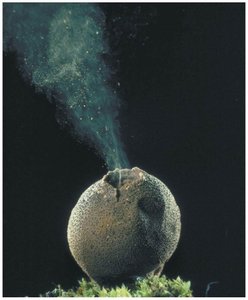
Natural Selection and Adaptation
Natural selection increases the match between organisms and their environment. Individuals with advantageous traits survive and reproduce at higher rates, leading to adaptation and potentially new species.
Natural selection acts on heritable variation.
Populations, not individuals, evolve over time.

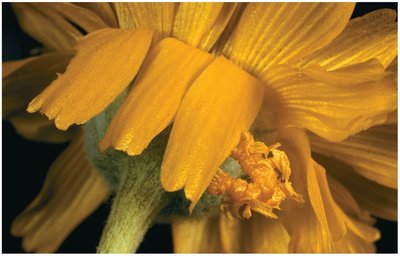
Examples of Natural Selection
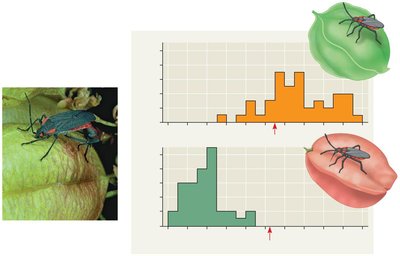
Two key examples demonstrate natural selection:
Soapberry bugs: Beak size evolved in response to fruit size in introduced plants.
Drug-resistant bacteria: MRSA evolved resistance to antibiotics through selection for resistant strains.

Genetic Variation and Population Genetics
Genetic Variation
Genetic variation is essential for evolution and arises from mutations, gene duplications, and sexual reproduction.
Phenotype is determined by genotype and environment.
Alleles are different versions of the same gene.
Mutations in gamete-producing cells can be inherited.
Chromosomal mutations may increase genome size and allow new functions.

Gene Pools and Allele Frequencies
A population's gene pool includes all alleles at all loci. Allele frequencies can be calculated and are fundamental to population genetics.
Homozygous: Two identical alleles at a locus.
Heterozygous: Two different alleles at a locus.
Calculating Allele Frequencies
Example: In a population of wildflowers with incomplete dominance:
320 red (CRCR), 160 pink (CRCW), 20 white (CWCW)
CR allele:
CW allele:
Frequency: ,
Sum:
The Hardy-Weinberg Equation
The Hardy-Weinberg equation predicts genotype frequencies in a non-evolving population:
: Frequency of homozygous dominant
: Frequency of heterozygous
: Frequency of homozygous recessive
Example: For , :
Conditions for Hardy-Weinberg Equilibrium
Five conditions must be met for Hardy-Weinberg equilibrium:
No mutations
Random mating
No natural selection
Extremely large population size
No gene flow
These conditions are rarely met in nature, so populations often evolve.
Microevolution
Microevolution is a change in allele frequencies in a population over generations. It is driven by three mechanisms:
Natural selection (adaptive evolution)
Genetic drift
Gene flow
Additional info: Only natural selection leads to adaptation; genetic drift and gene flow can alter allele frequencies without necessarily increasing fitness.
