 Back
Evolutionary Mechanisms and the History of Life: Study Guide for Chapters 22–25
Study Guide - Smart Notes
 Tailored notes based on your materials, expanded with key definitions, examples, and context.
Ch. 22 – Descent with Modification: A Darwinian View of Life
Historical Context and the Darwinian Revolution
The development of evolutionary theory was influenced by earlier scientific ideas and discoveries. Charles Darwin’s work challenged the traditional view of a static, young Earth and unchanging species.
Key Figures: Hutton (gradualism), Lamarck (inheritance of acquired traits), Malthus (population limits), Cuvier (fossils/extinction), Lyell (uniformitarianism).
Darwin’s Voyage: Observations during the HMS Beagle voyage, especially in the Galápagos Islands, were crucial to his theory.
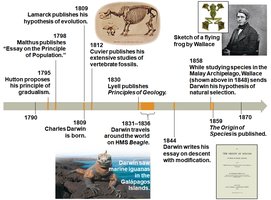
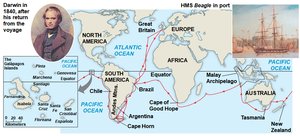
Fossils and the Evidence for Change Over Time
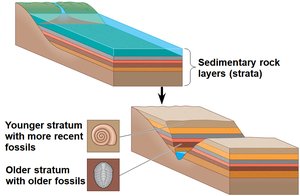
Fossils are the preserved remains or traces of organisms, typically found in sedimentary rock layers (strata). They provide evidence for the succession of life forms and extinction events.
Strata: Older fossils are found in deeper layers; newer fossils are closer to the surface.
Transitional Forms: Fossils can document evolutionary transitions, such as the move from land to sea in cetacean ancestors.
Lamarck vs. Darwin: Mechanisms of Evolution
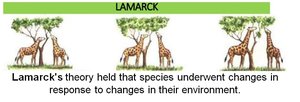
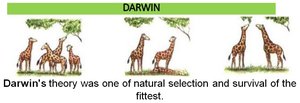
Lamarck proposed that organisms change during their lifetimes in response to their environment and pass these changes to offspring. Darwin, in contrast, argued that natural selection acts on heritable variation, leading to adaptation and evolution over generations.
Lamarck: Use and disuse, inheritance of acquired traits.
Darwin: Natural selection, survival of the fittest.
Artificial Selection, Natural Selection, and Adaptation
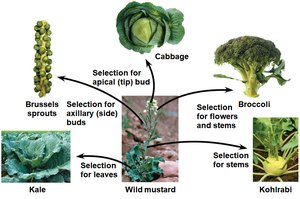
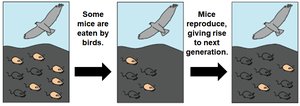
Artificial selection is the process by which humans breed plants and animals for desired traits. Natural selection is the differential survival and reproduction of individuals due to differences in phenotype.
Observation 1: Members of a population vary in inherited traits.
Observation 2: All species can produce more offspring than the environment can support.
Inference 1: Individuals with advantageous traits leave more offspring.
Inference 2: Favorable traits accumulate in the population over generations.
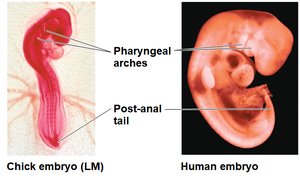
Homology, Analogy, and Evidence for Evolution
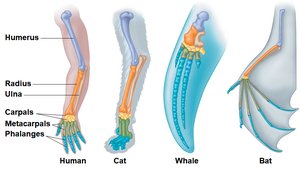
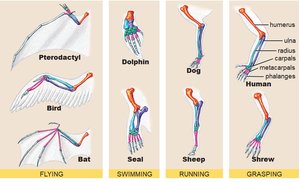
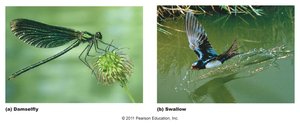
Homology refers to similarities due to shared ancestry, while analogy refers to similarities due to convergent evolution (independent adaptation to similar environments).
Homologous Structures: Similar anatomy, different functions (e.g., forelimbs of mammals).
Analogous Structures: Different anatomy, similar functions (e.g., wings of birds and insects).
Vestigial Structures: Remnants of features that served a function in ancestors.
Molecular Homology: Shared genes inherited from a common ancestor.
Biogeography and Endemic Species
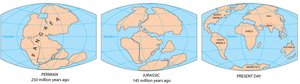
Biogeography is the study of the geographic distribution of species. The breakup of Pangaea and continental drift explain patterns of species distribution and endemism.
Endemic Species: Species found only in one location, often on islands.
Continental Drift: Explains similarities and differences among species on different continents.
Ch. 23 – The Evolution of Populations
Microevolution and Genetic Variation
Microevolution is the change in allele frequencies in a population over generations. Genetic variation arises from mutations, gene duplication, and sexual reproduction.
Sources of Variation: Mutation, recombination, independent assortment, crossing over.
Phenotypic Variation: Can be genetic or environmental (e.g., temperature-dependent sex determination in alligators).
Hardy-Weinberg Principle
The Hardy-Weinberg equilibrium describes a non-evolving population. The equation predicts genotype frequencies from allele frequencies:
Equation:
Where: = frequency of dominant allele, = frequency of recessive allele
Assumptions: No mutation, random mating, no gene flow, infinite population size, no selection
Mechanisms of Evolutionary Change
Three main mechanisms cause allele frequency change: natural selection, genetic drift, and gene flow.
Genetic Drift: Random changes in allele frequencies, especially in small populations (e.g., founder effect, bottleneck effect).
Gene Flow: Movement of alleles between populations.
Natural Selection: Only mechanism that consistently leads to adaptive evolution.
Types of Selection
Natural selection can take several forms:
Directional Selection: Favors one extreme phenotype.
Disruptive Selection: Favors both extreme phenotypes.
Stabilizing Selection: Favors intermediate phenotypes.
Sexual Selection and Frequency-Dependent Selection
Sexual selection leads to differences between sexes (sexual dimorphism). Frequency-dependent selection maintains diversity by favoring rare phenotypes.
Example: Scale-eating fish with left- or right-mouthed morphs.
Ch. 24 – The Origin of Species
Biological Species Concept and Reproductive Barriers
A species is a group of populations whose members can interbreed and produce viable, fertile offspring. Reproductive barriers prevent gene flow between species.
Prezygotic Barriers: Habitat, temporal, behavioral, mechanical, and gametic isolation.
Postzygotic Barriers: Reduced hybrid viability, reduced hybrid fertility, hybrid breakdown.
Modes of Speciation
Speciation can occur with or without geographic separation:
Allopatric Speciation: Physical separation of populations leads to divergence.
Sympatric Speciation: Speciation occurs in the same geographic area, often via polyploidy, sexual selection, or habitat differentiation.
Hybrid Zones and Speciation Rates
Hybrid zones are regions where different species meet and mate, producing hybrids. Speciation can occur gradually or in rapid bursts (punctuated equilibrium).
Outcomes: Reinforcement, fusion, or stability of hybrid zones.
Ch. 25 – The History of Life on Earth
Origin of Life and Early Earth
Life originated through a series of chemical and physical processes on early Earth. The Miller-Urey experiment demonstrated that organic molecules could form under prebiotic conditions.
Meteorites: Delivered amino acids and other organic molecules to Earth.
Geologic Time Scale and Major Events
The history of life is divided into eons, eras, and periods. Major events include the origin of prokaryotes, the oxygen revolution, the first eukaryotes, and the Cambrian explosion.
Stromatolites: Oldest known fossils, formed by cyanobacteria.
Oxygen Revolution: Rise in atmospheric O2 due to photosynthesis, causing mass extinctions and new adaptations.
Endosymbiosis: Origin of mitochondria and chloroplasts in eukaryotes.
Continental Drift, Mass Extinctions, and Adaptive Radiations
Movements of Earth’s plates (continental drift) have shaped the distribution of organisms. Mass extinctions have repeatedly altered the course of evolution, followed by adaptive radiations.
Pangaea: Supercontinent whose breakup led to allopatric speciation.
Adaptive Radiation: Rapid evolution of many species from a common ancestor, often after mass extinctions or colonization of new habitats.
Developmental Genes and Evolutionary Change
Changes in the timing and regulation of developmental genes (heterochrony) can lead to major evolutionary changes. Paedomorphosis is the retention of juvenile features in the adult form.
Example: Differences in skull growth rates between humans and chimpanzees.
