 Back
Evolutionary Processes and Hardy-Weinberg Equilibrium: Study Guide
Study Guide - Smart Notes
 Tailored notes based on your materials, expanded with key definitions, examples, and context.
Evolution: The Study of Change in Populations
What is Evolution?
Evolution is defined as "descent with modification," referring to the process by which populations of organisms change over generations through alterations in their DNA. These changes can result in new traits and increased diversity within populations.
Key Point 1: Evolution occurs only through changes in an individual's DNA sequence.
Key Point 2: The theory of evolution explains the diversity of life and the adaptation of organisms to their environments.
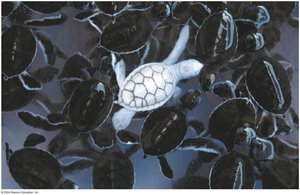
Example: The variation in sea turtle shell color, as seen in the image below, is a result of genetic differences and evolutionary processes.
Mathematics of Population Biology: Hardy-Weinberg Equilibrium
Hardy-Weinberg Principle and Equations
The Hardy-Weinberg equilibrium provides a mathematical model to study genetic variation in populations. It serves as a null hypothesis for detecting evolution, assuming no evolutionary forces are acting on the population.
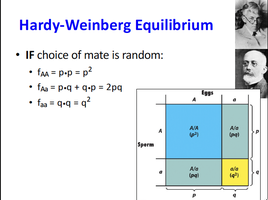
Key Point 1: The Hardy-Weinberg equations are: (allele frequencies) (genotype frequencies)
Key Point 2: The model assumes random mating, no natural selection, no genetic drift, no gene flow, and no mutation.
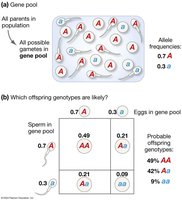
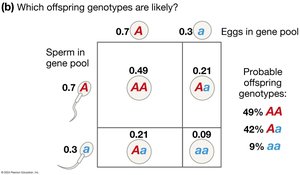
Example: If the frequency of allele A is 0.7 and allele a is 0.3, the expected genotype frequencies are: , , .
Alleles, Genotypes, and Phenotypes
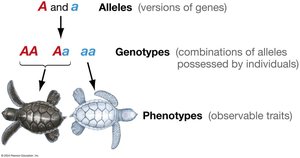
Alleles are different versions of a gene. Genotypes are the combinations of alleles possessed by individuals, and phenotypes are the observable traits resulting from these genotypes.
Key Point 1: The relationship between alleles, genotypes, and phenotypes is fundamental to understanding inheritance and variation.
Example: In sea turtles, the genotype determines shell color, as illustrated below.
Mendelian Genetics vs. Population Genetics
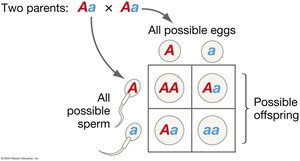
Mendelian genetics focuses on matings between two parents, while population genetics examines matings among all individuals in a population, allowing for the study of allele and genotype frequencies at a larger scale.
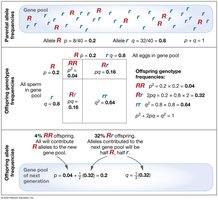
Key Point 1: Population genetics uses allele frequencies to predict genotype frequencies in the next generation.
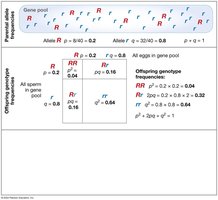
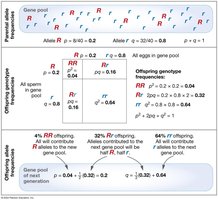
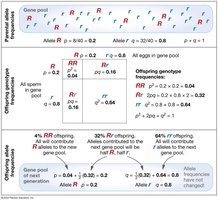
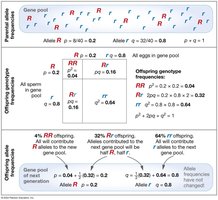
Example: Modified Punnett squares can be used to calculate expected genotype frequencies in populations.
Calculating Allele and Genotype Frequencies
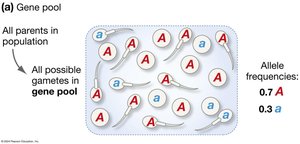
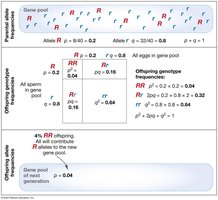
To apply the Hardy-Weinberg principle, first determine allele frequencies in the population, then use these to calculate genotype frequencies using the multiplication rule.
Key Point 1: Allele frequencies must add up to 1 (or 100%).
Key Point 2: Genotype frequencies are calculated using the multiplication and addition rules.
Example: For alleles A (0.7) and a (0.3): , , .
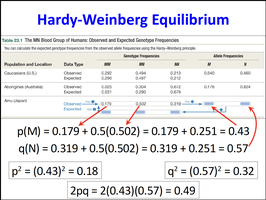
Hardy-Weinberg Equation: Worked Example
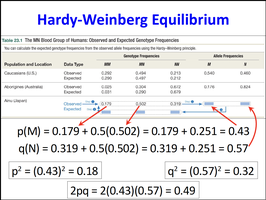
Applying the Hardy-Weinberg equation to real data allows for the calculation of expected genotype frequencies and comparison to observed values.
Key Point 1: The equation can be used "backwards" to estimate allele frequencies from observed genotype frequencies.
Example: Calculating blood group frequencies in humans.
Processes That Affect Hardy-Weinberg Equilibrium
Evolutionary Forces
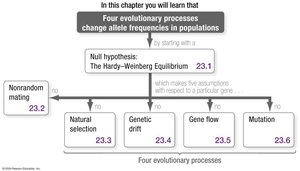
Five main processes can disrupt Hardy-Weinberg equilibrium and cause evolution by changing allele frequencies in a population:
Non-random mating: Includes inbreeding and sexual selection.
Natural selection: Differential survival and reproduction of individuals with certain traits.
Genetic drift: Random changes in allele frequencies, especially in small populations.
Gene flow: Movement of alleles between populations.
Mutation: Introduction of new alleles into the gene pool.
Non-Random Mating and Inbreeding
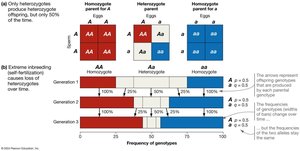
Inbreeding increases homozygosity but does not by itself change allele frequencies. However, it can increase the prevalence of recessive genetic disorders, which may affect allele frequencies if affected individuals have reduced reproductive success.
Key Point 1: Inbreeding increases the proportion of homozygous individuals in a population.
Key Point 2: Inbreeding can lead to increased expression of recessive diseases.
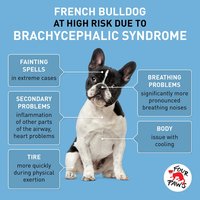
Example: Genetic disorders in dogs due to inbreeding.
Natural Selection
Natural selection is a process where individuals with advantageous traits are more likely to survive and reproduce, leading to changes in allele frequencies over time. There are three main types of natural selection:
Directional selection: Favors one extreme phenotype.
Stabilizing selection: Favors intermediate phenotypes.
Disruptive selection: Favors both extreme phenotypes.
Summary Table: Hardy-Weinberg Assumptions and Evolutionary Processes
The table below summarizes the main assumptions of the Hardy-Weinberg equilibrium and the evolutionary processes that can disrupt it.
Assumption | Process | Effect on Allele Frequency |
|---|---|---|
Random mating | Non-random mating | May increase homozygosity |
No natural selection | Natural selection | Changes allele frequency |
No genetic drift | Genetic drift | Random changes |
No gene flow | Gene flow | Introduces/removes alleles |
No mutation | Mutation | Introduces new alleles |
Additional info: These notes expand on the original content by providing definitions, examples, and academic context for each evolutionary process and the Hardy-Weinberg principle.
