 Back
Evolutionary Processes: Gene Flow, Genetic Drift, and Speciation
Study Guide - Smart Notes
 Tailored notes based on your materials, expanded with key definitions, examples, and context.
Evolutionary Processes
Introduction to Evolutionary Processes
Evolutionary processes are mechanisms that drive changes in the genetic composition of populations over time. These processes include mutation, gene flow, genetic drift, and natural selection. Understanding these mechanisms is essential for explaining how populations adapt, diversify, and sometimes form new species.
Gene Flow
Definition and Mechanism
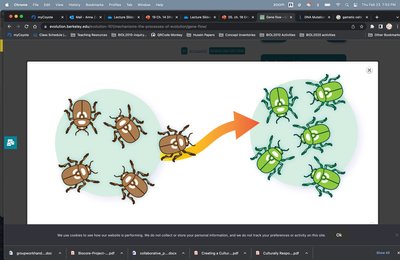
Gene flow is the transfer of alleles or genetic material from one population to another, typically through the migration of individuals or gametes. This process can introduce new genetic variation into a population, which may affect allele frequencies and evolutionary trajectories.
Migration is the movement of individuals between populations.
Gene flow only occurs if migrants reproduce and contribute alleles to the gene pool of the recipient population.
Gene flow can be random or non-random and may increase genetic variation within populations.
If the introduced trait is heritable and advantageous, it may become more common in future generations (adaptation).
Genetic Drift
Definition and Key Features
Genetic drift refers to random changes in allele frequencies within a population, especially pronounced in small populations. Unlike natural selection, genetic drift is not driven by fitness differences but by chance events.
Genetic drift can lead to the loss of genetic variation and fixation or loss of alleles.
It is most significant in small populations, where random events can have a large impact.
Genetic drift does not necessarily lead to adaptation and is random with respect to fitness.
Founder Effect and Bottleneck Effect
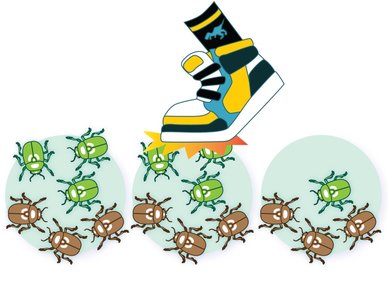
Founder Effect: Occurs when a small group of individuals establishes a new population, leading to reduced genetic variation compared to the original population.
Bottleneck Effect: Occurs when a population undergoes a drastic reduction in size due to a random event, resulting in decreased genetic diversity.
Fitness and Adaptation
Fitness
Fitness is defined as the relative reproductive success of an individual compared to others in the population. It is environment-dependent and does not necessarily mean being the strongest or healthiest.
Individuals with higher fitness contribute more alleles to the next generation.
Fitness is context-dependent and can change with environmental conditions.
Adaptation
Adaptation is the process by which a population becomes better suited to its environment through the increase of advantageous, heritable traits. Adaptation is a result of natural selection, but not all evolutionary changes are adaptive.
Occurs in populations, not individuals.
Heritable traits that increase fitness become more common over generations.
Microevolution and Macroevolution
Microevolution
Microevolution refers to small-scale changes in allele frequencies within a population over a few generations. These changes can be observed as shifts in genetic makeup from one generation to the next.
Examples include changes in coloration, size, or other traits within a population.
Macroevolution
Macroevolution involves large-scale evolutionary changes that occur over thousands to millions of years, often resulting in the formation of new species or higher taxonomic groups.
Macroevolutionary changes are typically studied through the fossil record and phylogenetic trees.
Speciation
Definition and Process
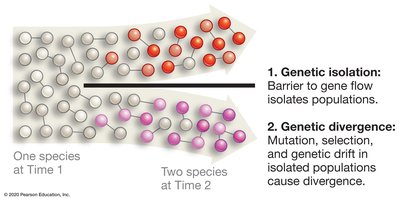
Speciation is the evolutionary process by which populations diverge to become distinct species. It involves the accumulation of genetic differences and the development of reproductive isolation.
Speciation is often represented by branching points on phylogenetic trees.
Divergence does not always result in speciation; reproductive isolation is required for the formation of new species.
Species Concepts
Biological Species Concept: Defines a species as a group of individuals that can interbreed and produce sexually viable offspring in nature.
Reproductive isolation is the main criterion for defining species under this concept.
Population vs. Species
Population: A group of organisms that interbreed and share a gene pool.
Species: A group of individuals that actually or potentially interbreed in nature and produce sexually viable offspring.
Modes of Speciation
Allopatric Speciation
Allopatric speciation occurs when populations are geographically separated, leading to reduced gene flow and divergence over time. Physical barriers such as mountains, rivers, or distance can cause this separation.
Over hundreds or thousands of generations, isolated populations accumulate genetic differences.
If reproductive isolation develops, new species are formed.
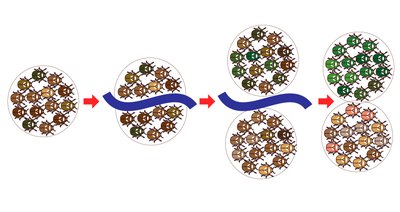
Sympatric Speciation
Sympatric speciation occurs without geographic barriers. Instead, biological differences such as feeding preferences, mating behaviors, or timing of reproduction reduce gene flow within the same geographic area.
Populations become reproductively isolated even while living together.
Examples include host shifts in insects or changes in mating signals.
Genetic Isolation and Divergence
Genetic isolation: Barriers to gene flow isolate populations.
Genetic divergence: Mutation, selection, and genetic drift in isolated populations cause divergence.
Divergent vs. Convergent Evolution
Divergent Evolution
Populations with a common ancestor become different due to environmental pressures, leading to the development of distinct traits.
Convergent Evolution
Unrelated species develop similar traits independently because they experience similar environmental conditions.
Study Techniques
Reverse Pyramid Study Technique
Study for 30 minutes: Read slides, highlight key information, and quiz yourself.
Use flashcards, vocabulary terms, and study guide questions to reinforce learning.
Track answers to identify areas needing improvement.
