 Back
Evolutionary Processes: Gene Flow, Genetic Drift, and Speciation
Study Guide - Smart Notes
 Tailored notes based on your materials, expanded with key definitions, examples, and context.
Evolutionary Processes
Gene Flow and Genetic Drift
Evolutionary processes such as gene flow and genetic drift are fundamental mechanisms that alter allele frequencies within populations, contributing to genetic diversity and sometimes leading to speciation. Understanding these processes is essential for grasping how populations evolve over time.
Gene Flow: The movement of alleles between populations due to migration of individuals or gametes. This process can introduce new genetic variation and increase diversity within a population.
Genetic Drift: Random changes in allele frequencies, especially pronounced in small populations. It often reduces genetic variation and can lead to the fixation or loss of alleles.
Founder Effect: Occurs when a small group establishes a new population, leading to reduced genetic variation.
Bottleneck Effect: Results from a drastic reduction in population size, causing a loss of genetic diversity.
Fitness: The relative reproductive success of an individual in a given environment. Traits that increase fitness are more likely to be passed on to future generations.
Example: Migration of individuals between two beetle populations can introduce new alleles, increasing genetic variation if the migrants reproduce.
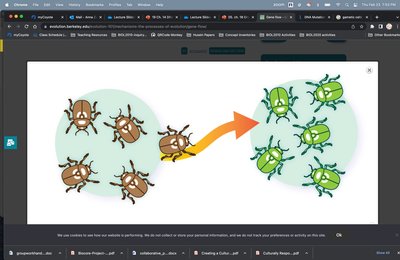
Additional info: Genetic drift is random with respect to fitness and does not always lead to adaptation.
Adaptation and Natural Selection
Adaptation as an Evolutionary Outcome
Adaptation is the process by which populations become better suited to their environment through the accumulation of advantageous, heritable traits. While adaptation is a key outcome of evolution by natural selection, not all evolutionary changes are adaptive.
Natural Selection: Acts on individuals based on their phenotype, favoring traits that increase fitness.
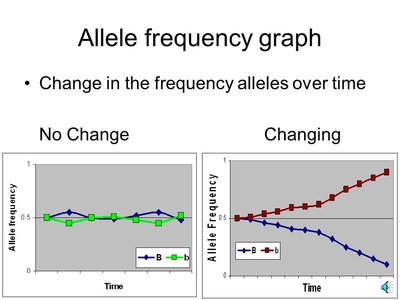
Population Evolution: Over generations, allele frequencies change, leading to the evolution of populations.
Microevolution: Small-scale changes in allele frequencies over a few generations.
Macroevolution: Large-scale evolutionary changes over thousands or millions of years.
Speciation
Process and Types of Speciation
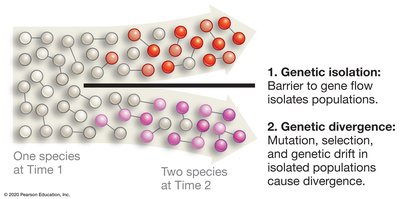
Speciation is the evolutionary process by which populations diverge to become distinct species. This typically involves genetic isolation followed by genetic divergence.
Genetic Isolation: Barriers to gene flow separate populations, preventing interbreeding.
Genetic Divergence: Accumulation of genetic differences due to mutation, selection, and genetic drift.
Allopatric Speciation: Occurs when populations are geographically separated.
Sympatric Speciation: Occurs within the same geographic area, often due to biological differences such as mating preferences or ecological niches.
Example: Hawthorn flies in North America began laying eggs on apples after their introduction, leading to reproductive isolation and potential speciation.
Defining Species
Biological Species Concept
The Biological Species Concept defines a species as a group of individuals that can interbreed in nature and produce sexually viable offspring. Reproductive isolation is the main criterion for distinguishing species.
Population: A group of organisms that interbreed and share a gene pool.
Species: A group of individuals that actually or potentially interbreed in nature and produce viable offspring.
Reproductive Isolation: Prevents gene flow between species, maintaining distinctiveness.
Modes of Speciation
Allopatric and Sympatric Speciation
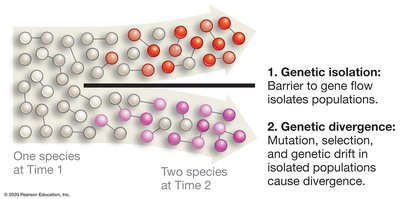
Speciation can occur through different modes, primarily allopatric and sympatric speciation. Allopatric speciation involves geographic isolation, while sympatric speciation occurs without physical barriers.
Allopatric Speciation: Geographic barriers reduce gene flow, leading to divergence.
Sympatric Speciation: Biological differences such as feeding preferences or mating times reduce gene flow within the same area.
Divergent vs. Convergent Evolution
Comparing Evolutionary Patterns
Divergent evolution occurs when populations with a common ancestor become different due to environmental pressures. Convergent evolution happens when unrelated species develop similar traits independently because they experience similar environmental conditions.
Divergent Evolution: Populations diverge and develop different traits.
Convergent Evolution: Unrelated species develop similar traits due to similar selective pressures.
Population Genetics
Allele Frequency and Evolution
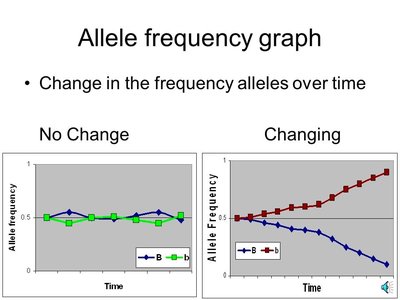
Population genetics studies the changes in allele frequencies within populations over time. These changes are driven by mutation, gene flow, genetic drift, and natural selection.
Allele Frequency: The proportion of a specific allele among all alleles in a population.
Equation: (where p and q are the frequencies of two alleles at a locus)
Hardy-Weinberg Principle: (predicts genotype frequencies in a population not evolving)
Phylogenetic Trees and Speciation Events
Visualizing Evolutionary Relationships
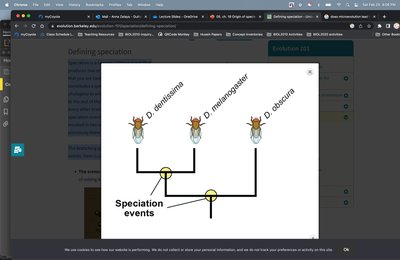
Phylogenetic trees are diagrams that represent evolutionary relationships and branching points of speciation events. They help visualize how species diverge from common ancestors.
Branching Points: Indicate speciation events.
Lineages: Represent evolutionary paths of species.
Study Techniques
Effective Study Strategies for Evolutionary Biology
To master evolutionary biology concepts, use active study techniques such as reading slides, highlighting key information, quizzing yourself, and using flashcards. Track your progress and focus on areas needing improvement.
Reverse Pyramid Study Technique: Start with broad concepts, then focus on details and practice questions.
Quiz Yourself: Use flashcards and study guides to reinforce learning.
Summary Table: Comparison of Evolutionary Processes
Process | Mechanism | Effect on Genetic Variation | Example |
|---|---|---|---|
Gene Flow | Migration of individuals/alleles | Increases variation | Beetles migrating between populations |
Genetic Drift | Random changes in allele frequency | Reduces variation | Bottleneck effect after a disaster |
Natural Selection | Selection for advantageous traits | Can increase or decrease variation | Adaptation to environment |
Speciation | Genetic isolation and divergence | Formation of new species | Allopatric and sympatric speciation |
