 Back
Evolutionary Processes: Gene Flow, Genetic Drift, and Speciation
Study Guide - Smart Notes
 Tailored notes based on your materials, expanded with key definitions, examples, and context.
Evolutionary Processes
Introduction to Evolutionary Processes
Evolution is the change in allele frequencies within a population over generations. Several mechanisms drive these changes, including natural selection, genetic drift, gene flow, mutation, and non-random mating. Understanding these processes is fundamental to explaining how populations adapt and diversify over time.
How Populations Evolve
L Mechanisms of Evolution
Natural Selection: Differential survival and reproduction of individuals due to differences in phenotype.
Non-Random Mating (Sexual Selection): Individuals select mates based on specific traits, influencing allele frequencies.
Genetic Drift: Random changes in allele frequencies due to chance events, especially in small populations.
Gene Flow: Movement of alleles between populations through migration.
Mutation: Random changes in the genetic sequence, introducing new alleles.
Traits can be advantageous, disadvantageous, or neutral depending on the environment.
Natural Selection and the Environment
Natural selection acts on phenotypes, but evolution is observed as changes in allele frequencies. The advantage of a trait depends on environmental context.
Advantageous Trait: Increases survival and reproductive success in a specific environment.
Disadvantageous Trait: Decreases survival or reproductive success.
Neutral Trait: Does not affect fitness in the current environment.
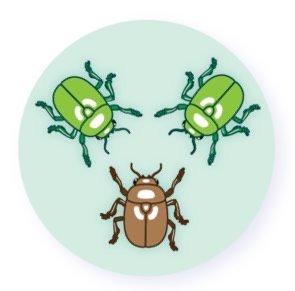
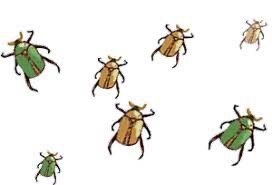
Example: Brown coloration in beetles may be advantageous in a forest with dark wood and predatory birds, while it may be neutral in an environment without predators.
Behavioral Traits and Adaptation
Behavioral traits, such as burrowing, can also be subject to natural selection. The advantage of a behavior depends on environmental pressures.
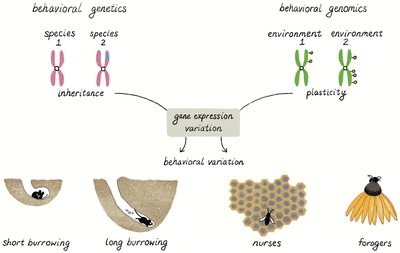
Example: Long burrowing may be advantageous in predator-rich environments but neutral or disadvantageous elsewhere.
Visualizing Variation: Histograms and Data Distribution
Understanding Trait Distribution
Histograms are used to visualize the distribution of continuous traits (e.g., height, leaf size) within a population. A normal distribution is common for many traits.
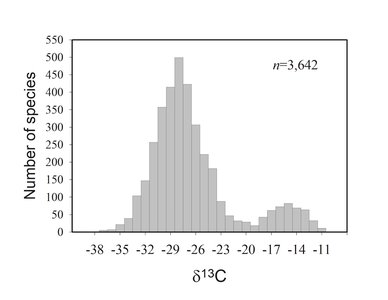
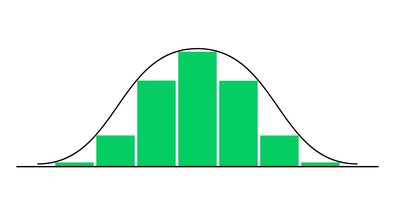
Key Points:
Independent variable: Trait measured (e.g., height).
Dependent variable: Number of individuals with that trait value.
Genetic Drift
Definition and Mechanism
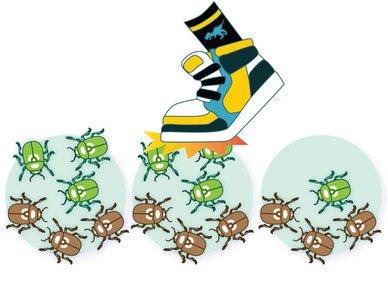
Genetic drift is the random fluctuation of allele frequencies in a population due to chance events. It is especially significant in small populations and can lead to the loss of genetic variation.
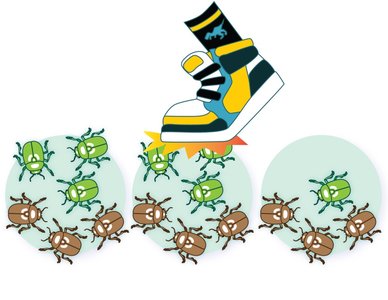
Not all individuals reproduce due to random events (e.g., accidents, natural disasters).
Survivors may not be the fittest, but simply lucky.
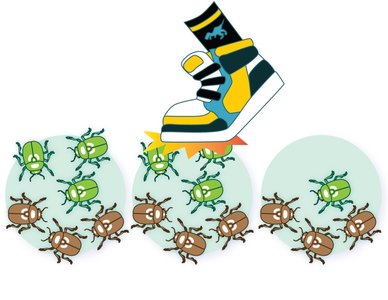
Consequences: Reduced genetic variation, increased chance of inbreeding, and persistence of maladaptive traits.
Founder Effect
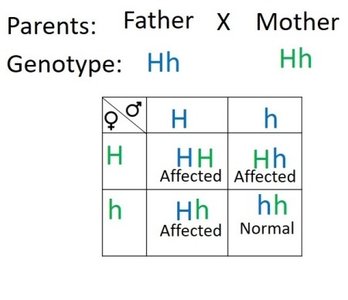
The founder effect occurs when a small group establishes a new population, carrying only a subset of the genetic variation from the original population. This can lead to high frequencies of certain alleles, including harmful ones.
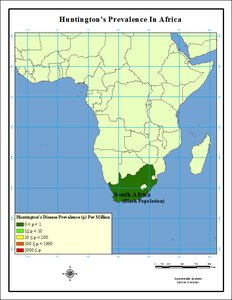
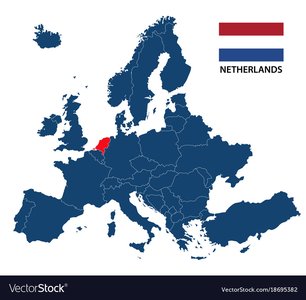
Example: The Afrikaner population in South Africa has a high frequency of the Huntington's disease allele due to the founder effect from Dutch colonizers.
Bottleneck Effect
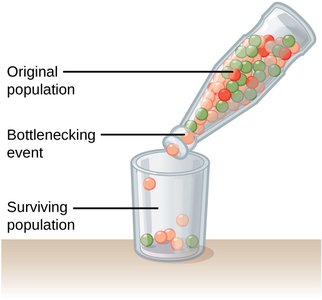
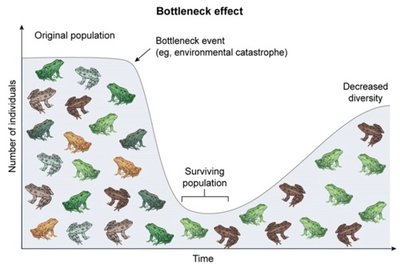
The bottleneck effect is a sharp reduction in population size due to environmental events, resulting in decreased genetic diversity in the surviving population.
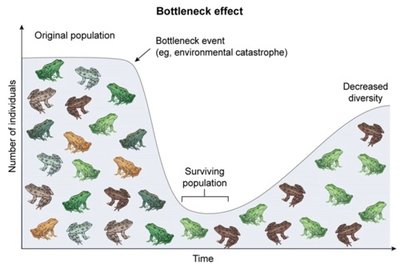
Example: Cheetah populations have experienced bottlenecks, leading to low genetic diversity and increased risk of inbreeding.
Key Points about Genetic Drift
Random with respect to fitness; not adaptive.
Most pronounced in small populations.
Can lead to fixation or loss of alleles by chance.
Gene Flow (Migration)
Definition and Effects
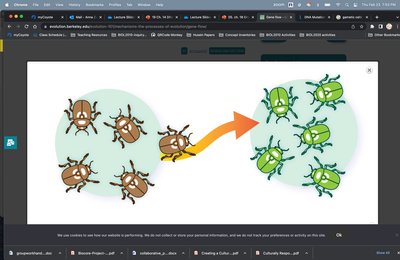
Gene flow is the movement of alleles between populations due to migration of individuals or gametes. It introduces new genetic variation and can counteract the effects of genetic drift.
Can increase genetic variation within a population.
If the introduced trait is advantageous and heritable, it may become more common (adaptation).
Gene Flow vs. Genetic Drift
Gene Flow | Genetic Drift |
|---|---|
Movement of alleles between populations | Random changes in allele frequencies within a population |
Increases genetic variation | Reduces genetic variation |
Can be adaptive if new alleles are advantageous | Not adaptive; random with respect to fitness |
Fitness and Adaptation
Understanding Fitness
Fitness is the relative reproductive success of an individual in a specific environment. It is not necessarily about being the strongest, but about contributing more alleles to the next generation.
Fitness is environment-dependent.
Populations with greater genetic diversity are better able to adapt to changing environments.
Adaptation
Adaptation is the process by which a population becomes better suited to its environment through the increase of advantageous heritable traits. Not all evolution is adaptive; some changes are due to drift or gene flow.
Common Misconceptions about Evolution
"Just a theory": In science, a theory is a well-supported explanation based on evidence.
Individuals evolve: Evolution occurs in populations over generations, not in individuals.
Evolution explains the origin of life: Evolution explains how populations change and diversify, not how life began.
Evolution is intentional: Variation arises randomly; evolution is not purposeful.
Speciation
Definition and Process
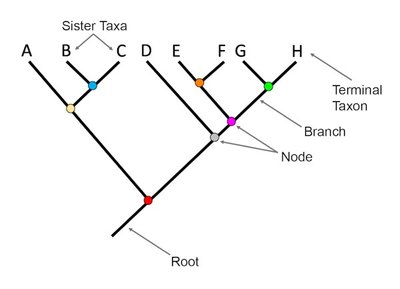
Speciation is the process by which one species splits into two or more distinct species. It is a key mechanism for generating biodiversity.
Occurs when populations become reproductively isolated and diverge genetically.
Represented as branching points on phylogenetic trees.
Summary Table: Evolutionary Processes
Process | Definition | Effect on Genetic Variation |
|---|---|---|
Natural Selection | Non-random increase of advantageous alleles | Can increase or decrease |
Genetic Drift | Random changes in allele frequencies | Usually decreases |
Gene Flow | Movement of alleles between populations | Usually increases |
Mutation | Random changes in DNA sequence | Increases |
Additional info: Maintaining large populations and high genetic diversity is crucial for the survival and adaptability of species. This minimizes the spread of maladaptive traits and allows populations to respond to environmental changes.
