 Back
Evolutionary Processes: Natural Selection, Genetic Drift, and Gene Flow
Study Guide - Smart Notes
 Tailored notes based on your materials, expanded with key definitions, examples, and context.
Evolution by Natural Selection
Introduction to Natural Selection
Natural selection is a fundamental mechanism of evolution, first formally described by Charles Darwin and Alfred Russel Wallace. It explains how populations adapt to their environments through differential survival and reproduction of individuals with varying traits.
Natural selection is the process by which heritable traits that confer a reproductive advantage become more common in a population over time.
Evolution occurs only in populations, not in individuals.
Fitness in evolutionary biology refers to an organism's reproductive success, not physical strength.
Artificial Selection
Artificial selection is the intentional breeding of organisms by humans to select for specific traits. This process has been used for centuries in agriculture and animal husbandry.
Artificial selection involves human-directed breeding based on desired traits.
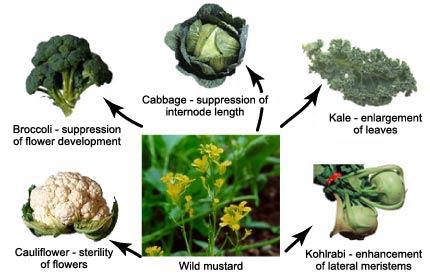
Examples include the domestication of plants and animals, such as the selective breeding of wild mustard to produce broccoli, cabbage, kale, cauliflower, and kohlrabi.
Darwin, Wallace, and the Theory of Natural Selection
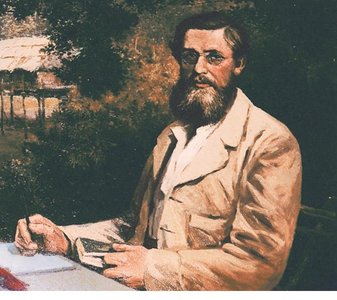
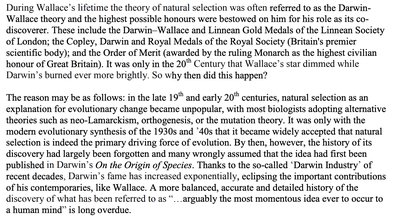
Charles Darwin and Alfred Russel Wallace independently developed the theory of natural selection. Their work overturned the idea that species are static and introduced the concept of populations evolving over time.
Darwin published On the Origin of Species in 1859.
Wallace contributed significantly to the development of evolutionary theory.
Conditions for Natural Selection
The Three Conditions
For natural selection to occur, three essential conditions must be met:
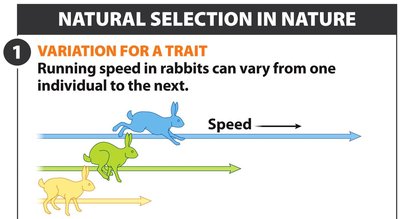
Variation for a trait: Individuals in a population must vary in their traits.
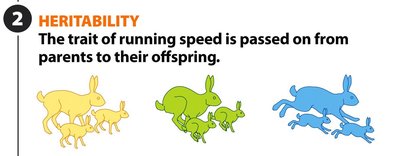
Heritability: The variation must be heritable, meaning it can be passed from parents to offspring.
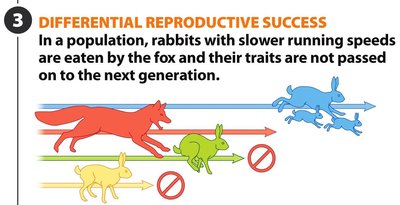
Differential reproductive success: Individuals with certain traits must have higher reproductive success than others.
Evolutionary Fitness and Adaptation
Fitness and Survival
Evolutionary fitness is a measure of an organism's reproductive success relative to others in the population.
Traits that increase fitness become more common over generations.
"Survival of the fittest" refers to reproductive success, not physical strength.
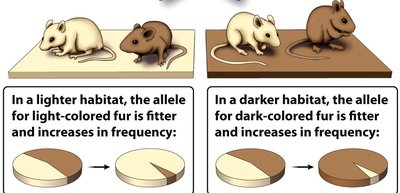
Adaptation is the result of natural selection, leading to populations well-suited to their local environments.
Misconceptions about Natural Selection
Common Misconceptions
Natural selection does not change individuals; it acts on populations.
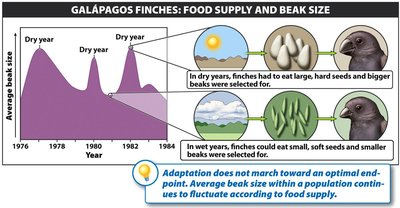
Natural selection is not goal-directed; it does not lead to perfection.
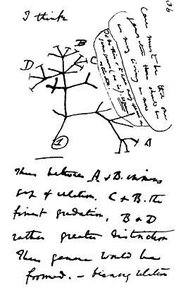
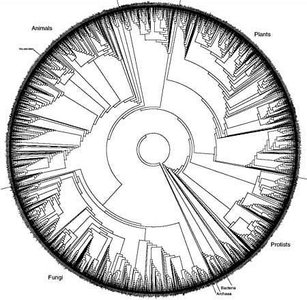
Evolution produces a branching tree of life, not a ladder of progress.
Modes of Natural Selection
Types of Selection
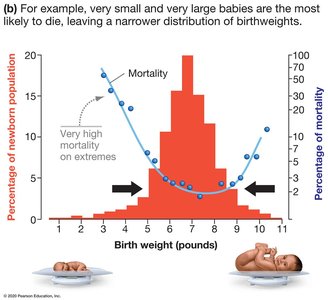
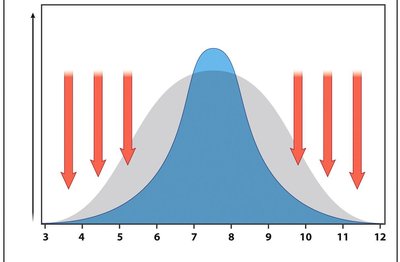
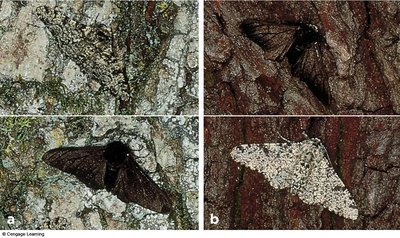
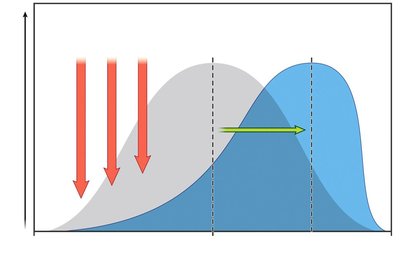
Natural selection can act in different ways depending on the environmental context and the traits involved.
Stabilizing selection: Favors intermediate phenotypes, reducing variation.
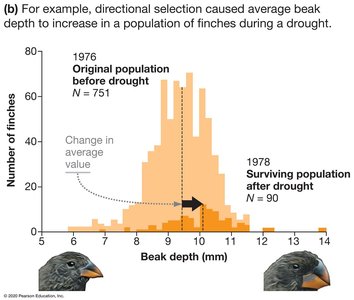
Directional selection: Favors one extreme phenotype, shifting the population mean.
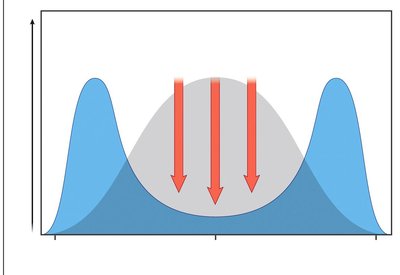
Disruptive selection: Favors extreme phenotypes at both ends, increasing variation.
Balancing selection: No phenotype has a distinct advantage; maintains diversity.
Sexual Selection
Mechanisms of Sexual Selection
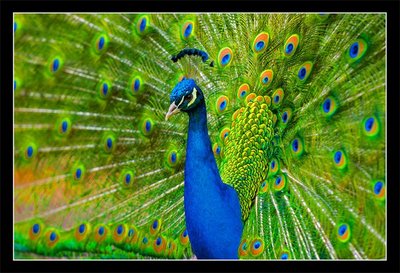
Sexual selection is a form of natural selection where traits that increase an individual's chances of mating are favored.
Intersexual selection: Mate choice, often by females selecting males with attractive traits.
Intrasexual selection: Competition among males for access to females.
Sexual dimorphism: Differences in appearance between males and females due to sexual selection.
Experimental Evidence: Mate Choice
Experiments with zebra finches show that females prefer males with brighter beaks, indicating health and genetic quality.
Carotenoids in feathers and beaks are signals of health.
Females spend more time with males displaying brighter colors.

Genetic Drift
Definition and Effects
Genetic drift is the change in allele frequencies in a population due to random chance, especially pronounced in small populations.
Genetic drift is random with respect to fitness.
It can lead to the loss or fixation of alleles, reducing genetic variation.
Sampling error during reproduction is a primary cause.
Founder Effect and Bottleneck Effect
Founder effect: Occurs when a new population is established by a small group, leading to different allele frequencies from the source population.
Bottleneck effect: Occurs when a population is drastically reduced in size, resulting in loss of genetic diversity.
Gene Flow
Definition and Impact
Gene flow is the movement of alleles between populations, typically through migration and breeding.
Gene flow equalizes allele frequencies between populations.
It can increase or decrease genetic variation and fitness, depending on the context.
Gene flow tends to reduce genetic differences between populations.
Summary Table: Evolutionary Processes
Process | Definition | Effect on Variation | Effect on Fitness |
|---|---|---|---|
Natural Selection | Non-random increase of advantageous traits | Can increase or decrease | Usually increases |
Genetic Drift | Random change in allele frequencies | Decreases | Random |
Gene Flow | Movement of alleles between populations | Can increase or decrease | Random |
Artificial Selection | Human-directed selection for traits | Can increase or decrease | Usually increases for selected traits |
Additional info: These notes expand on brief points from the original materials, providing academic context and examples for clarity and completeness.
