 Back
Exam 1 Review: Foundations of Evolution and Scientific Inquiry
Study Guide - Smart Notes
 Tailored notes based on your materials, expanded with key definitions, examples, and context.
Big Theme #1: Doing & Interpreting Science
Characteristics of Good Scientific Practices
Science is a systematic approach to understanding the natural world through observation, experimentation, and evidence-based reasoning. Good scientific practices ensure that findings are reliable and reproducible.
Objectivity: Scientists strive to minimize personal biases and rely on empirical evidence.
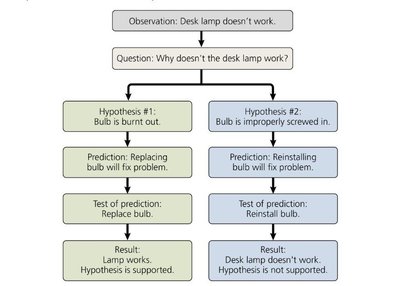
Testable Hypotheses: Scientific questions must be framed so they can be tested and potentially falsified.
Reproducibility: Experiments should yield consistent results when repeated by others.
Peer Review: Scientific work is evaluated by other experts before acceptance.
Guarding Against Bias
Double-blind experiments and randomization help reduce bias.
Replication and statistical analysis are used to confirm results.
Scientific Terms vs. Common Usage
Theory (scientific): A well-substantiated explanation of some aspect of the natural world, supported by a large body of evidence.
Hypothesis: A testable statement or prediction based on observations.
Law: A statement describing consistent natural phenomena, often expressed mathematically.
Common Misconceptions about Evolution
Evolution is not a linear progression toward 'better' organisms.
Individuals do not evolve; populations do over generations.
Natural selection is not the same as 'survival of the strongest.'
Big Theme #2: Diversity of Life
Measuring Variation of Life on Earth
Biodiversity refers to the variety of life forms, from genes to ecosystems, and is measured by species richness, genetic diversity, and ecosystem diversity.
Species richness: The number of different species in a given area.
Genetic diversity: The variety of genes within a population.
Ecosystem diversity: The variety of habitats and ecological processes.
Common Features of All Organisms
All living things are composed of cells.
They use DNA as genetic material.
They obtain and use energy, grow, and reproduce.
Classification of Organisms
Organisms are classified using a hierarchical system: Domain, Kingdom, Phylum, Class, Order, Family, Genus, Species.
Classification reflects evolutionary relationships.
Major Groups of Organisms
Bacteria, Archaea, Eukarya are the three domains of life.
Major kingdoms include Plantae, Animalia, Fungi, and various protists.
Changes in Diversity Over Time
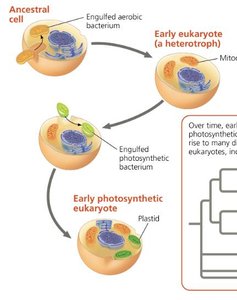
Major milestones include the origin of prokaryotes, eukaryotes, multicellularity, and the colonization of land.
Mass extinctions and adaptive radiations have shaped the tree of life.
Big Theme #3: Development of Ideas of Evolution
Historical Changes in Evolutionary Thought
Understanding of evolution has evolved from early ideas of fixed species to the modern synthesis integrating genetics and natural selection.
Pre-Darwinian views included fixity of species and inheritance of acquired traits (Lamarck).
Darwin introduced natural selection as a mechanism for evolution.
Influences on Darwin
Geology (Lyell): Earth is old and changes gradually.
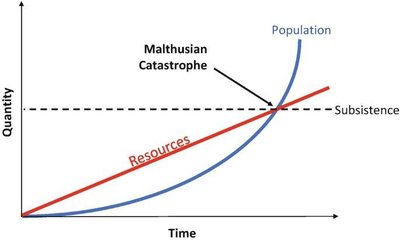
Economics (Malthus): Populations grow faster than resources, leading to competition.
Darwin's New Ideas
Species change over time through descent with modification.
Natural selection acts on heritable variation.
Evidence for Evolution
Fossil record: Shows changes in organisms over time.
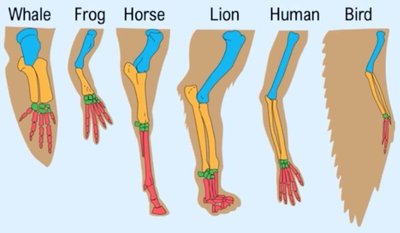
Homologous structures: Similar anatomy in different species due to common ancestry.
Molecular evidence: DNA and protein similarities among species.
Big Theme #4: How Evolution Happens—Genetics
Mendel's Contributions
Gregor Mendel's work on pea plants established the basic principles of heredity, including the concepts of dominant and recessive alleles.
Law of Segregation: Each individual has two alleles for each gene, which segregate during gamete formation.
Law of Independent Assortment: Genes for different traits are inherited independently.
Modern Genetics Beyond Mendel
Includes incomplete dominance, codominance, polygenic inheritance, and environmental effects on gene expression.
Genetic Definition of Evolution
Evolution is defined as a change in allele frequencies in a population over generations.
Connection Between Alleles and Traits
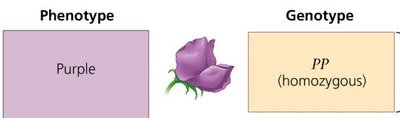
Genotype: The genetic makeup of an organism (e.g., PP).
Phenotype: The observable traits (e.g., purple flowers).
Genetics and Evolutionary Mechanisms
Genetic variation provides the raw material for evolution.
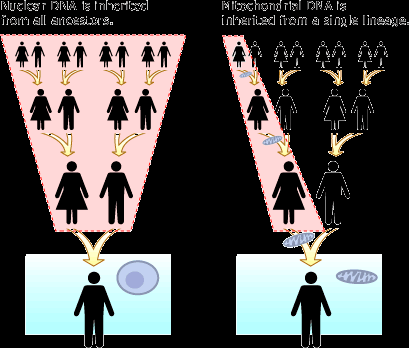
Mutations, gene flow, and sexual reproduction contribute to genetic diversity.
Big Theme #5: Why Evolution Happens—Mechanisms
Main Mechanisms of Evolution
There are four primary mechanisms that drive evolutionary change in populations:
Natural Selection: Differential survival and reproduction of individuals due to differences in phenotype.
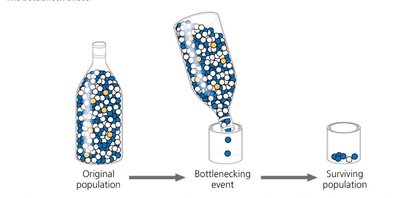
Genetic Drift: Random changes in allele frequencies, especially in small populations.
Gene Flow: Movement of alleles between populations.
Mutation: Random changes in DNA that introduce new alleles.
Effects on Allele Frequencies
Natural selection increases the frequency of advantageous alleles.
Genetic drift can lead to loss of genetic variation.
Gene flow can introduce new alleles to a population.
Mutations are the ultimate source of genetic novelty.
Examples of Mechanisms in Nature
Bottleneck effect: A sharp reduction in population size leads to loss of genetic diversity.
Forms of Natural Selection
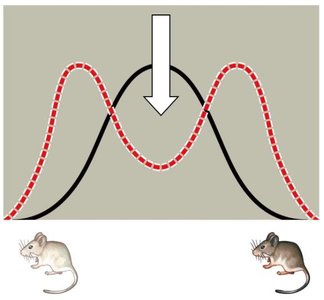
Directional selection: Favors one extreme phenotype.
Disruptive selection: Favors both extreme phenotypes over intermediates.
Stabilizing selection: Favors intermediate phenotypes.
Types of Fitness
Absolute fitness: The total number of offspring an individual produces.
Relative fitness: The reproductive success of an individual compared to others in the population.
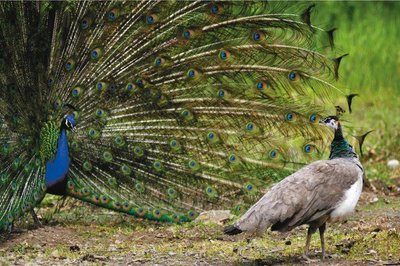
Sexual Selection
Selection for traits that increase mating success, often leading to pronounced differences between sexes.
Big Theme #6: Building Evolutionary Hypotheses
Predicting Evolutionary Outcomes
Evolutionary hypotheses allow scientists to predict how populations might change under different selective pressures or scenarios.
For example, if a population experiences a new predator, traits that confer better camouflage may become more common.
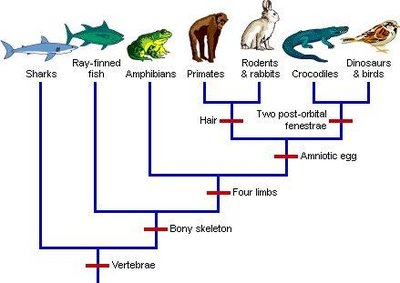
Interpreting Phylogenetic Trees
Phylogenetic trees depict evolutionary relationships among species based on shared characteristics and genetic data.
Each branch point represents a common ancestor.
Building Phylogenetic Trees
Scientists use morphological, molecular, and fossil evidence to construct trees.
Cladistics is a method that groups organisms by shared derived characteristics.
Additional info: The exam will consist of 34 questions (multiple choice and free response), and will cover all the above themes. Students should be prepared to interpret diagrams, apply concepts, and explain mechanisms of evolution and scientific reasoning.
