 Back
BackExtensions and Exceptions to Mendelian Genetics: Polygenic Traits, Epistasis, and Environmental Effects
Study Guide - Smart Notes
 Tailored notes based on your materials, expanded with key definitions, examples, and context.
Extending Mendelian Genetics: Two or More Genes
Epistasis and Polygenic Inheritance
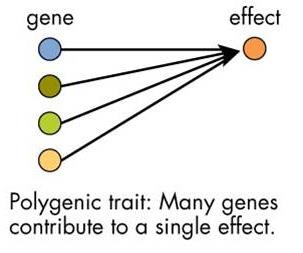
Many traits are determined by the interaction of two or more genes, leading to complex inheritance patterns beyond simple Mendelian genetics. Epistasis occurs when the expression of one gene affects the phenotypic expression of another gene. Polygenic inheritance involves multiple genes independently contributing to a single trait, resulting in a continuous range of phenotypes.
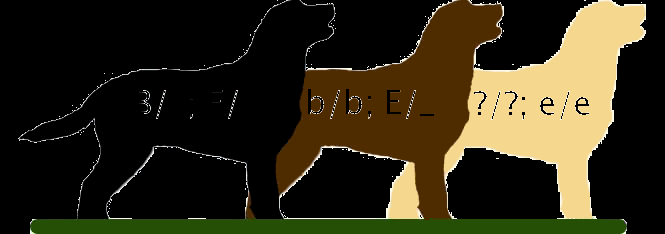
Epistasis: One gene can mask or modify the expression of another gene. For example, in Labrador retrievers, coat color is determined by two genes: one for pigment color (B/b) and one for pigment deposition (E/e).
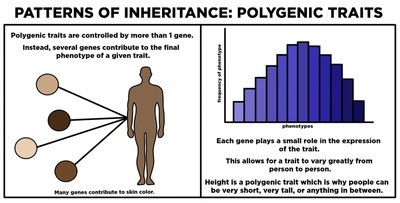
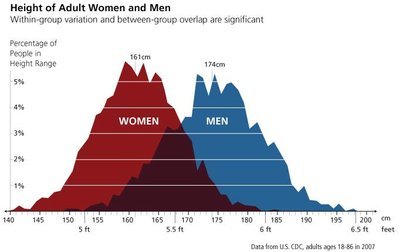
Polygenic inheritance: Traits such as skin color and height are influenced by many genes, each with a small additive effect.
Quantitative characters: Traits that vary along a continuum, such as height or skin pigmentation, usually indicate polygenic inheritance.
Examples of Polygenic Traits
Polygenic traits are common in humans and other organisms. Skin pigmentation and height are classic examples, each influenced by numerous genes and environmental factors.
Skin pigmentation: Controlled by many genes related to melanin production, resulting in a wide range of skin colors.
Height: Over 180 genes affect human height, with more than 700 different alleles contributing to variation.
Multifactorial traits: Traits influenced by both genetic and environmental factors, such as nutrition, disease, and lifestyle.
Environmental Effects on Phenotype
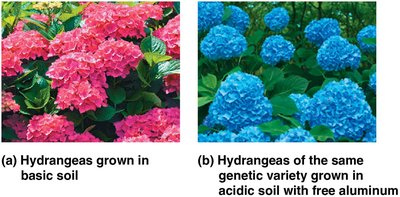
The environment can significantly influence the expression of polygenic traits, leading to phenotypic plasticity. The range of phenotypes produced by a genotype depends on environmental conditions.
Phenotypic plasticity: The ability of a genotype to produce different phenotypes in response to environmental conditions.
Example: Hydrangea flower color varies depending on soil acidity and aluminum content, ranging from pink in basic soil to blue-violet in acidic soil.
Gene by Environment Interaction (G x E) and Epigenetics
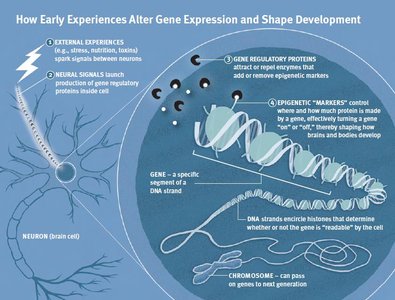
Gene-environment interactions are central to the field of epigenetics, which studies how environmental factors and behaviors can cause structural changes in chromosomes that affect gene expression.
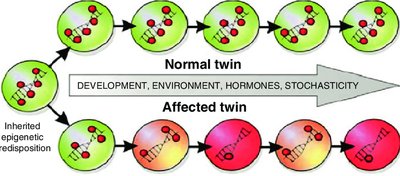
Epigenetics: The study of heritable changes in gene expression that do not involve changes to the DNA sequence.
Best study systems: Identical twins and clones are valuable for understanding epigenetic effects, as they share the same genetic makeup but may differ in phenotype due to environmental influences.
A Mendelian View of Heredity and Variation
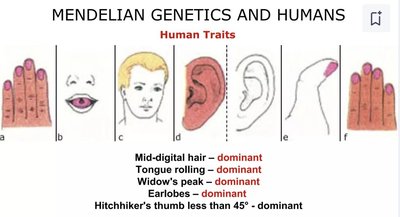
Human Traits and Mendelian Patterns
Some human traits follow simple Mendelian inheritance patterns, but many traits are more complex due to polygenic and environmental influences.
Mendelian traits: Traits determined by a single gene with dominant and recessive alleles, such as tongue rolling or earlobe attachment.
Limitations: Humans are not ideal subjects for genetic research due to long generation times and limited offspring.
Summary Table: Polygenic vs. Mendelian Traits
Trait Type | Number of Genes | Phenotypic Variation | Example |
|---|---|---|---|
Mendelian | 1 | Discrete (either-or) | Tongue rolling |
Polygenic | Multiple | Continuous (range) | Height, skin color |
Key Equations
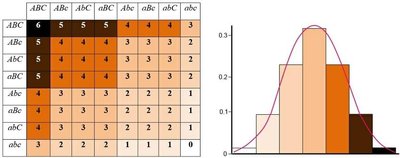
Additive effect of polygenic inheritance: The total phenotype is the sum of the effects of all contributing genes.
Additional info: Polygenic traits often display a normal distribution in populations, as shown in the height distribution graph. Environmental factors can shift the mean or variance of these distributions, further complicating genetic analysis.
