 Back
Female Reproductive System, Obstetrics, and Neonatology: Mini-Textbook Study Notes
Study Guide - Smart Notes
 Tailored notes based on your materials, expanded with key definitions, examples, and context.
Female Reproductive System
Anatomy and Physiology: Structures
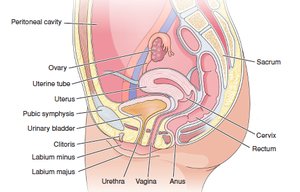
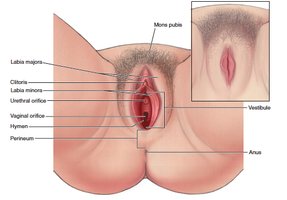
The female reproductive system consists of both external and internal genitalia, each with distinct functions. The external genitalia, collectively called the vulva, include the mons pubis, labia majora and minora, clitoris, vestibule, and the openings of the urethra and vagina. These structures facilitate sperm entry, protect internal organs, and provide sexual pleasure. The internal genitalia form the genital tract, which includes the ovaries, uterine tubes, uterus, and vagina. The breasts, though not part of the genital tract, are functionally included due to their role in nourishing infants.
External Genitalia: Mons pubis, labia majora, labia minora, clitoris, vestibule, urethral and vaginal openings
Internal Genitalia: Ovaries, uterine tubes (fallopian tubes), uterus, vagina
Breasts: Contain milk-producing structures for infant nutrition
Anatomy and Physiology: Functions
The female reproductive system is responsible for producing oocytes (female sex cells), female sex hormones, transporting oocytes for fertilization, supporting embryonic and fetal development, and providing nutrition and antibodies to infants through breast milk.
Oocyte Production: Ovaries produce oocytes for fertilization
Hormone Production: Estrogen and progesterone regulate reproductive functions
Embryo/Fetus Support: Uterus provides a nurturing environment
Infant Nutrition: Breasts produce milk and antibodies
Breast Anatomy and Terminology
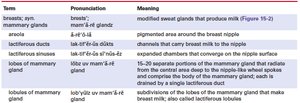
The breast contains specialized structures for milk production and delivery. Key terms include mammary glands, areola, lactiferous ducts and sinuses, lobes, and lobules.
Term | Pronunciation | Meaning |
|---|---|---|
breast; mammary glands | brɛst; ˈmænəri ˈɡlændz | Modified sweat glands that produce milk |
areola | əˈriːələ | Pigmented area around the nipple |
lactiferous ducts | lækˈtɪfərəs dʌkts | Channels that carry breast milk to the nipple |
lactiferous sinuses | lækˈtɪfərəs ˈsaɪnəsɪz | Expanded chambers that converge on the nipple surface |
lobes of mammary gland | loʊbz əv ˈmænəri ˈɡlænd | 15–20 separate parts of the mammary gland |
lobules of mammary gland | ˈlɑbjulz əv ˈmænəri ˈɡlænd | Subdivisions of lobes that make breast milk |
Internal Genitalia: Uterus, Ovaries, and Uterine Tubes
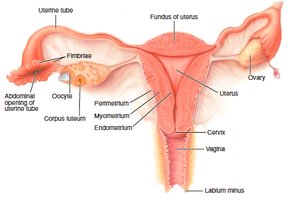
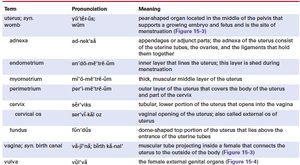
The internal genitalia are essential for reproduction, including the uterus, ovaries, and uterine tubes. The uterus is a pear-shaped organ that supports embryo and fetal development. The ovaries produce oocytes and hormones, while the uterine tubes transport oocytes and are the site of fertilization.
Uterus: Site of embryo implantation and fetal development
Ovaries: Produce oocytes and hormones (estrogen, progesterone)
Uterine Tubes: Transport oocytes; site of fertilization
Key Terms Related to Female Reproductive System
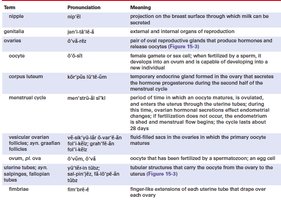
Understanding terminology is crucial for mastering anatomy and physiology. The following table summarizes important terms:
Term | Pronunciation | Meaning |
|---|---|---|
nipple | ˈnɪpəl | Projection on breast surface for milk secretion |
genitalia | ˌdʒɛnɪˈteɪliə | External and internal organs of reproduction |
ovaries | ˈoʊvəriːz | Produce hormones and release oocytes |
oocyte | ˈoʊəˌsaɪt | Female gamete or sex cell |
corpus luteum | ˈkɔːrpəs ˈluːtiəm | Temporary endocrine gland in ovary |
menstrual cycle | ˈmɛnstruəl ˈsaɪkəl | Monthly cycle of oocyte maturation and uterine changes |
fimbriae | ˈfɪmbriˌiː | Finger-like extensions of uterine tube |
External Genitalia: Vulva and Associated Structures
Vulva Anatomy
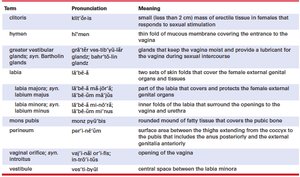
The vulva includes the mons pubis, labia majora and minora, clitoris, vestibule, urethral orifice, vaginal orifice, hymen, and perineum. These structures protect internal organs and facilitate sexual function.
Labia Majora: Outer folds covering the genital area
Labia Minora: Inner folds surrounding the vaginal opening
Clitoris: Erectile tissue for sexual pleasure
Vestibule: Space between labia minora
Perineum: Area between vulva and anus
Obstetrics and Neonatology
Fetal Membranes and Pregnancy Terms
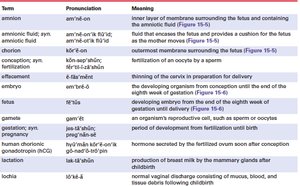
Obstetrics focuses on pregnancy and childbirth, while neonatology deals with newborn care. Key terms include amnion, chorion, amniotic fluid, embryo, fetus, and placenta.
Amnion: Inner membrane surrounding fetus
Chorion: Outermost fetal membrane
Amniotic Fluid: Cushions and protects fetus
Placenta: Organ for nutrient and gas exchange
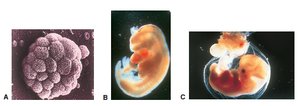
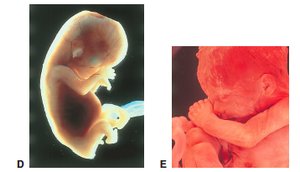
Embryo: Early stage of development (up to 8 weeks)
Fetus: Later stage of development (after 8 weeks)
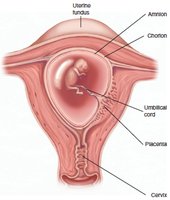
Embryonic and Fetal Development
Human development begins with fertilization, followed by implantation, embryonic growth, and fetal maturation. The embryo is surrounded by amniotic fluid and protected by fetal membranes.
Implantation: Occurs 7–8 days after conception
Embryo: Develops rapidly in first 8 weeks
Fetus: Growth and organ maturation from 8 weeks onward
Key Terms: Obstetrics and Neonatology
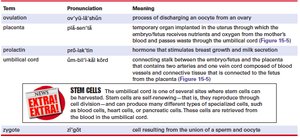
Understanding medical terminology is essential for describing pregnancy, childbirth, and newborn care. The following table summarizes important terms:
Term | Pronunciation | Meaning |
|---|---|---|
ovulation | ˌɑːvjəˈleɪʃən | Release of oocyte from ovary |
placenta | pləˈsɛntə | Temporary organ for nutrient exchange |
prolactin | proʊˈlæktɪn | Hormone for breast growth and milk secretion |
umbilical cord | ʌmˈbɪlɪkəl kɔrd | Connects fetus to placenta |
zygote | ˈzaɪˌɡoʊt | Cell formed by union of sperm and oocyte |
Medical Terminology: Word Parts
Combining Forms
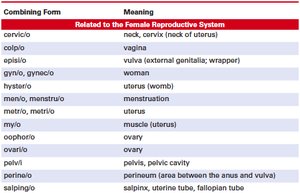
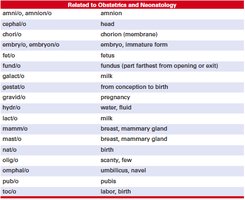
Combining forms are used to build medical terms related to the female reproductive system, obstetrics, and neonatology. Examples include cervic/o (neck, cervix), vagin/o (vagina), hyster/o (uterus), oophor/o (ovary), and mamm/o (breast).
Prefixes and Suffixes
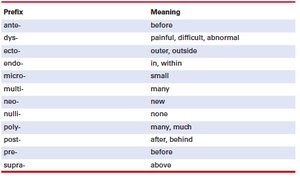
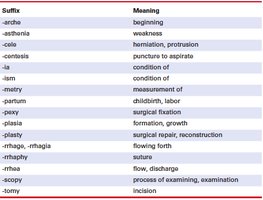
Prefixes and suffixes modify the meaning of medical terms. Common prefixes include ante- (before), dys- (painful, abnormal), endo- (within), and poly- (many). Suffixes include -arche (beginning), -metry (measurement), -partum (childbirth), and -tomy (incision).
Medical Conditions and Disorders
Common Conditions
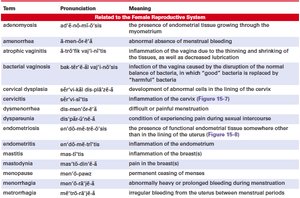
Several conditions affect the female reproductive system, including endometriosis, cervicitis, uterine fibroids, and polycystic ovary syndrome. These disorders can impact fertility, menstrual cycles, and overall health.
Endometriosis: Growth of endometrial tissue outside the uterus
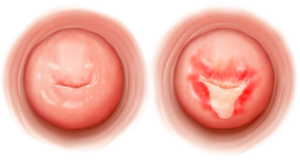
Cervicitis: Inflammation of the cervix
Uterine Fibroids: Benign tumors in the uterus
Polycystic Ovary Syndrome: Hormonal disorder causing enlarged ovaries with cysts
Summary
The female reproductive system is essential for producing oocytes, supporting embryonic and fetal development, and nourishing infants. Obstetrics focuses on pregnancy and childbirth, while neonatology addresses newborn care. Mastery of medical terminology, anatomy, and physiology is crucial for understanding these systems and their associated conditions.
Additional info: These notes expand on brief points with academic context, definitions, and examples to ensure completeness and clarity for exam preparation.
