 Back
Fermentation, Cellular Respiration, and Cell Division: Study Notes for General Biology
Study Guide - Smart Notes
 Tailored notes based on your materials, expanded with key definitions, examples, and context.
Fermentation and Cellular Respiration
Overview of Fermentation
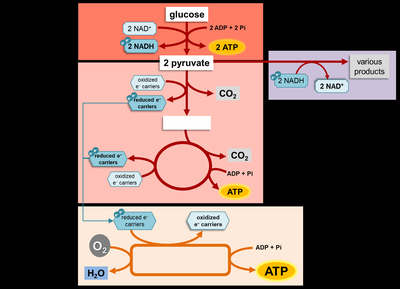
Fermentation is a metabolic process that allows cells to continue producing ATP via glycolysis when oxygen is scarce or absent. It is essential for regenerating NAD+, which is required for glycolysis to proceed. Unlike cellular respiration, fermentation does not produce additional ATP beyond what is generated in glycolysis.
Fermentation occurs under low or no oxygen conditions.
Purpose: Regenerates oxidized electron carriers (NAD+) so glycolysis can continue.
ATP Yield: Only 2 ATP per glucose molecule (from glycolysis).
Products: Various, depending on the type of fermentation.
Key Reaction: NADH is converted back to NAD+.
Example: Fermentation is used by certain cells and organisms when oxygen is not available, such as muscle cells during intense exercise or yeast in bread and alcohol production.
Types of Fermentation
There are two main types of fermentation: lactic acid fermentation and alcoholic fermentation. Both processes convert NADH to NAD+ and allow glycolysis to continue, but they produce different end products.
Lactic Acid Fermentation: Produces lactic acid (lactate) as the end product.
Alcoholic Fermentation: Produces ethanol and carbon dioxide as end products.
Lactic Acid Fermentation
Lactic acid fermentation occurs in some bacteria and in animal cells, such as muscle cells and red blood cells. It is responsible for the tangy taste in foods like yogurt and sauerkraut.
Reactants: 2 pyruvate, 2 NADH (from glycolysis)
Products: 2 lactate, 2 NAD+
Equation:
Occurs in: Red blood cells (no mitochondria), muscle cells (low/no oxygen), some bacteria
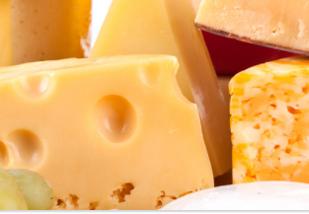

Example: Lactic acid fermentation is used in the production of yogurt, cheese, and pickled foods.
Alcoholic Fermentation
Alcoholic fermentation is carried out by yeast and some bacteria. It is responsible for the production of alcoholic beverages and the rising of bread.
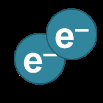
Reactants: 2 pyruvate, 2 NADH (from glycolysis)
Products: 2 ethanol, 2 CO2, 2 NAD+
Equation:
Occurs in: Yeast (e.g., Saccharomyces cerevisiae)
Example: Alcoholic fermentation is used in the production of beer, wine, and bread.
Fermentation Products and Applications
Fermentation produces a variety of products depending on the organism and pathway. These products have important applications in food and beverage industries.
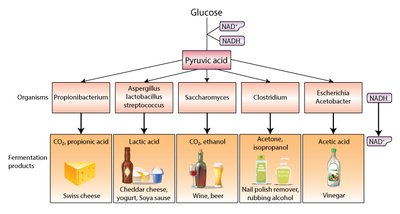
Lactic acid: Yogurt, cheese, sauerkraut
Ethanol: Beer, wine, bread
Other products: Acetic acid (vinegar), propionic acid (Swiss cheese), acetone, isopropanol
Cellular Respiration vs. Fermentation
Benefits of Cellular Respiration
Cellular respiration is a more efficient process for ATP production when oxygen is available. It allows cells to extract much more energy from glucose compared to fermentation.
Cellular respiration: Occurs in mitochondria, uses oxygen, produces up to 36-38 ATP per glucose.
Fermentation: Occurs in cytoplasm, does not use oxygen, produces only 2 ATP per glucose.
Key Point: Oxygen enables the complete oxidation of glucose, maximizing ATP yield.
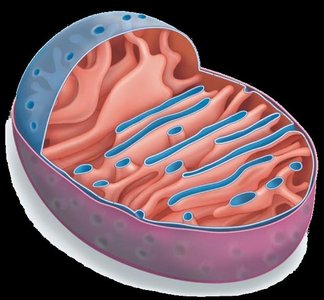
Example: Most eukaryotic cells prefer cellular respiration when oxygen is present, switching to fermentation only when oxygen is limited.
Cell Cycle and Mitosis
Introduction to Cell Division
Cell division is the process by which cells reproduce, enabling growth, repair, and reproduction. There are two main types: mitosis (for somatic cells) and meiosis (for gametes).
Mitosis: Produces genetically identical daughter cells.
Meiosis: Produces gametes with half the chromosome number, genetically different from parent cells.
Cell division steps: Copying DNA, separating copies, dividing cytoplasm.
Example: Mitosis is used for tissue repair and growth; meiosis is used for sexual reproduction.
Chromosomes and Chromatids
Chromosomes are structures composed of DNA and proteins that carry genetic information. Chromatids are the replicated forms of chromosomes, joined at the centromere.
Gene: Region of DNA coding for a protein or RNA.
Chromosome number: Varies by species (humans: 46, chimpanzees: 48).
Homologous chromosomes: Pairs carrying the same set of genes.
Ploidy: Number of complete sets of chromosomes (haploid: n, diploid: 2n).
Example: Human somatic cells are diploid (2n = 46); gametes are haploid (n = 23).
The Cell Cycle
The cell cycle describes the sequence of events leading a eukaryotic cell through chromosome duplication and division. It consists of growth (interphase) and division (M phase).
Interphase: G1 (growth), S (DNA synthesis), G2 (preparation for mitosis)
M phase: Mitosis (nuclear division) and cytokinesis (cytoplasmic division)
Example: Most of the cell cycle is spent in interphase, with mitosis occupying a small proportion.
Mitosis: Stages and Key Structures
Mitosis is the process by which a cell divides its nucleus, ensuring each daughter cell receives an identical set of chromosomes. Chromatin condenses, sister chromatids separate, and the mitotic spindle facilitates chromosome movement.
Chromatin: DNA-protein complex that condenses during mitosis.
Sister chromatids: Identical copies joined at the centromere.
Mitotic spindle: Microtubule structure controlling chromosome movement.
Kinetochore: Protein complex at the centromere, interface for spindle fibers.
Centromere: DNA region binding spindle fibers.
Example: During mitosis, each daughter cell receives a complete and identical set of chromosomes.
Cytokinesis
Cytokinesis is the division of the cytoplasm, resulting in two distinct daughter cells. It differs between plant and animal cells.
Animal cells: Cleavage furrow forms to separate cells.
Plant cells: Cell plate forms to divide cells.
Example: Cytokinesis ensures each daughter cell has a full set of organelles and genetic material.
Cell Division in Prokaryotes
Prokaryotes reproduce by binary fission, a simpler process than mitosis. Binary fission does not involve mitosis and results in genetically identical daughter cells.
Binary fission: DNA is copied, cell splits into two.
Occurs in: Bacteria and archaea.
Example: Binary fission is the primary method of reproduction for prokaryotic cells.
