 Back
Fermentation, Cellular Respiration, and Cell Division: Study Notes for General Biology
Study Guide - Smart Notes
 Tailored notes based on your materials, expanded with key definitions, examples, and context.
Fermentation and Cellular Respiration
Overview of Fermentation
Fermentation is a metabolic process that allows cells to generate energy under low or no oxygen conditions. It enables glycolysis to continue by regenerating NAD+, an essential electron carrier, but does not produce additional ATP beyond what is generated in glycolysis.
Fermentation occurs when oxygen is scarce or absent.
It regenerates NAD+ from NADH, allowing glycolysis to proceed.
Only 2 ATP are produced per glucose molecule under fermentation.
Fermentation products cannot be used to generate more ATP in cells carrying out fermentation.
All types of fermentation convert NADH to NAD+.
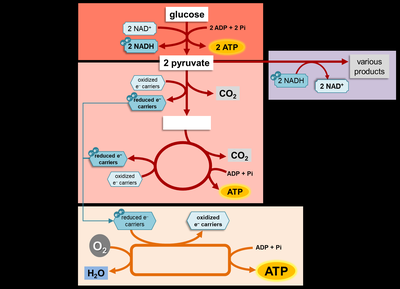
Cellular Respiration vs. Fermentation
Cellular respiration is more efficient than fermentation, producing significantly more ATP per glucose molecule when oxygen is present. Fermentation is used as an alternative pathway when oxygen is unavailable.
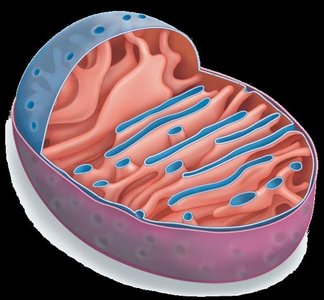
Cellular respiration occurs in the mitochondria and produces up to 36 ATP per glucose.
Fermentation occurs in the cytoplasm and produces only 2 ATP per glucose.
Cellular respiration uses oxygen as the final electron acceptor, while fermentation does not.
Main Types of Fermentation
There are two main types of fermentation: lactic acid fermentation and alcoholic fermentation. Both processes regenerate NAD+ but produce different end products.
Lactic Acid Fermentation: Converts pyruvate to lactate. Occurs in some bacteria, red blood cells, and muscle cells under low oxygen.
Alcoholic Fermentation: Converts pyruvate to ethanol and CO2. Occurs in yeast and some bacteria.
Lactic Acid Fermentation
Lactic acid fermentation is carried out by certain bacteria and animal cells, such as muscle cells and red blood cells. It is important for food production and occurs during intense exercise when oxygen is limited.
Equation: $2 \text{Pyruvate} + 2 \text{NADH} \rightarrow 2 \text{Lactate} + 2 \text{NAD}^+$
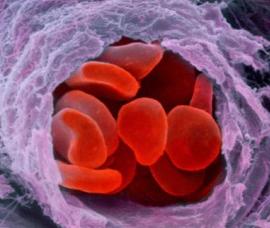
Red blood cells rely on lactic acid fermentation because they lack mitochondria.
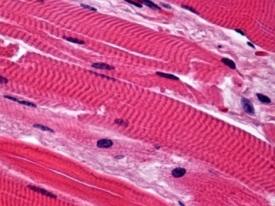
Muscle cells use lactic acid fermentation during strenuous activity.
Lactic acid gives foods like yogurt and sauerkraut their tangy flavor.
Alcoholic Fermentation
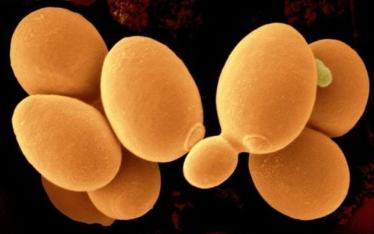
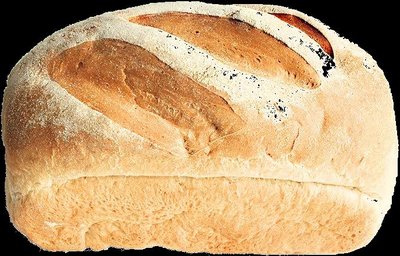
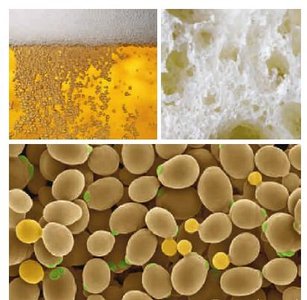
Alcoholic fermentation is performed by yeast and some bacteria. It is responsible for the production of alcoholic beverages and the rising of bread.
Equation: $2 \text{Pyruvate} + 2 \text{NADH} \rightarrow 2 \text{Ethanol} + 2 \text{CO}_2 + 2 \text{NAD}^+$
Yeast is the primary organism used in alcoholic fermentation.
Alcoholic fermentation produces ethanol and carbon dioxide.
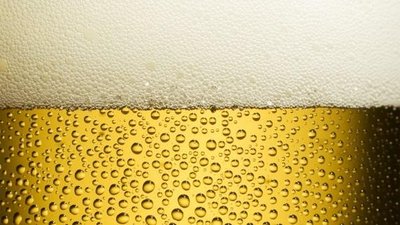
CO2 causes bread to rise and creates bubbles in beer and wine.

Fermentation Products and Applications
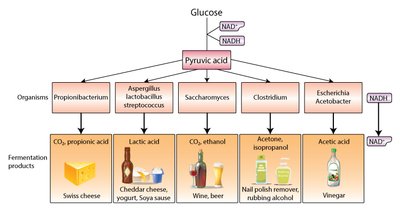
Fermentation produces a variety of products depending on the organism and pathway. These products are important in food, beverage, and industrial applications.
Lactic acid: Yogurt, cheese, sauerkraut
Ethanol: Beer, wine, bread
Other products: Acetic acid (vinegar), propionic acid (Swiss cheese), acetone, isopropanol
Cell Cycle and Mitosis
Introduction to Cell Division
Cell division is the process by which cells reproduce. There are two main types: mitosis (for somatic cells) and meiosis (for gametes). Both processes ensure the continuity of life and genetic information.
Mitosis: Produces genetically identical daughter cells for growth, repair, and asexual reproduction.
Meiosis: Produces gametes with half the chromosome number, leading to genetic diversity.
Cell division is accompanied by cytokinesis, the division of the cytoplasm.
Chromosomes and Chromatids
Chromosomes are structures composed of DNA and proteins that carry genetic information. Chromatids are the replicated forms of chromosomes, joined at the centromere.
Gene: Region of DNA coding for a protein or RNA.
Chromatids: Each replicated chromosome consists of two sister chromatids.
Homologous chromosomes: Pairs of chromosomes carrying the same set of genes.
Ploidy: Number of complete sets of chromosomes (haploid = n, diploid = 2n).
Humans have 46 chromosomes (2n = 46); chimpanzees have 48 (2n = 48).
The Cell Cycle
The cell cycle describes the sequence of events leading a eukaryotic cell through the duplication of its chromosomes and division. It consists of growth and division phases.
G1 phase: Cell grows and prepares for DNA replication.
S phase: DNA synthesis and replication.
G2 phase: Preparation for mitosis.
M phase: Mitosis (nuclear division) and cytokinesis (cytoplasmic division).
Mitosis: Stages and Key Events
Mitosis is the process by which a cell divides its nucleus, ensuring each daughter cell receives an identical set of chromosomes. It is followed by cytokinesis.
Chromatin condenses to form chromosomes.
Sister chromatids separate to become independent chromosomes.
Mitotic spindle controls chromosome movement.
Kinetochore: Protein structure at the centromere, interface for spindle fibers.
Centromere: DNA region where chromatids are attached.
Each daughter cell receives a complete and identical set of chromosomes.
Cytokinesis
Cytokinesis is the division of the cytoplasm, resulting in two distinct cells. It differs in plant and animal cells.
Each daughter cell receives new organelles synthesized during interphase.
Cell Division in Prokaryotes
Prokaryotes reproduce by binary fission, a simpler process than mitosis. Binary fission does not involve mitosis.
Binary fission results in two genetically identical cells.
