 Back
Fertilization: Sperm-Oocyte Interaction and Blocks to Polyspermy
Study Guide - Smart Notes
 Tailored notes based on your materials, expanded with key definitions, examples, and context.
Fertilization: Sperm-Oocyte Interaction
Capacitation and Sperm Activation
Capacitation is a physiological process that sperm undergo in the female reproductive tract, enabling them to acquire the ability to fertilize an oocyte. This process involves changes in the sperm membrane and activation of enzymes necessary for penetration of the oocyte's protective layers.
Capacitation: Removal of inhibitory factors from the sperm membrane, activation of membrane proteins, and functional enzymes such as hyaluronidase.
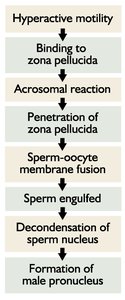
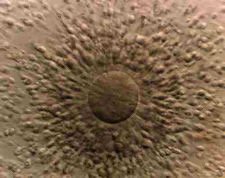
Hyperactive motility: Sperm exhibit increased motility, which is essential for traversing the cumulus cells surrounding the oocyte.
Example: Capacitated sperm can penetrate the extracellular matrix of cumulus cells, which is rich in hyaluronic acid.
Oocyte Morphology and Protective Layers
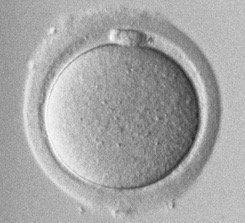
The oocyte is surrounded by several protective layers, each playing a role in fertilization and preventing polyspermy. The main structures include the zona pellucida, perivitelline space, oolemma, and cumulus cells.
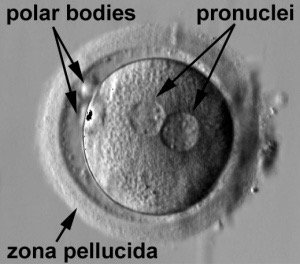
Zona Pellucida: A glycoprotein-rich extracellular matrix composed of ZP1 and ZP2 (structural proteins) and ZP3 (binding protein for sperm).
Cumulus Cells: Granulosa cells embedded in hyaluronic acid, providing structural support and facilitating sperm passage.
Perivitelline Space: The space between the zona pellucida and the oolemma (oocyte plasma membrane).
Sperm Anatomy and Acrosome Reaction
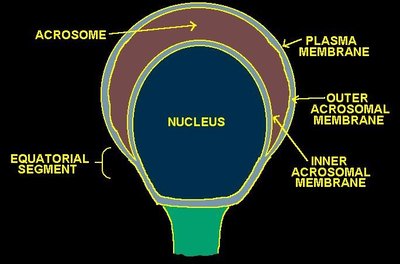
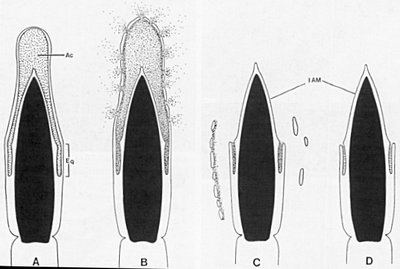
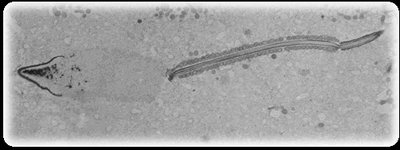
The sperm head contains the acrosome, a specialized organelle filled with enzymes necessary for penetrating the zona pellucida. The acrosome reaction is a critical event in fertilization, involving membrane fusion and enzyme release.
Acrosome: Contains acrosin, an enzyme that digests the zona pellucida.
Acrosome Reaction: Fusion of the sperm plasma membrane with the outer acrosomal membrane, leading to vesiculation and release of acrosomal contents.
Equatorial Segment: Region exposed after the acrosome reaction, containing fusion proteins necessary for sperm-oocyte membrane fusion.
Binding and Penetration of the Zona Pellucida
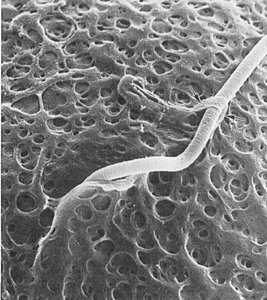
After capacitation, sperm bind to the zona pellucida via specific regions and undergo the acrosome reaction, allowing them to penetrate this layer and reach the oocyte membrane.
Zona Binding Region: First binding site for sperm on the zona pellucida.
Acrosome Reaction Promoting Region: Second binding site, triggering the acrosome reaction.
Penetration: Sperm use acrosin and hyaluronidase to digest the zona pellucida and traverse the cumulus cells.
Sperm-Oocyte Membrane Fusion and Blocks to Polyspermy
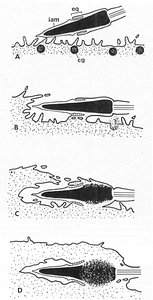
Fusion of the sperm and oocyte membranes initiates a series of events that prevent entry of additional sperm, ensuring monospermy. These blocks are essential for normal development.
Zona Block: The zona pellucida hardens due to the release of cortical granule contents from the oocyte, preventing further sperm penetration.
Vitelline Block: The oocyte plasma membrane becomes unresponsive to additional sperm after fusion, preventing recognition of fusion proteins.
Sperm Engulfment: The oocyte engulfs the sperm, leading to decondensation of the sperm nucleus.
Decondensation of Sperm Nucleus and Male Pronucleus Formation
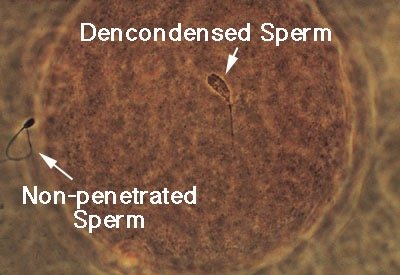
Once inside the oocyte, the sperm nucleus undergoes decondensation, facilitated by high levels of glutathione (GSH) in the oocyte, which breaks disulfide bridges in protamines. This process results in the formation of the male pronucleus, which will fuse with the female pronucleus to complete fertilization.
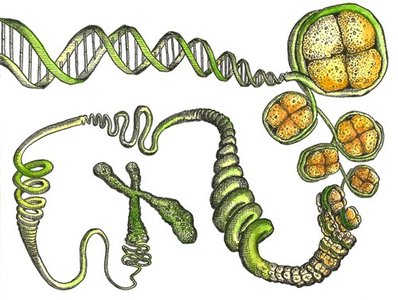
DNA Condensation: Sperm DNA is highly condensed by protamines and stabilized by disulfide bridges.
Decondensation: GSH breaks S=S bonds, allowing the sperm DNA to decondense.
Male Pronucleus: The decondensed sperm nucleus forms the male pronucleus, ready to fuse with the female pronucleus.
Summary Table: Steps of Fertilization
Step | Description |
|---|---|
Capacitation | Sperm undergoes membrane and enzymatic changes in female tract |
Hyperactive Motility | Sperm increases motility to traverse cumulus cells |
Binding to Zona Pellucida | Sperm binds to glycoproteins (ZP3) on zona pellucida |
Acrosome Reaction | Fusion and vesiculation of sperm membranes, release of acrosin |
Penetration of Zona Pellucida | Sperm digests and penetrates zona pellucida |
Sperm-Oocyte Membrane Fusion | Sperm and oocyte membranes fuse, exposing fusion proteins |
Sperm Engulfed | Oocyte engulfs sperm, initiating blocks to polyspermy |
Decondensation of Sperm Nucleus | GSH breaks disulfide bridges, sperm DNA decondenses |
Formation of Male Pronucleus | Decondensed sperm nucleus forms male pronucleus |
Additional info: The process of fertilization is tightly regulated to ensure only one sperm fertilizes the oocyte, preventing abnormal chromosomal numbers and ensuring proper embryonic development.
