 Back
Flowering Plants: Reproduction and Development (Chapter 38) - Study Notes
Study Guide - Smart Notes
 Tailored notes based on your materials, expanded with key definitions, examples, and context.
Flowering Plants: Reproduction and Development
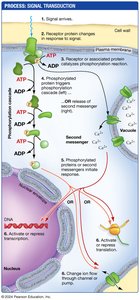
Plant Environmental Signal Processing
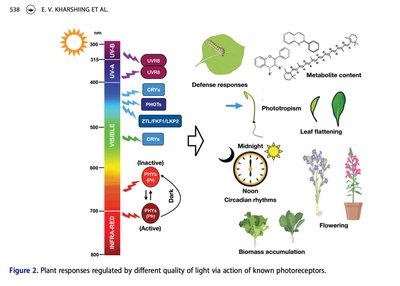
Plants detect and respond to environmental signals through a series of steps involving receptor proteins, signal transduction, and physiological responses. This process is essential for growth, development, and adaptation.
Signal Detection: Environmental stimuli (e.g., light, gravity) are detected by receptor proteins such as photoreceptors.
Conformation Change: Absorption of the stimulus causes the receptor protein to change its three-dimensional shape.
Signal Transduction: The conformational change activates intracellular signaling pathways, including phosphorylation cascades and secondary messengers (e.g., Ca2+ ions).
Plant Response: Responses include growth, flowering, stomatal movement, seed germination, and defense mechanisms.
Auxin and Phototropism
Auxin is a key plant hormone regulating growth responses to light (phototropism) and gravity (gravitropism). Phototropism is the bending of plant shoots toward light, driven by hormone-induced cell elongation.
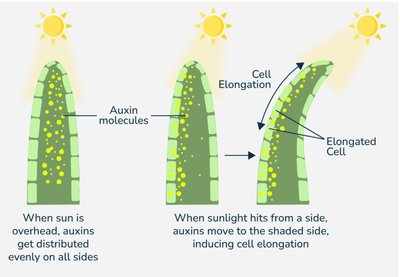
Phototropism: Blue light is detected by photoreceptors, triggering a signal transduction pathway that redistributes auxin to the shaded side of the shoot.
Cell Elongation: Auxin stimulates elongation of cells on the shaded side, causing the shoot to bend toward the light.
Example: When sunlight is overhead, auxin is evenly distributed; when sunlight is from the side, auxin moves to the shaded side, inducing cell elongation.
Auxin and Gravitropism
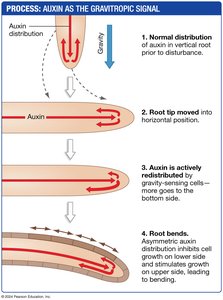
Gravitropism is the directional growth response to gravity. Roots exhibit positive gravitropism (grow downward), while shoots exhibit negative gravitropism (grow upward). Auxin distribution is central to this process.
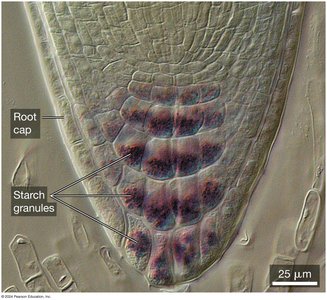
Gravity Detection: Specialized cells containing statoliths (starch granules) sense gravity.
Auxin Redistribution: Gravity causes auxin to accumulate on the lower side of the root or shoot.
Growth Response: Asymmetric auxin distribution inhibits cell growth on the lower side of roots and stimulates growth on the upper side, leading to bending.
Phytochromes and Light Responses
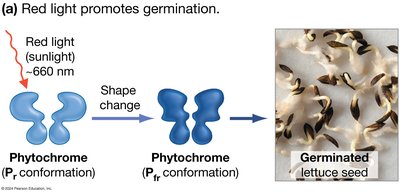
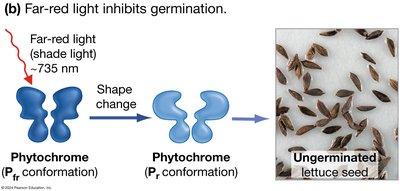
Phytochromes are photoreceptors sensitive to red and far-red light, regulating germination, stem elongation, and flowering. They exist in two forms: Pr (inactive) and Pfr (active), and can switch between these forms depending on light quality.
Red Light: Triggers germination by converting Pr to Pfr.
Far-Red Light: Inhibits germination by converting Pfr back to Pr.
Photoreversibility: The ability to switch between Pr and Pfr forms allows plants to respond dynamically to light conditions.
Role in Plant Development: Phytochromes regulate circadian rhythms, etiolation, and flowering signals.
Reproductive Structures and Processes in Angiosperms
Importance of Plant Reproductive Organs
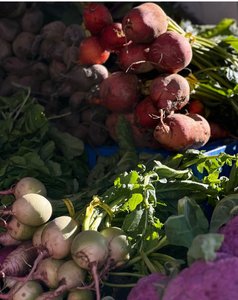
Understanding plant reproductive organs and developmental processes is crucial for agriculture, horticulture, forestry, biotechnology, and ecological restoration. Most human food comes from plant reproductive structures such as seeds and fruits.
Flower Structure and Function
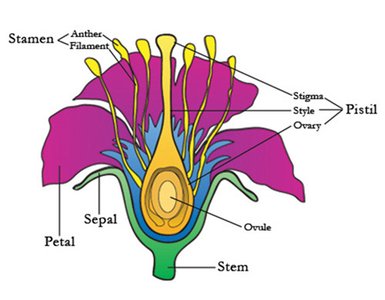
Flowers are the reproductive organs of angiosperms, producing gametophytes, attracting pollinators, receiving pollen, supporting fertilization and embryo development, and developing into seeds and fruits.
Basic Parts: Sepals, petals, stamens (anther + filament), and carpels (stigma + style + ovary).
Stamen: Male reproductive organ; produces pollen.
Carpel (Pistil): Female reproductive organ; contains ovules.
Perfect and Imperfect Flowers
Flowers can be classified based on the presence of reproductive organs:
Perfect Flowers: Contain both stamens and carpels (male and female organs).
Imperfect Flowers: Contain only one set of reproductive organs (either stamens or carpels).
Monoecious and Dioecious Plants
Monoecious and dioecious plants differ in the arrangement of male and female flowers:
Monoecious: Male and female flowers occur on the same plant (e.g., maize, walnuts).
Dioecious: Male and female flowers occur on separate plants (e.g., kiwifruit, date palm).
Pollination and Fertilization
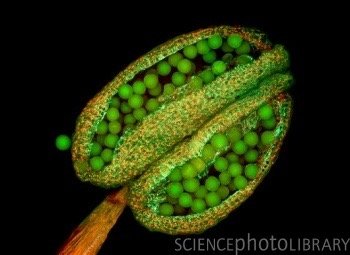
Pollination is the transfer of pollen from the anther to the stigma. Fertilization occurs when the sperm cell from the pollen fertilizes the egg cell within the ovule.
Self-Compatibility: Many flowering plants can self-fertilize, but mechanisms exist to promote outcrossing.
Pollinators: Animals, insects, wind, and water can transfer pollen, facilitating fertilization.
Angiosperm Life Cycle and Alternation of Generations
Angiosperms exhibit alternation of generations, alternating between diploid (sporophyte) and haploid (gametophyte) stages.
Sporophyte (2n): The diploid stage produces haploid spores by meiosis.
Gametophyte (n): The haploid stage produces gametes (sperm and eggs) by mitosis.
Life Cycle Steps:
Seed germinates and grows into a flowering plant.
Pollen is transferred to the female part of the flower and fertilizes the egg.
Fertilized egg develops into an embryo.
Embryo develops inside the seed (within the fruit).
Seed germinates and the embryo grows into a new plant.
Double Fertilization
Double fertilization is a unique process in angiosperms where two sperm cells from the pollen tube fertilize two different cells in the ovule:
Sperm + Egg: Forms the diploid zygote (2n), which develops into the embryo.
Sperm + Central Cell: Forms the triploid endosperm (3n), a nutrient-rich tissue that nourishes the embryo.
Result: The fertilized ovule becomes the seed, and the ovary develops into the fruit.
Fertilization Event | Result |
|---|---|
Sperm + Egg | Zygote (2n) → Embryo |
Sperm + Central Cell (2 polar nuclei) | Endosperm (3n) → Nutrient tissue |
Asexual Reproduction in Plants
Asexual reproduction does not involve fertilization and results in genetically identical offspring (clones). Mechanisms include vegetative reproduction and apomixis.
Vegetative Reproduction: New plants grow from roots, stems, or leaves.
Apomixis: Seeds are produced without fertilization.
Example: The King Clone creosote bush in the Mojave Desert is estimated to be 11,700 years old, demonstrating longevity through clonal reproduction.
Flower Diversity and Pollination Mechanisms
Flower structure, scent, shape, and color are adapted to attract specific pollinators. Coevolution between plants and pollinators drives diversity, especially in orchids.
Specialized Pollination: Some flowers are adapted for specific pollinators (e.g., moths, bees).
Sexual Deception: Orchids may trick pollinators into visiting flowers without offering rewards.
Reproductive Isolation: Unique pollination mechanisms contribute to speciation and diversity.
Functions of Seeds and Fruits
Seeds contain the embryo and nutrient reserves, surrounded by a protective coat. Fruits develop from the ovary and enclose seeds, aiding in dispersal and protection.
Seed: Embryo, endosperm, and protective coat.
Fruit: Developed from the ovary; contains or encloses seeds.
Summary Table: Flower Types and Plant Sexuality
Flower Type | Reproductive Organs | Plant Sexuality | Example |
|---|---|---|---|
Perfect | Stamens + Carpels | Hermaphroditic | Most angiosperms |
Imperfect | Stamens or Carpels | Monoecious or Dioecious | Maize, walnuts, kiwifruit |
Monoecious | Male & Female flowers on same plant | Monoecious | Maize, walnuts |
Dioecious | Male & Female flowers on separate plants | Dioecious | Kiwifruit, date palm |
Key Equations and Concepts
Alternation of Generations:
Double Fertilization:
