 Back
Foundations of Biology: Basic Biological Themes and the Scientific Process
Study Guide - Smart Notes
 Tailored notes based on your materials, expanded with key definitions, examples, and context.
Review of Basic Biological Themes
Introduction to Biology
Biology is the scientific study of life and living organisms, encompassing a wide range of subfields that focus on different aspects of life, such as microbiology, ecology, molecular biology, biochemistry, and genetics. Despite their diversity, all branches of biology seek to understand the structure, function, growth, origin, evolution, and distribution of living organisms.
Microbiology: Study of microscopic organisms, such as bacteria and viruses.
Ecology: Study of interactions between organisms and their environment.
Molecular Biology: Study of biological processes at the molecular level.
Biochemistry: Study of chemical processes within and related to living organisms.
Genetics: Study of heredity and variation in organisms.
Major Themes in Biology
All living beings share several fundamental characteristics that define life:
Emergent Properties: Complex properties arise from the interaction of simpler components.
Cellular Organization: All living things are composed of one or more cells, the basic units of life.
Genetic Information: Organisms use genetic material (DNA/RNA) to store and transmit information essential for development and function.
Energy and Matter: Life depends on the transfer and transformation of energy and matter.
Interactions: Organisms interact with each other and their environment, both internally and externally.
Adaptation and Evolution: Populations of organisms change over time through the process of evolution.
The Scientific Process in Biology
Steps of Scientific Inquiry
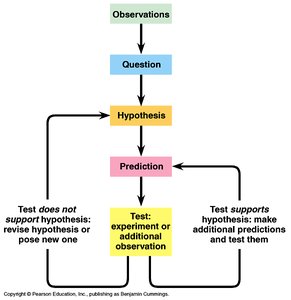
The scientific method is a systematic approach used to investigate natural phenomena. It involves several key steps:
Observation: Gathering data through the senses or instruments.
Hypothesis Formation: Proposing a testable explanation for observations.
Experimentation: Testing hypotheses through controlled experiments.
Analysis and Conclusion: Interpreting data to draw conclusions and refine hypotheses.
Types of Data
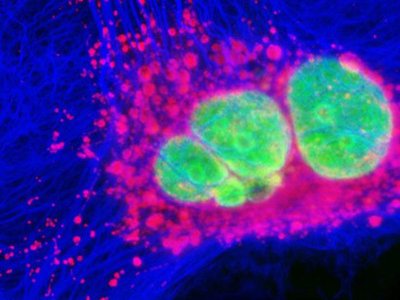
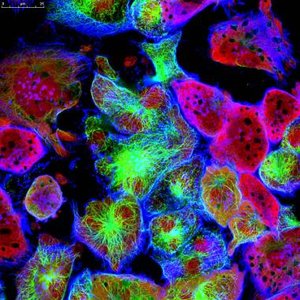
Qualitative Data: Descriptive data that do not involve numbers (e.g., photographs, written descriptions, maps).
Quantitative Data: Numerical data that can be measured and analyzed statistically (e.g., graphs, tables, calculations).
Reasoning in Science
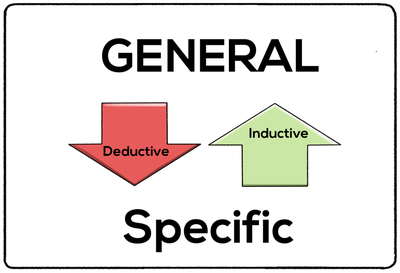
Inductive Reasoning: Making generalizations based on specific observations (specific → general).
Deductive Reasoning: Making specific predictions based on general principles (general → specific).
Designing and Testing Hypotheses
A hypothesis is a testable explanation for a phenomenon, based on observations and prior knowledge. Experiments are designed to test predictions derived from hypotheses.
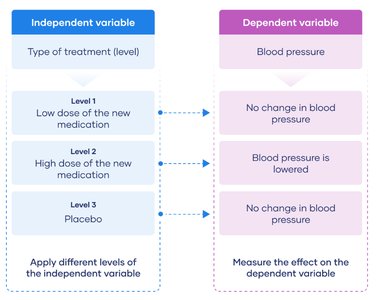
Experimental Group: The group in which the independent variable is manipulated.
Control Group: The group that does not receive the experimental treatment, used for comparison.
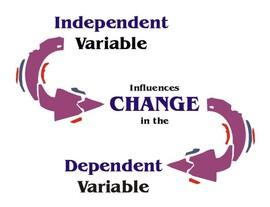
Variables: Factors that can change in an experiment.
Independent Variable: The variable that is deliberately changed by the researcher.
Dependent Variable: The variable that is measured in response to changes in the independent variable.
Iterative Nature of Science
Scientific inquiry is an ongoing process. Hypotheses may be revised or rejected based on experimental results. Troubleshooting and redesigning experiments are essential for scientific progress. While hypotheses can be disproven, they are rarely proven with absolute certainty.

Case Study: Adaptation in Mice
Example of the Scientific Process in Action
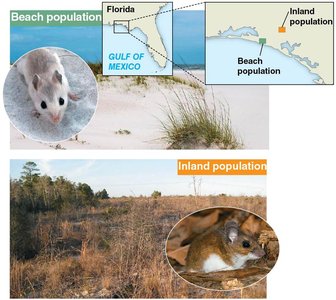
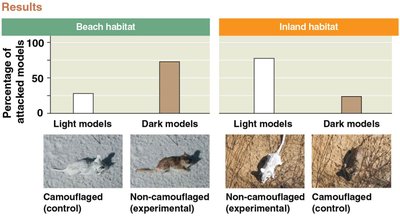
Researchers studied the adaptation of coat color in the beach mouse (Peromyscus polionotus). Mice living in different environments (beach vs. inland) have different color patterns, hypothesized to be adaptations for predator avoidance.
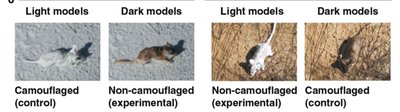
Researchers created model mice with different color patterns and placed them in both habitats.
They predicted that models matching the environment would be attacked less by predators.
Results supported the hypothesis: camouflaged models were attacked less frequently.


Theories and Laws in Science
When hypotheses are repeatedly supported by evidence, they may be integrated into a theory, a broad explanation for a range of phenomena. A scientific law describes a universally observed phenomenon, such as the law of gravity.
Modern Biology: Model Organisms and Technology
Model Organisms
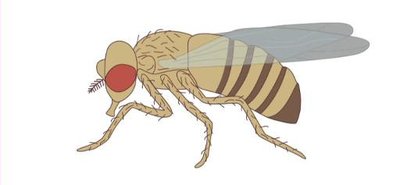
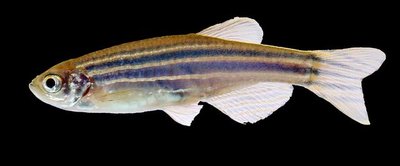
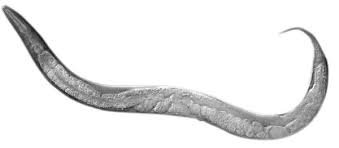
Model organisms are species that are widely studied to understand biological processes, as their findings can often be generalized to other species. Examples include the fruit fly (Drosophila melanogaster), zebrafish (Danio rerio), and the nematode (Caenorhabditis elegans).
Science and Technology
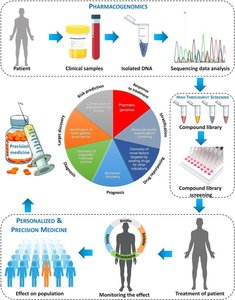
Science and technology are interdependent. Advances in technology enable new scientific discoveries, while scientific knowledge drives technological innovation. Examples include high-throughput DNA sequencing and bioinformatics, which allow scientists to analyze large datasets and understand complex biological systems.
Diversity and Societal Impact in Science
Modern science is increasingly diverse, with global communication and collaborative efforts encouraging participation from a wide range of backgrounds. Science and technology have significant societal impacts, influencing fields such as transportation, healthcare, and food development.
Summary of the Scientific Process
Scientific inquiry begins with observations, leading to hypotheses formed through reasoning (inductive or deductive).
Controlled experiments test hypotheses, focusing on variables and the use of experimental and control groups.
Troubleshooting and redesign are essential for refining scientific understanding.
Science is increasingly collaborative, diverse, and intertwined with technology.
